The White Picket Fence

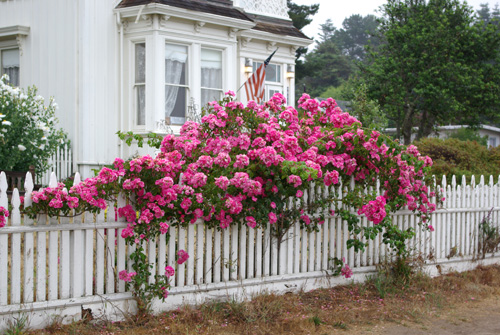
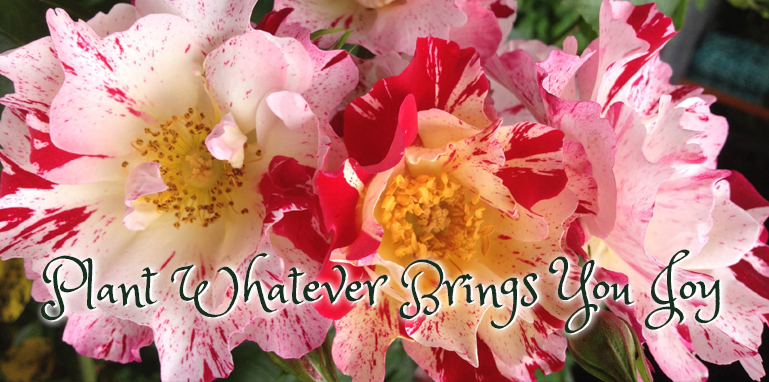
roses

The first time I moved to Mendocino was when Antonia went off to college and “mom moved to the country to get a dog.” I went from a burgeoning Marin County to a little bitty town out on the coast, directly across the street from the raging ocean on the headlands. Oh my gosh, it was noisy at night. It took some real getting used to. But there I was in the woods, oh so still, you would not believe how still. And I got that dog, my Moxie, now on the other side, bless her heart. And Mendocino, the most beautiful of small towns, became my central hub. So I am always thrilled at the opportunity, as happened last weekend, to go out to Mendo (as we locals call it), and absorb all that Mendo is and offers. Last weekend it offered an awfully lot, as not only was there a Summer Arts Fair going on at Mendocino Art Center, where I was meeting a friend, but as I learned upon arrival, the Mendocino Music Festival was also going on. Lordie. Think lots of tourists. Lots. I decided to join the fray but thought with some regret I might not be able to do the shoot I’d been hoping for and planning on.

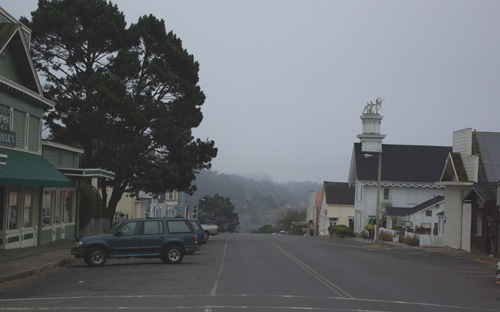
As fate (spelled BORDER COLLIES) would have it, I arose at 5:30AM, and not wanting to awaken my friend and her family, I showered, dressed and sneaked off in the Explorer with the puppies before 7:00AM. What a boon! I arrived to an empty, foggy town. Perfect, early soft light.

Mendo

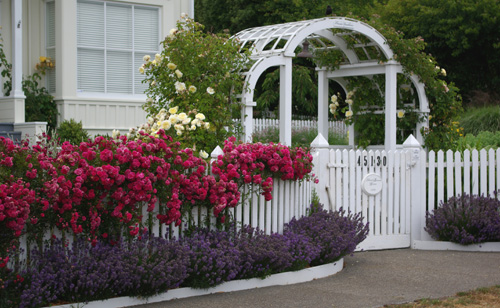
I suddenly found myself with the unexpected luxury of having Mendo basically all to myself, free to walk down the center of the wide streets shooting whatever captured my imagination! What I began immediately to focus on was one of the most charming aspects of the town of Mendocino: the white picket fence. Though I have photographed Mendo in the past, somehow having the gardening blog as a photo destination allowed me to hone in on this white picket fence theme and I will now show you why. Ready?

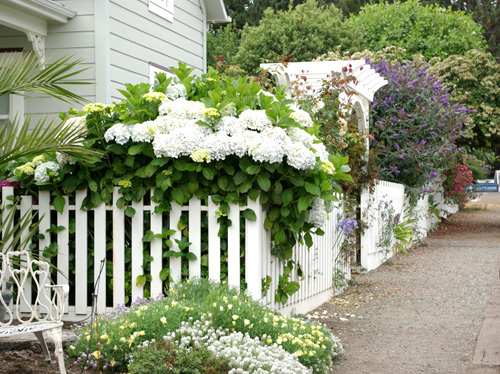
hydrangea

Those hydrangeas were a knock out! Now fancy this.

arbor

Oh, goodness. Can you begin to imagine how thrilled I was to be able to just walk and shoot, totally unencumbered on one of the busiest weekends of the year? Lucky me! It just kept getting better.

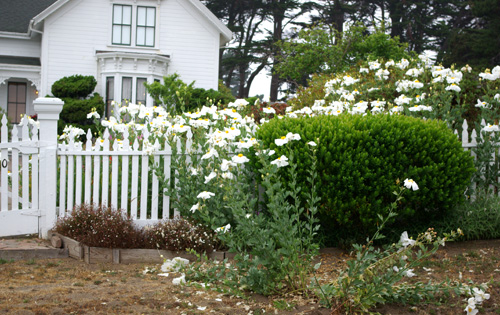
white poppy

I happen to absolutely adore matillija poppies (dreadfully called Fried Egg Poppy or Fried Egg Flower), so I was very pleased to find these growing in abundance in front of this beautiful old white house.

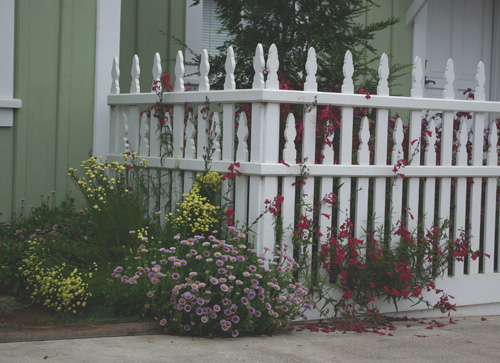
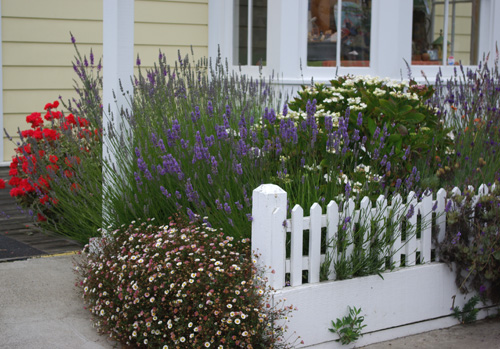
Mendocino has very strict ordinances about keeping architecture in keeping with its charm. This allows this white picket fence and flower culture to thrive. It is found not only among the residences, but also in the small commercial district as well.

corner

Another:

varied

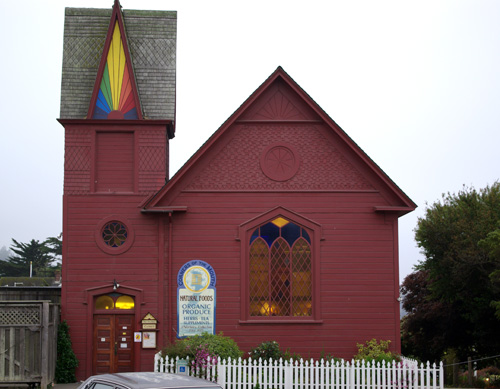
Even the health food store, our famed Corners of the Mouth (named after a hexagram in the I Ching), housed for many years in this old church, honors the white picket fence.

Corners of the Mouth

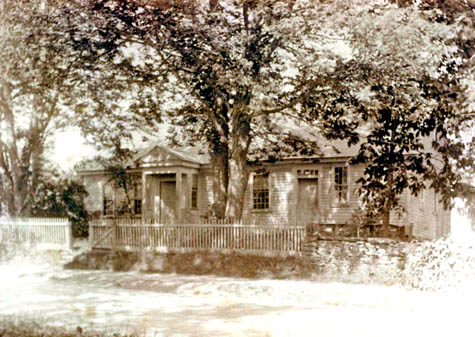
Naturally, I began to wonder about the origin of the white picket fence and found very little to illuminate its introduction, though Wikipedia revealed it was very old, indeed, having been incorporated since Colonial days, making me think perhaps it likely jumped the pond. Perhaps a UK reader might shed light on this possibility. Meanwhile it occurred to me that I did have a photo (most miraculously) of my gggggggggrandfather George Hall’s home in Taunton, Massachusetts. George and his wife Mary came in the mid-1600’s from Devon, England. And would you believe this?

G. Hall home

I know. I know. I wonder if Mary loved flowers as much as we do, and what she might have planted?

Love and garden blessings,
Kathryn xoxo

Book Notes: Thornton Burgess Animal Stories

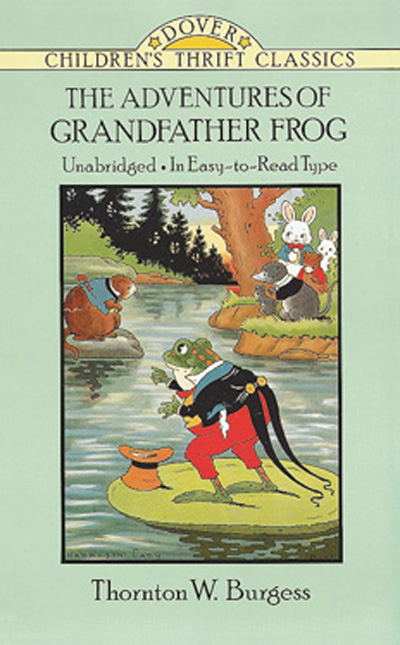
Grandfather Frog

It was actually Frances of Faire Garden who brought Burgess to my attention when I wrote about my experiences with (what Southerners call) buzzards. It brought to Frances’s mind her deep enjoyment as a child of Thornton Burgess’s Ol’ Mistah Buzzard in his Animal Stories for children. I immediately bought a boxed set of six of his books, delivered handily by mail, and that evening began to delve into the world Burgess created first for his own son, as so often happens with writers, being inspired to write for their own children–and then discovering the Universe had a much larger plan for their creations than they had originally imagined. It happens.

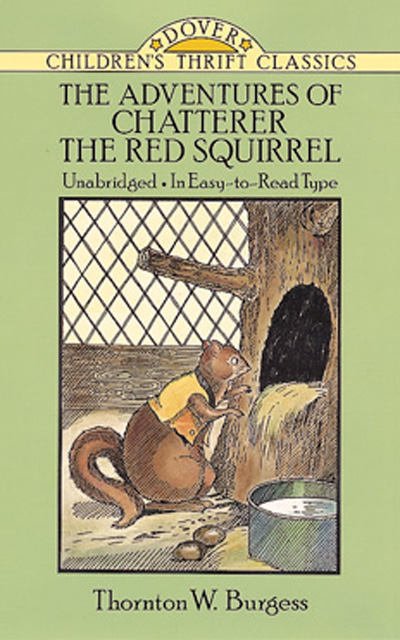
Thornton Burgess (1874-1965) who lived his life in Cape Cod, had been brought up by a father who taught him a deep appreciation for nature. As an adult Burgess wrote over 170 books and 15,000 stories. (He would have made a great blogger!) Among his many books are these six I present you with today. I’m betting that many of you will have fond memories of having read these books when you were a child. For some strange reason, in spite of being introduced to many children’s book series as a child (Honeybunch series, all the Hardy Boy series, all the Nancy Drew series, etc.) Burgess was not in my home library. So it is with a new inspiration to have discovered him now, and surely there will be some among you who also did not read him. And others will be delighted to have their memories refreshed as they have children or grandchildren who will appreciate them, and gardening grandmothers or grandfathers will be particularly pleased as these books do kindle an appreciation for those critters who live out in Nature, though I must say they do spend an inordinate amount to time contemplating catching and devouring each other, so stand forewarned!

“He comes to grief, however fleet,
Who doesn’t watch his flying feet.”

Ultimately even the untrustworthy characters, such as Reddy Fox, find a place in the hearts of their woodland companions, so one not worry about frightening anyone. (Though after what our children are exposed to these days, I’m certain they will find these stories very tame.)

Reddy Fox

As with European fables, the characters live their lives in a moral spotlight, teaching our children to consider acts of cunning and acts of compassion; trickery and honesty; pride and humility–all worthy topics, offered in a most engaging, humorous and delightful style. I have thoroughly enjoyed each story, laughing out loud at some of the antics! Perhaps my favorite, and I suspect I am certainly in large, varied and wide company, is the beloved Peter Cottontail.
Peter Cottontail

I can only imagine how absolutely pleased with himself Thornton Burgess must have been when he thought of this name! I bet he had a very big smile on his face all day. I would have!

“Peter Rabbit’s changed his name.
In the future without fail
You must call him, if you please,
Mr. Peter Cottontail.”

Peter is probably the best-known and loved of Burgess’s characters. (Maybe it’s because he’s a vegetarian and isn’t eating any of his friends??) The characters live their lives in the enchanting and approachable world of Green Meadows, the Old Briar-patch, Farmer Brown’s garden, the Green Forest, the Smiling Pool and the Purple Mountains. Here they learn the value of being true to themselves and each other. Here lives innocence, good storytelling and charm.
Happy Jack

Accompanying Thorton Burgess’s lively-paced and lighthearted stories are the beautiful old illustrations of Harrison Cady, and the newer adaptations by New Yorker, Thea Kliros. Both artists capture the spirit of the books perfectly.
Red Squirrel

“Hop along, skip along,
The sun is shining bright;
Hum a song, sing a song,
My heart is always light.”

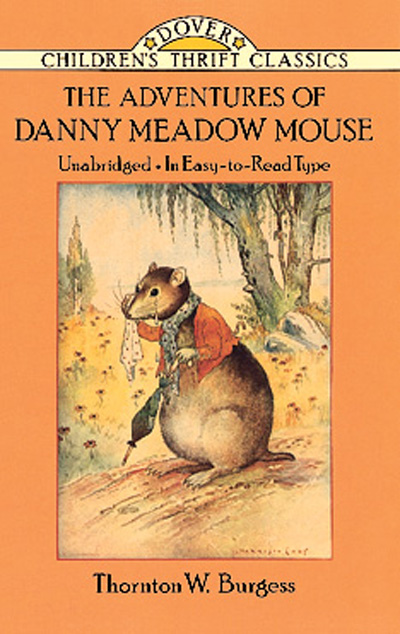
Danny Meadowmouse

Not unlike the impulses of Celia Thaxter, the impact of Thornton Burgess lives on in Cape Cod at the Thornton W. Burgess Museum and Green Briar Nature Center. I was particularly charmed to see they lead visitors on wildflower garden walks to this day. Oh, gosh. Wouldn’t you just love to follow Dr. Shirley Cross through a wildflower field? I would.

It is a gift that we have such literature available to us to read to our children and grandchildren. Happy, healthy choices. Enjoy, dear readers.

Love and gardening blessings,
Kathryn xoxo

The First (Everything)

Van Gogh
Wheat Field with Crows, Vincent Van Gogh, 1890

From time immemorial human beings have been marking that time by looking to what is happening in their world, on their planet, out-of-doors, and usually the resulting designations are tied to the availability or impending availability of food. The process is complex. It involves the moon. The sun. The soil. The rain. The nutrients. The seasons. Largely we have in our modernity separated ourselves from many of these considerations, as they have been viewed as elements to “overcome” or dominate or eradicate or manipulate, as mostly, we mess with things. A lot. Man Against Nature, my early English teachers used to lecture me–an entire genre. Genre, indeed.

As we reclaim our agrarian roots we return to first the acknowledgment and then to the celebration of what our ancestors knew and celebrated: the turning and maturing of the season. And so it is with that age-old delight that I scope out my little kitchen garden, just outside the back steps, and cheer on with glee the first of many things coming to maturity.

It would be most excellent to begin a celebration by happily noting the recent blossoming of the beautiful dahlia my dear friend Conny gave to me for my birthday in a large pot. Actually the dahlias were hiding underground, she said, and now after some patient waiting they have emerged.

red dahlia

Was that not worth awaiting? And is it not the absolutely most perfect 4th of July flower? It looks to me like a happy red starburst!

Stepping beyond the fence into the tomato patch I am thrilled to see my first ripe Early Girl! Oh, yes, she might make it to a platter before the holiday is up!
early girl

Keeping her company are my beloved principe bourgheses, my all-time favorite tomato thus far. They are not as far along, but they are definitely the first of the season and I can hardly wait for their blessed abundance that allows me to make near instant sauces for summer pasta dishes simply by popping in the Cuisinart and then dropping into some nice garlic and onion sauteed in olive oil, with the usual seasonings. Yum!
tomatoes

At the foot of my principes, not to be ignored and undoubtedly about to make itself very well known, is a single morning glory, a volunteer, who within a month will have wrapped itself exquisitely into the principes, to be wedded for the season. I can’t stop such romance and it’s fine with me.
mglory

Still within the confines of the fencing just underfoot and hiding is the first zucchini of the year!
zucchini

I only planted one! Can you believe it? The first year I had a garden I planted an entire package. Uh-oh. This is the counter-experiment to see how many one will yield! Do you ever slice them and then dip them in beaten egg and then coat them with wholewheat flour and saute them in oil? Oh, so delicious. And if you are up for it, you can put little bits of cheese on the sauteed ones and pop them in the oven to melt. Oh, your children will love you!
[Editor’s note, days later: Oh, dear. It is NOT a round zucchini as I’d thought. It is clearly a spaghetti squash! I found the real zucchini where I thought I’d planted the s. squash. Don’t you think they must be so delighted to have fooled me all these weeks?!]

Now, if you will follow me outside the fence just to over here, I will share with you one of the most exciting events in the garden: my first lemon blossoms on my new (improved) Meyer lemon tree! There are 27 buds. Does that mean 27 lemons?? Don’t tell. I want to be surprised!

lemon blossom

And keeping watch over the blossoming Meyer lemons are the lovely (if annoying) trumpet vines. As invasive as they are I have finally come to peace with them and simply scold them mildly much as one might a dotty old auntie, or naughty goat, and pull them up where they do not belong.

trumpet vine

They are so abundant they have covered the pittosporum where the jays built their nest so now the wild thing is covered each morning in hummingbirds. Who can complain?

Leaving the grace of the garden I climb the few steps to the back door, and stop to admire the last of my lilies, potted year before last and blessing us with their annual return. Yes, this is the last of the lilies, honoring the infinite cycle of birth and death and transformation.
lily

Love and gardening blessings,
Kathryn xoxox

© 2008 - 2026 Kathryn Hall. All rights reserved.
For optimal viewing Mac users using IE should access via Safari.
Pixel Surgery by Site Mechanix