Winter’s Face

dawn

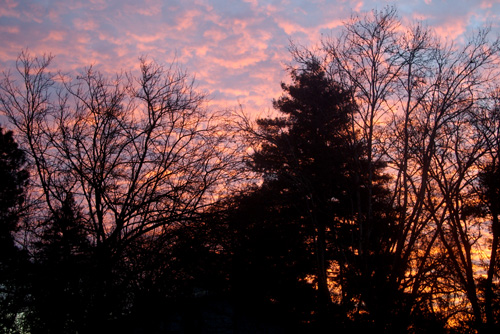
Sigh. Californians are, most likely, a curmudgeonly lot, wont to complain about the frosts and rains of winter. It’s true. We do. Having suffered, endured and survived the long winter snows of both Massachusetts and Ohio, I know how spoiled we must sound, how entitled we must think we are. But there you have it. However, our constant semi-anxious state, ever glancing at a local snow-capped mountain as our constant indicator of just how close we are to spring (we aren’t) can also open our eyes to the precious signs of life that do abound (and they do). Opening the front door recently I was stunned to find the above sky dawning and ran to my camera to catch this glorious morning, as these skies can shift in a moment or two.

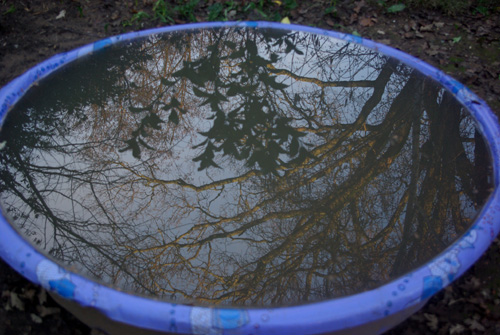
Then a few days later, grumbling as I ran my dogs in the mud, I eyed their pool–usually filled with clean water, but not this day, and was amazed to see my world reflected back in the most extraordinary way!
pool1

You can bet that I began paying much closer attention to puddles, streams and lakes in the days that followed, watching carefully for Nature’s exquisite take on winter, not at all muddled or obscured as my view had been. Not at all.

Continuing on this inspired path I looked fondly on the assortment of little pots I had collected about the front door, greeting and cheering all who entered and departed at this time of year. It’s a lovely sight, I must say.

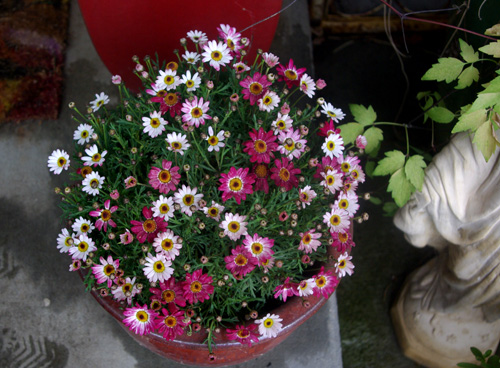
Ever so glad I found this unlikely marguerite at Christmas, and added her to the welcoming committee!
marguerite

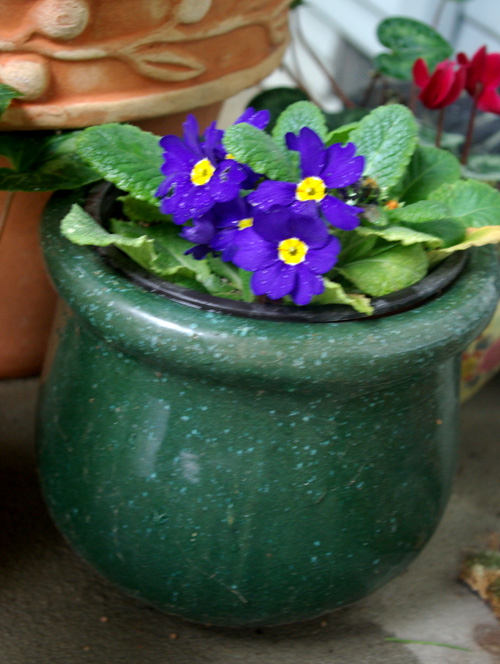
And here a faithful primrose:
primrose

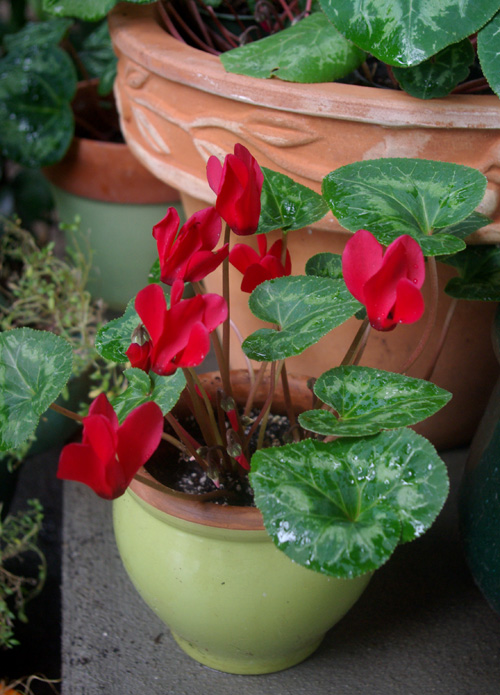
Most especially I rely on the cyclamen, winter’s special gift, and they abound at this time of year and I am happy and grateful for it! They are perennial, as you most likely know. I set them up ages ago and I do absolutely nothing, yet they emerge beautifully and generously each year.
smlcyc

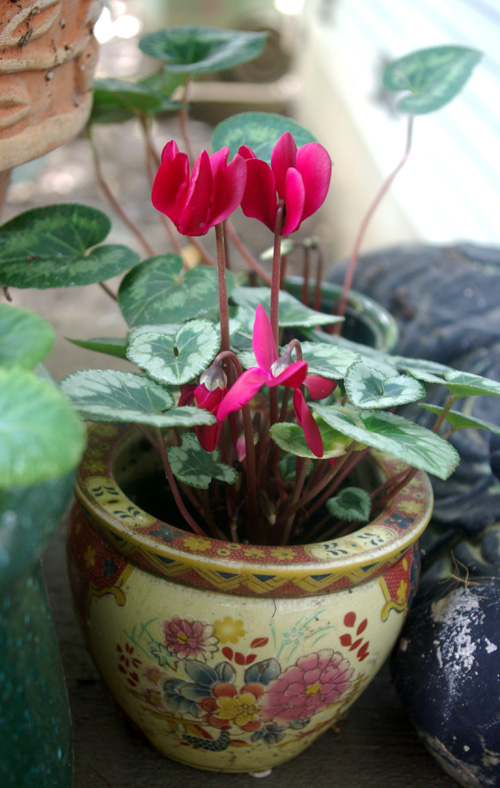
The small investment of a lovely pot adds to the charm of this presentation which I rely upon year after year.
smlcyc2

Reading about cyclamens I am told to not water them during summer. Ha! While I do respect their dormancy period I am just as inclined to splash water on the cyclamens as anything else in my path and they really do not seem to mind. Perhaps it’s due to our very hot summers. There really is no danger of their “rotting” around here!

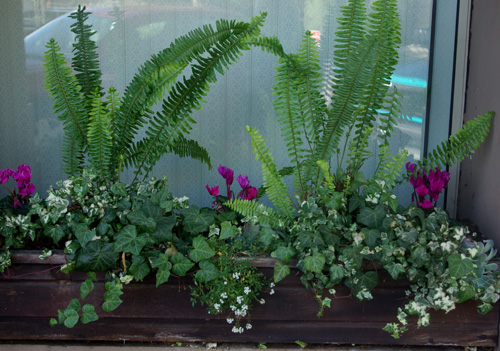
Cyclamens truly are one of my favorites, and I find others in the community have taken advantage of their loveliness in their potted arrangements as well. Here’s a group living happily with ferns and ivy, beneath a canopy to protect from occasional frosty nights and mornings.
cyclbox1

And this pot invites folks to sit awhile on the adjacent bench. How pretty is this?
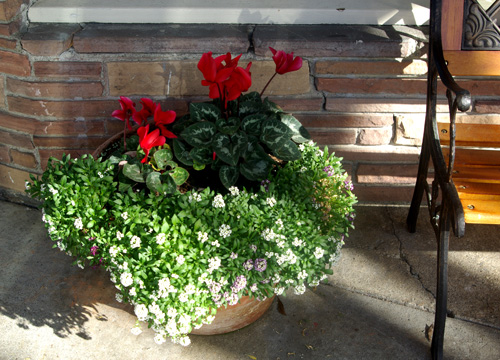
cyclbox2

Keeping the cyclamens company are the very early camellias. Each year I very much look forward to the opening of my Christmas camellia, never knowing if it will actually open by Christmas or not. (It did!)
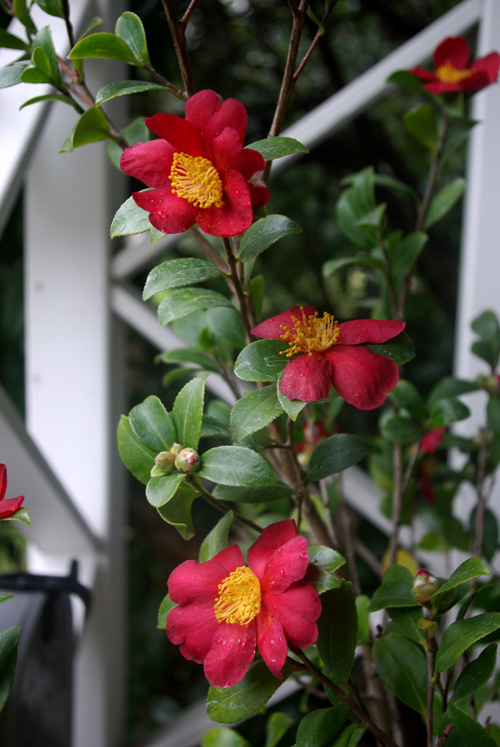
camellia

Once the Christmas camellia opens the watch begins for the opening of the abundant camellias that live here, right now primarily all in bud. The first in the garden to open is a large white one, which I often access not from my own garden, but from my neighbor’s garden, as it faces toward the winter sun, still low in the sky. Last week it had not yet opened, but, praise be, this week it did! I am enjoying most thoroughly!
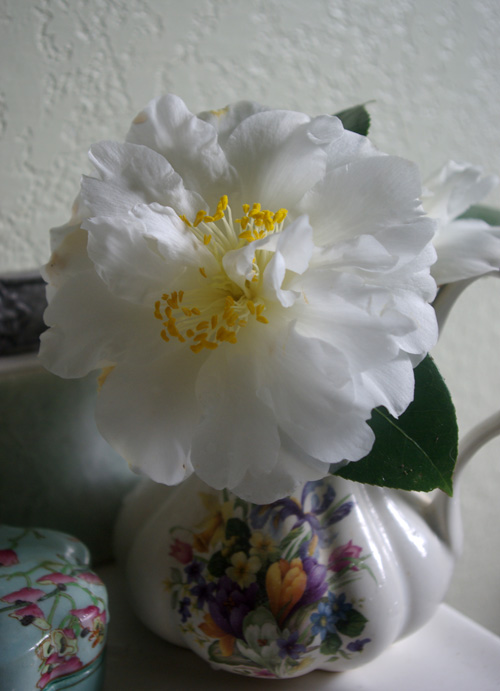
cam2

“The wonderful purity of nature at this season is a most pleasing fact… In the coldest and bleakest places, the warmest charities still maintain a foothold.” ~Henry David Thoreau

What plants inspire and nurture you during the cold of winter, my dearest readers?

Love and winter blessings,
Kathryn xoxo

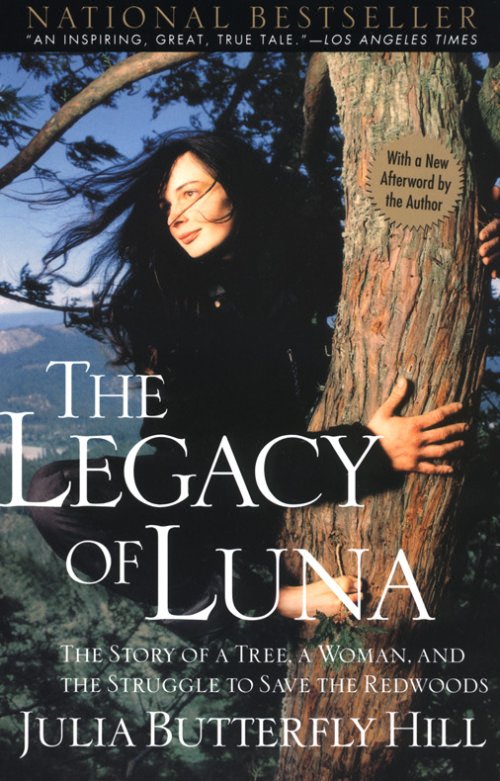
Book Notes: The Legacy of Luna

juliahill

Honestly, I had wanted to review Julia Butterfly Hill’s book The Legacy of Luna quite some time ago and was reticent to do that when copies seemed scarce. Nevertheless, I happened upon my copy last weekend and determined I would write the review (which wanted to be written, afterall) and today I am delighted to report that copies are now apparently back in abundance and available on Amazon. Hurray! For this is truly a book that all nature lovers will most likely relate to, and cherish for all time. It’s also a profound story which deserves to be told and retold, as it is epic in scope and depth and intention and is an act so deep and profound and courageous and encouraging, now if ever, it needs to be told.

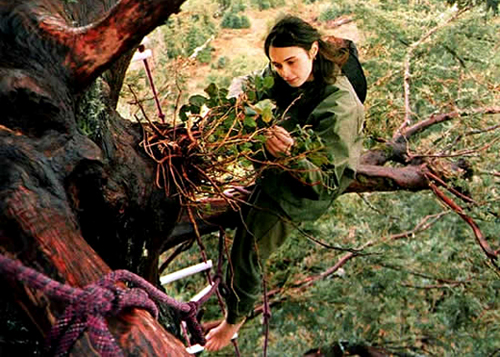
“Julia is a lightening rod 180 feet a top a giant redwood. She says, ‘No more old-growth redwoods should be cut…’ She’s the Joan of Arc of the redwoods.” ~Mickey Hart

juliainLuna

I met Julia at a Bioneers Conference some years ago. I looked up, recognized her, and gently approached her, tears unexpectedly streaming down my cheeks, as I was so deeply moved to be meeting her. Inside my book she enscribed “For Kathryn, Thank you for understanding your power to change the world! Julia Butterfly Hill, October 21, 2000.” There is a heart next to her name. 🙂

By the time I met Julia it had been merely ten months since her feet had touched ground for the first time in over two years, when she descended from “Luna,” a thousand-year old redwood tree high on a hill in Humboldt County, California. Julia had climbed the tree 180 feet up to a rugged wooden platform in December of 1997, thinking she would be participating in a two-week “sit.” But out of her deep commitment to the salvation of the ancient redwoods and to the protesting of the practice of clear cutting our beloved forests, she lived on this small wooden platform for 738 days, eighteen stories off the ground, subjected to fierce life-threatening storms, helicopter harassment, and a ten-day siege against her by lumber company security guards who were determined to starve her out, impossible for any one of us to imagine.

“Tree sitting is a last resort. When you see someone in a tree trying to protect it, you know that every level of our society has failed. The consumers have failed, the companies have failed, and the government has failed.” ~Julia Butterfly Hill

Perhaps her being the daughter of a preacher gave her the background to commit and endure. Indeed, it is out of our deepest commitments to our vision for saving the Earth that such challenges do and will appear to us which require great fortitude and courage to sustain our chosen paths. Julia’s courageous path serves as an inspiration to those of us facing the continued worsening challenges on our beleaguered Earth today. When you don’t know where it’s going to come from you might turn to The Legacy of Luna to prevail.

“One day I was climbing around Luna and the fog slipped back to the coast, sunlight hit a spiderweb still glistening with drops of moisture. It shot these beautiful spectral colors in every direction. The diversity of life is like those strands of the spider’s web: the strands weaving together make the web strong and balanced and, even more amazing, make it beautiful as well.” ~ Julia Butterfly Hill

Julia
Julia Butterfly Hill
Most importantly of all this is a story of unconditional love, to which Julia turns again and again in the face of attacks from those determined to bring her, and Luna, down. And it was unconditional love she sought and cultivated as her role emerged in the international media as a spokesperson for what was happening in the depths of our forests.

I believe that such heroic figures are emerging in all parts of the world today as individuals are turning within to listen to their heart’s prompting. They are choosing their passions and stepping forward to help the emerging global community which we all must ultimately recognize and turn to in order to preserve this beautiful planet on which we live. It is nothing short of this, believe me. The Legacy of Luna was an early harbinger of what is required, and Julia Butterfly Hill’s story points the way.

Love and global blessings,
Kathryn xoxoo

For more information on our beloved local woods, you might want to revisit this post Into the Woods. And for a very long, very thorough overview and update of the what is happening to California redwoods, check out National Geographic’s Redwood article.

Year of the Lemons!

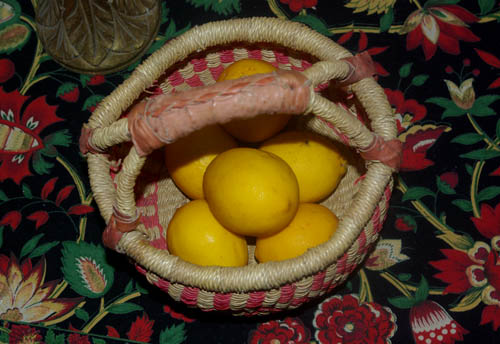
lemonbasket

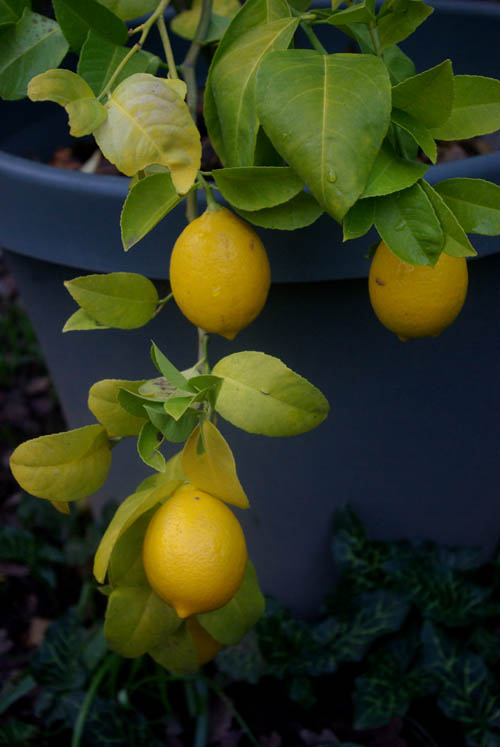
Last week darling daughter arrived for Christmas with an unexpected treasure–lemons from her recent road trip to Southern California! It was timely in that for the very first time my Meyer lemon tree was also producing fresh lemons, fortunately a bit behind maturity from the ones she gifted me with from SoCal!
Safely still on their host branches and not fully ripened they can now rest easy in their process without my hovering, and I can rest assured they are chilled to perfection!
lemons

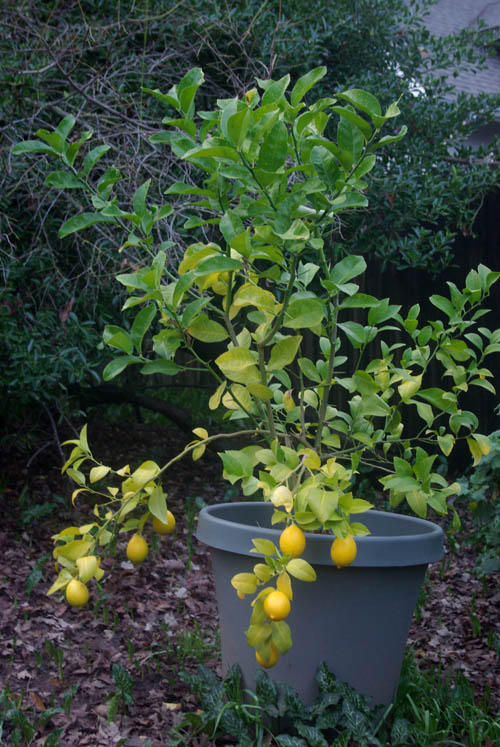
There are nine and I have been poking at them and counting them repeatedly all summer and fall long, trust me. When the cold snap arrived I was certain I would lose them all, thinking that for some strange reason they had not come to fruition on time. I was surprised and delighted to hear my friend Justine, down in Marin Co., who’s had a lemon tree for years and years and has been generously supplying all her friends with lemons for decades, assured me that her lemons were just now ripening as well, so clearly I have a lot to learn about citrus in general. It’s very hard for me to imagine that they are ripening even as the outer mountains are snow covered and frost abounds. But there you have it! Lemons! And I am thrilled!

I planted this tree nearly five years ago, in a big plastic pot, hoping for the best. Year after year I’ve hoped and been crestfallen. Rekindling my patience and optimism, I’ve searched each spring, and this was the year I was blessed with fruit! Yay, little tree! You did it!
Meyerlemon
Neighbors do tell stories of their lemon trees which succombed to frost, so this one sits near a gnarly old plum tree, somewhat protected. And I have been known to stew and put a blanket of leaves about its base to protect its root system. It’s worked so far!

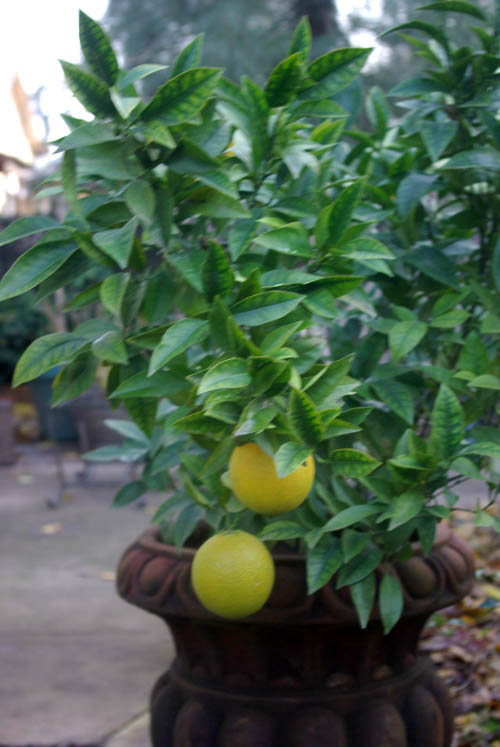
And not to be outdone, strangely the orange tree, also in a pot, planted around the same time, has produced two huge oranges, ripening even as I write. I can’t wait to see how they emerge as fully mature oranges, gracing a breakfast table! And undoubtedly the zest will find its way into weekly scones!
orange

The Meyer lemon, common in California, was brought to America from China. The original one harbored a virus which destroyed crops of lemons so they themselves were destroyed. Fortunately a scientist created an Improved Meyer Lemon which is virus free. They are frequently grown as ornamentals, but not here in this garden! They are treasured as a lovely organic fresh healthy food source and a wonderful welcome addition to my kitchen! Salutations to the lemon tree!

Love and gardening blessings,
Kathryn xoxo

Book News: Readers of Science of Mind might want to read my article “Plant Your Joy” in the January 2011 issue!

© 2008 - 2026 Kathryn Hall. All rights reserved.
For optimal viewing Mac users using IE should access via Safari.
Pixel Surgery by Site Mechanix