Book Notes: Attracting Native Pollinators

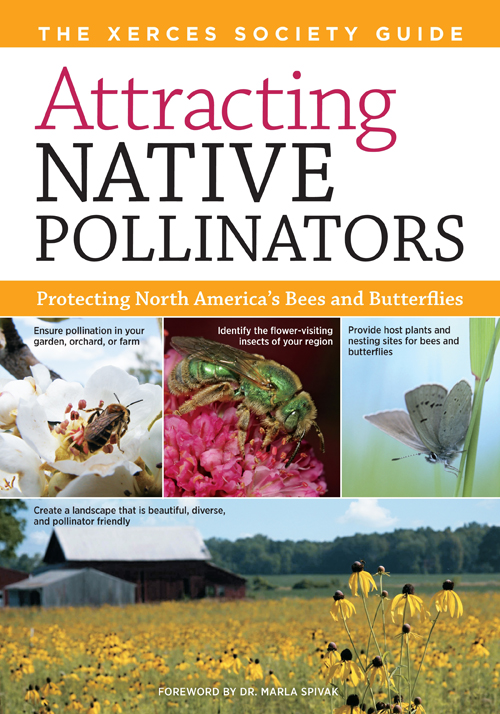
More and more I am awakening to the realization that I am destined to become a beekeeper. It is part of my spiritual path. It’s simply a matter of when and where. Meanwhile, as a kindly gentleman from Sonoma Beekeepers Association pointed out to me recently, “Start learning now.” And so I am, following my inner directives towards a path of bees, who, in all honesty, have long attended me, and I them. Along the path I was advised that the Xerces Society was about to have published Attracting Native Pollinators: Protecting North America’s Bees and Butterflies. Longtime followers of this blog would undoubtedly recognize this as My Kind of Book, so I was delighted that Storey Publishing gifted me with a copy so that I might alert all of you to Attracting Native Pollinators as a book all those interested in conscious gardening would want to have in their libraries as an invaluable resource book. For now, more than ever, it is critical that those of us who are called heed that call and learn all we can about our blessed butterflies and bees and learn to care for them, protect them from the onslaught that is their lives, and ensure that they survive, for us and for all who come after. It’s that dire, my dearest readers. It truly is.

For those of you who feel a need to educate yourselves on the current well being of pollinators in general Attracting Native Pollinators offers pragmatic information on Threats to Pollinators. I’m certain you are aware that the dreadful practices of monocultural plantings, like the almond industry, and the continued use of pesticides makes it very difficult for our wee ones. But the overall tone of Attracting Native Pollinators is in recognizing the broad spectrum of pollinators in our environments and focusing on the planting of the correct flowers for your locale, taking into account the need for host plants for butterflies as well as those that will later attract them. Chapters include Strategies to Help Pollinators, Providing Foraging Habitat, Nesting and Egg-Laying Sites for Pollinators, Pollinator Conservation on Farms as well as chapters designed for those in more urban environments.
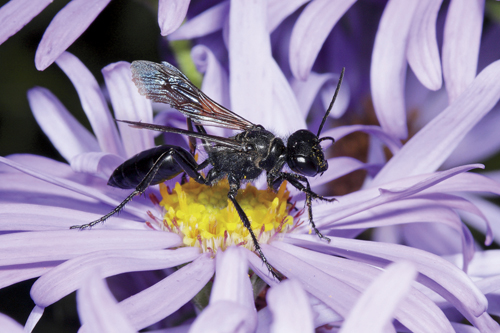

a gentle wasp
photo credit: Rollin Coville

This book is much more than a resource on how to improve habitat for native pollinators. It is a step-by-step guide for changing our stewardship of the Earth; it is a tangible way for people of all ages to make a difference. Active participation in this vital, grass-roots revolution is easy: Plant flowers.
~Dr. Marla Spivak, from the foreword
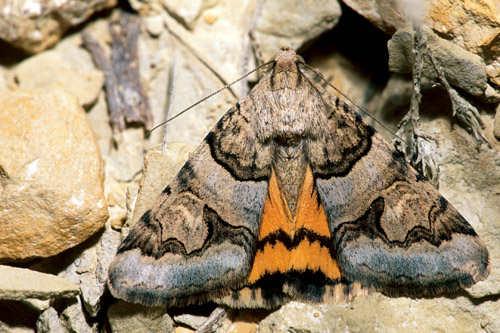

an underwing moth
photo credit: Bryan R. Reynolds

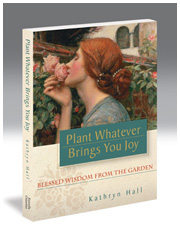
I was particularly delighted that Attracting Native Pollinators makes clear that, generally speaking, wasps are gentle creatures. Those who have read Plant Whatever Brings You Joy will recall my story of discovering that paper wasps that had built a nest right outside my back patio door were a source of joy and discovery for me once I’d accepted that they were not the fearful critters I’d imagined.

Another section of the book I found particularly interesting were the pages on creating natural nests to attract more solitary native bees, such as leafcutter or mason bees. Check this out!
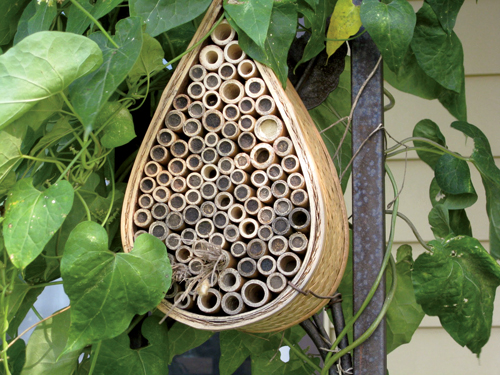
photo credit: Lloyd Crim

How to Create a Stem Bundle

Cut each stem below a node (usually indicated by a ridge) to create a handful of tubes each with one open end. Strap the tubes together into a tight bundle with wire, string or tape, making certain that the closed ends of the stems are all at the same end of the bundle.

A variation of this is to tightly pack the stems–open ends out–into a tin can, paper milk carton, square plastic bucket, or short section of PVC pipe. You could even make a wooden frame or open sided birdhouse to hold them.

They then go on to explain that you need to place the bundles in a sheltered location, stems horizontal to the ground–or slightly tilted downward–with the holes facing east to receive the warmth of the morning sun.

Do you not love this? Imagine doing this with your children or grandchildren! What an enriching memory for them. And what a teaching.

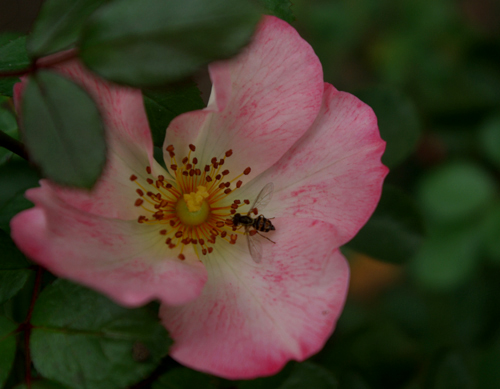
Just knowing this book was on its way to me I immediately began to look more carefully at what other insects were coming and going in my garden other than my beloved honeybees and bumblebees. I was particularly delighted to find this visitor one morning and she obliged me in staying in one lovely flower long enough for me to capture her on my camera. Anyone know what she is??
Love and garden blessings,
Kathryn xoxo

Book News! Dig It! Magazine is now featuring a wonderful review of Plant Whatever Brings You Joy.
Western North Carolina Woman is featuring an excerpt from Plant Whatever Brings You Joy in December and Ode Magazine is also running an excerpt from my book in their January/February issue!
If you have not yet visited my new book trailer on YouTube, link here!
Enjoy!
With Christmas coming I do hope some of you will consider purchasing a copy of Plant Whatever Brings You Joy for a loved one. I hear from booksellers and readers alike, “This is a beautiful gift.”

Thank you to Storey Publishing for permission to reprint their photographs.

Boo!


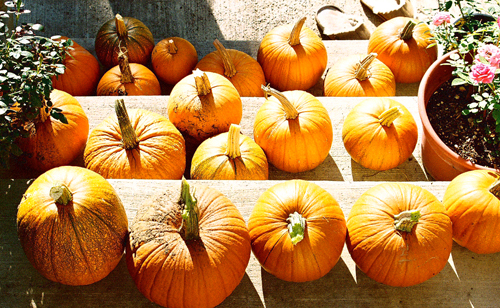
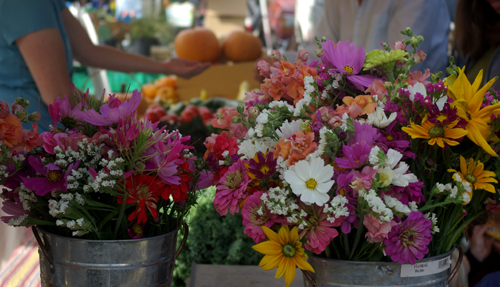
pumpkin harvest

Truly one of the joys of life for any gardener is growing pumpkins, harvested just in time for Halloween, and if you have not done it ever, I encourage you to try! This year I did not, but the above photo illustrates the venture as part of my history, which I treasure. Those “without the space” can look into vertical gardening, for pumpkins will climb, and happily!

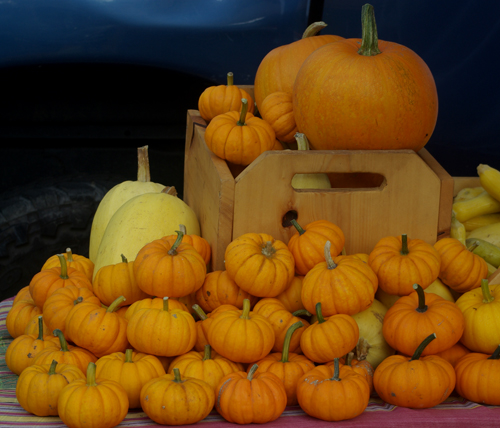
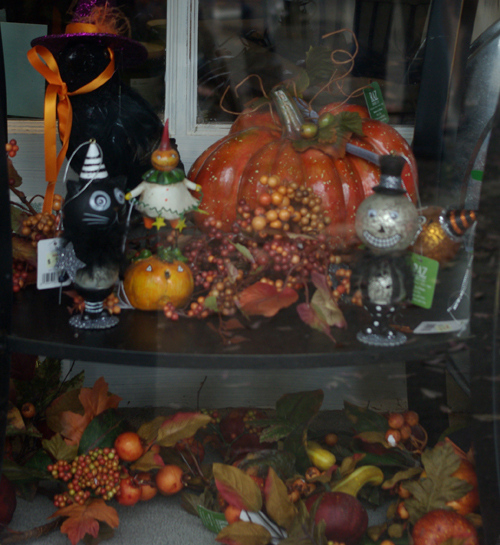
Halloween pumpkins

Pumpkins are only one of the many images that come to bear on Halloween [Hallowed (Holy) Evening] and the more imagination one has, the more the imagery works upon the soul, I do declare.

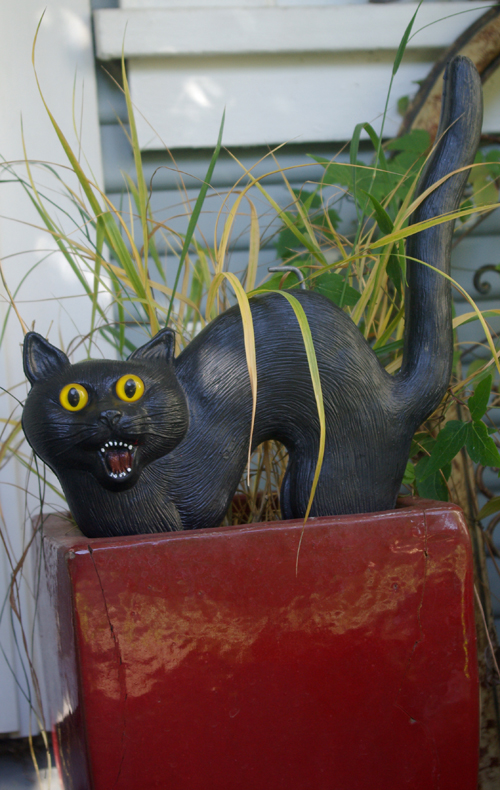
scary cat, hahaha
Traditionally this is the time of year, as the days shorten and the nights become cold and long, when the veil is thinnest between the worlds, beckoning a visitation, and celebration of those departed. The energetic backdrop of Scorpio only enhances the possibilities!

Song of the Witches by William Shakespeare

Double, double toil and trouble;
Fire burn and caldron bubble.
Fillet of a fenny snake,
In the caldron boil and bake;
Eye of newt and toe of frog,
Wool of bat and tongue of dog,
Adder’s fork and blind-worm’s sting,
Lizard’s leg and howlet’s wing,
For a charm of powerful trouble,
Like a hell-broth boil and bubble.

Double, double toil and trouble;
Fire burn and caldron bubble.
Cool it with a baboon’s blood,
Then the charm is firm and good.


boo!

During Halloween our festive imagery abounds, harkening the arrival of these last months of our most cherished holidays, presently nearing our hearth and doorsteps.

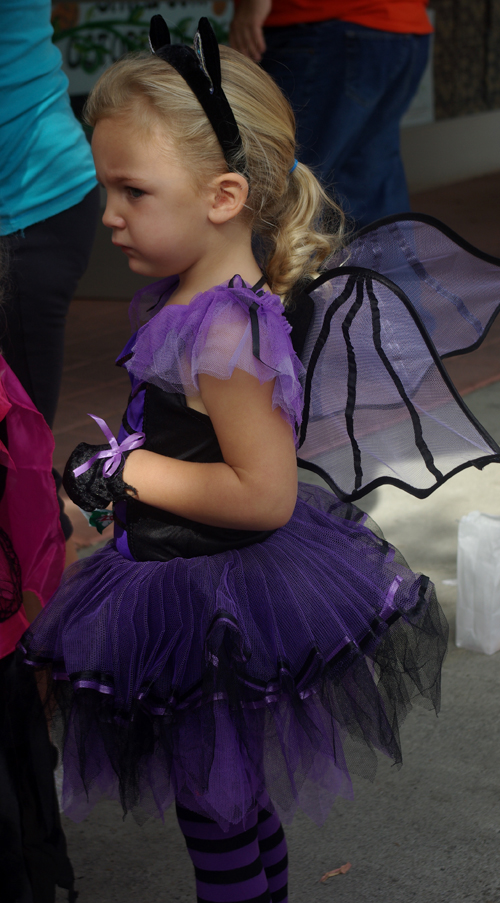
Among the most charming and endearing images are our children in costume. Some happy.


chica bonita

Some, not so much, a reminder that Halloween can be stressful even for delighted children who might need special attention midst the rush to activity.


Awwww
Nevertheless, endearing angels, don’t you agree?

My love for Halloween began as a child when I became overwhelmingly excited that for this one very special night of the year all the doors in my lovely neighborhood, without exception, opened. And for that brief flicker of a moment I was able to peer inside and learn more about who lived about me, about which I must have had an insatiable curiosity. It was this gift which I treasured far more than the candies and homemade cookies and fruits they lavished on me at the door. I got to look inside. The fact that it was evening and the houses were lighted by artificial lighting only enhanced the splendor of those moments for me. I can still feel my excitement and wonder.

What will you be doing to honor this Halloween tradition in your communities this year, and what memories are kindled as we reenact this holiday once again?

Love and Hallowed Evening blessings,
Kathryn xoxo

Book Notes: Most excitedly, OdeWire has now published the story of The Scarf Initiative in which so many of you took part. Feel free to visit their site and leave a comment about your participation!

I’m also honored to announce that Dig-It Magazine is publishing a review of Plant Whatever Brings You Joy along with an interview with me in the next two weeks. I will post a link when it is published.

Lastly, new book trailer here!

Happy Halloween!

Invest in Trees

The following is an excerpt from Plant Whatever Brings You Joy: Blessed Wisdom from the Garden.

Invest in trees

My daughter was making her first journey to Appalachia! And
knowing we would not see each other that Christmas I leapt at the
chance to create a holiday with her in October. Fortunately Halloween
is one of my favorite holidays of the year, upon which I could readily
build, with vast support from the magnificent changing of leaves in a
North Carolina fall.

I called a tree farm outside Asheville inquiring if he had “anything that
looked like a Christmas tree”. Puzzled, he asked why. “Do you really want
to know?” I responded, grinning into the phone. He did. I explained that
my daughter was coming, that it was her first trip to North Carolina,
that I did not anticipate seeing her that Christmas, and that I wanted to
make us a pumpkin tree. This man knew how to hear a mother’s heart.
Clearly touched, he invited me to come out, even though it was a wholesale
business, and he would “find me something”. I drove myself out into the
country with my dog, and eventually spotted the long red gate he had given
me as a landmark. I pulled through the gate and found myself entering a
magical environment of all manner of trees in pots. I had never been to
such a tree farm before, and I was instantly enchanted. When I exited
from the car a warm young man came out to greet me, anticipating who
I was. He indicated I should follow him and I followed his lead through
pots and pots of trees, about which I could scarcely contain my curiosity,
until we stopped before what appeared to be some kind of small and
noble cedar. I felt strangely comfortable with its green upward spiraling
flat branches. It was a narrow tree, about five and a half feet high, and he
called it an arborvitae. “Tree of life,” I smiled excitedly. “I’ll take it!” When
I arrived home I wetted it down, then brought it inside (promising the
tree it was only for a few days) and began the joyful task of wrapping
smiling round pumpkin lights about its limbs, then topping it off with
a long strand of shiny red and gold tiny autumn leaves. I plugged in the
pumpkin lights and stood back to admire my creation: A Pumpkin Tree!
I grinned with glee and anticipation of my surprise. A couple of welcoming
gifts wrapped in orange and gold papers with Halloween stickers
strategically placed about the packages finished off the project. When
Antonia arrived, tired from the long journey, the tree stood in a living
room corner in shining festive welcome and as she spotted it, her weary
face broke into a broad grin. I was so tickled, so pleased.

So now I own two trees. My ginkgo and a Western Red Cedar, as
it turns out, which, curiously, really belongs in the Pacific Northwest.
Nomadic as I am known to be, I am the owner and caregiver of two
trees, who will now make their way with me in my travels. Somehow
they give me great comfort. I fantasize, and have spoken with family
members about placing these trees in our family cemetery plot. Here
lie my greatgrandmother and greatgrandfather and grandmother and
greataunt, and a bevy of cousins are buried nearby, throughout the small
town cemetery. The plot was purchased over one hundred years ago for
us by my greatgrandfather, a true investment in a longterm proposition,
which is, in fact, what a tree is about. One day perhaps I will be buried
there and my body, first purified in the grace of fire, will become part of
these trees I nurture, who in return nurture me.

The trees in my life are not all physical and recognizable trees.
There are the traditions, maintained devotedly year to year, creating
the substance of family memories on which we hang our lives. Chai on
Christmas morning. Gingerbread and popovers and the familiar ornaments
that carry their special memories year after faithful year. Graves
tended. Birthdays honored. Scrapbooks and photo books marking the
passages of life. A wedding veil passed from grandmother to daughter
to sister to grandchild. Stories long told from generation to generation,
each word repeated faithfully as it was first heard by a grandchild or
greatgrandchild. Such is the stuff of families, the roots of which go long
and deep before us.

Who and what are the proverbial trees in your life to which you make
the faithful annual pilgrimages? What does the honoring of these longheld
traditions give in return? How does change or turning away from them
affect your heart and soul? How can they be maintained, tended, and
cared for in a world that will not stand by waiting for us, but catapults
us further into a future we cannot predict, that we cannot count on to
stay the same? What will you take in your hand, your heart, your being
to sustain you on this ever-changing road, the trees of your life that lend
substance, courage, strength, rootedness, and meaning?

Love and Halloween blessings!
Kathryn xoxo

Book Notes: Those of you who participated in The Scarf Initiative might find it interesting that OdeWire.com has just published the story of that social media venture in its current issue, replete with some of the many fine photos that were engendered, due to the love of all of you who responded. Thank you.

© 2008 - 2026 Kathryn Hall. All rights reserved.
For optimal viewing Mac users using IE should access via Safari.
Pixel Surgery by Site Mechanix