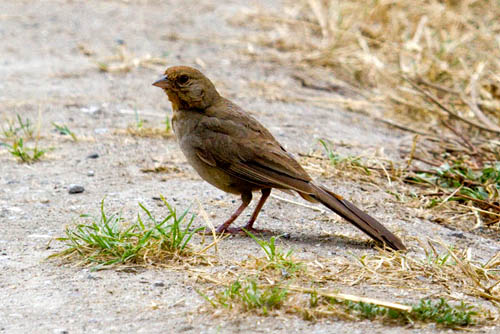
Baby Towhee

adult
Adult California towhee

Yesterday morning in a burst of energetic inspiration I spent nearly three hours trimming back all manner of growth in the garden. Trumpet vine largely, which is gorgeous and unruly. Also spent leaves from the hollyhock, and those flowers on the butterfly bushes past their prime and a few roses needing deadheading, though that’s a daily task. Looking around quite satisfied with my efforts I turned on the hose to offer a parting light spraying, a kind of benevolent and sacred gesture, setting the garden in good stead for the heat that would soon follow. I chose to ignore a modest hole in my hose, which I attempted to fix with duct tape. Hahaha. I pointed the fine spray in the direction of the butterfly bushes, knowing they would appreciate the extra attention. Glancing down at the muddy patch I’d inadvertently created imagine my surprise to see this!
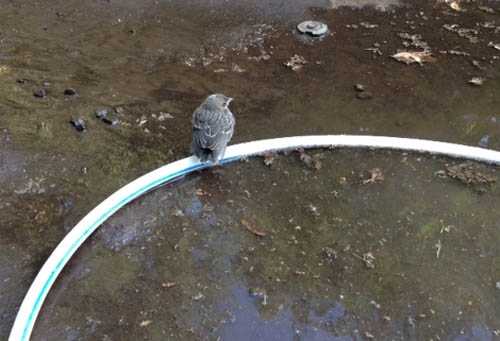
puddle

What? What? A fledgling?? What?

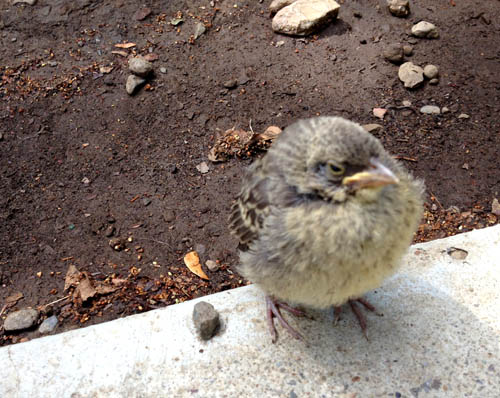
Listening to its little peep I knew at once that it was a towhee fledgling. And, in fact, it brought to mind that I’d vaguely been aware all week that I’d been listening to this very sound in the garden and half heartedly asking myself if it was a towhee or not, as it seemed to be more persistent and somehow lighter. I’d even thought to explore, but had not yet, thinking perhaps it was not a towhee, but some other bird with which I was not familiar. But here was my answer, miraculously at my feet. For while there is a towhee family that lives in my garden and has for years, I’d never ever seen one of their fledglings before. Had I not heard the little voice of this wee creature I would not even have recognized what it was. For California towhees are dark brown, plain birds, and, very obscure. I’m betting that people who do not observe their gardens closely would not even know towhees were living on their property, as they tend to live close to the ground, fly under bushes, stay largely out of sight, except for sudden bold flights directly across one’s path, but instantly in hiding. They are incredibly well camouflaged. And other than the sudden darting on wing they blend into the background very nicely.

So it was very out of character, I would have thought, for a fledgling to appear in such an unguarded open place. But lucky me!

I said a prayer under my breath and ran to get my iPhone. Here’s what I captured.
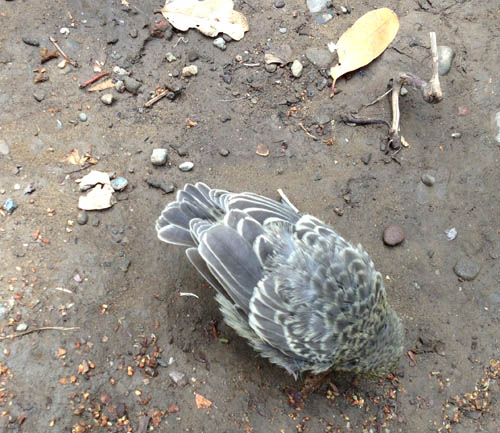
ground

I took comfort that the parents had made themselves known to me, and they did not seem alarmed, so I continued to snap away!
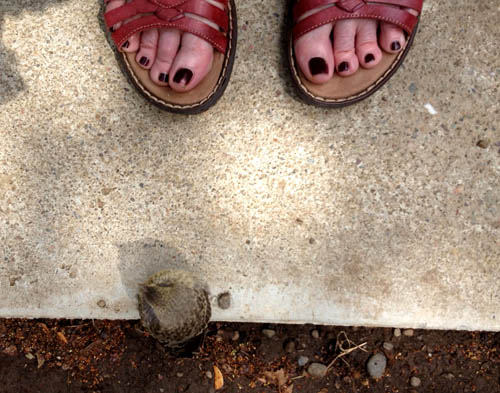
feet
sidewalk

As you might imagine, I rather thought that would be the end of my sighting. Right? But no. An hour later I reemerged into the garden and this little fellow was sitting in a plum tree, peep peep peeping! I’m thinking by now this is rather extraordinary. Remember, I’m capturing this on an iPhone. My camera is several inches away!
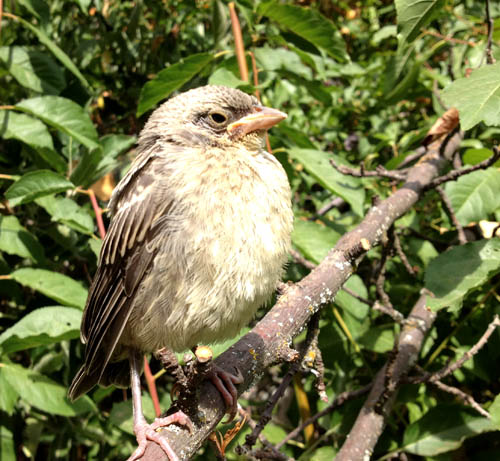
tree

The adventure did not end in the plum tree. No. Because by now my mother instincts have kicked in and I confess I am no mother bird. I lose all objectivity when it comes to fledglings, well documented on this very blog in relation to my friendship with scrub jays. So now I’m invested. So when I came out later in the afternoon, looking about for this little baby bird, I was horrified that the peep peeping was coming from my neighbor’s yard. And they have cats. And a new rambunctious terrier from the pound! That drama was rectified after finding not only my new charge, but a sibling. In a tree. Up high. (And, yes, one of their cats was already spying on them.) I forced myself into the house muttering a necessary mantra, “I am not a mother bird. I am not a mother bird.” Went and watched a movie. Whew!

But here’s the best part. At dusk I was out in the garden again, looking (of course) and was utterly amazed to find this.

This morning I went out and was gratified to hear the baby towhees making their way around the neighborhood, getting to know their new world. Parents were nearby attending their exploration. Blessings on their journey.

Love and birdie blessings,
Kathryn xoxox

Book News: Most exciting news is that Barnes and Noble buyers have placed a substantial order of copies of Plant Whatever Brings You Joy to place in their brick and mortar stores! Send me pics if you see one, will you?? ๐Ÿ™‚ Also, September 1st an excerpt of Plant Whatever Brings You Joy will be published in Maine’s Still Points Arts Quarterly. Thank you.

Hibiscus Sun Tea!

tea
Heat waves continually move across this great land of ours and we are parched, dear readers! We are bone dry! Our need for hydration always increases in summer, but this year seems particularly demanding on our bodies, don’t you find? So I’m turning to sun tea, which I’ve made since Antonia was a little girl.

The herb I’m most drawn to at the moment are the flowers of the hibiscus plant. I love the rich color and it harbors a tangy flavor that is perfect for taking the edge off this heat. These days I buy my hibiscus flowers at the health food store. But there were years I would track down jamaica in the large downtown market in Acapulco, on my annual Mexican pilgrimages, from a sunbaked Indian woman who stored them in large plastic bags, and I would bring them back up to California, always causing pause at the border crossings or customs. ๐Ÿ˜‰ Flowers! They are red flowers! ๐Ÿ™‚

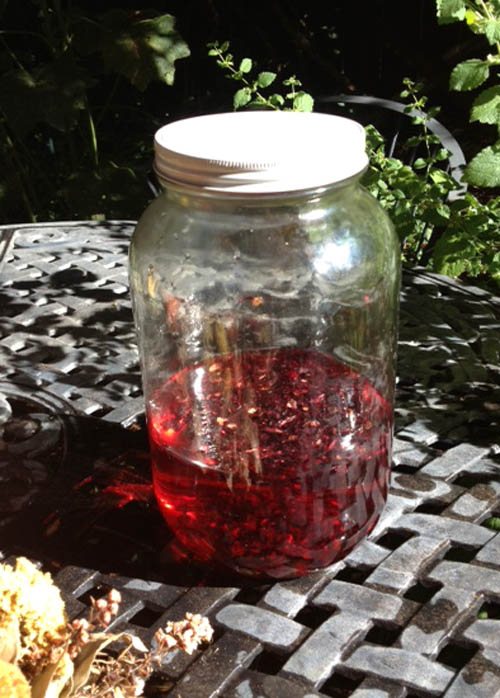
So here’s what you do. So easy. Find a large clear clean jar. Fill with amount of clear water you want. Add handful of hibiscus flowers. Stir gently. And set in the sun. Here’s what they will look like initially:

hibiscus1

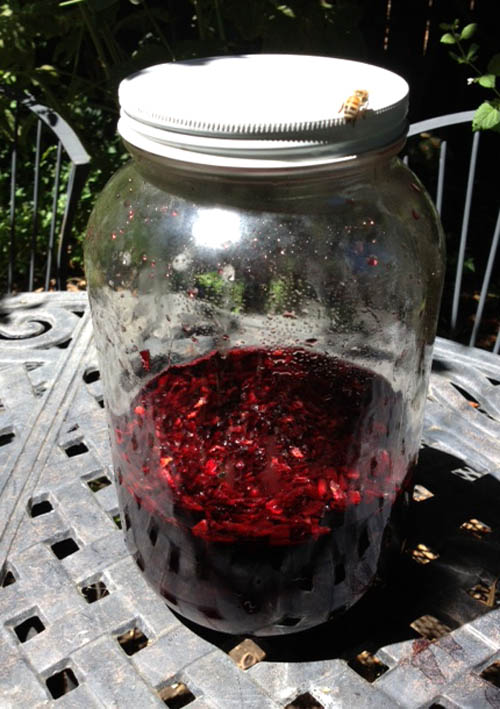
Come back later in the day. A good five hours is plenty. And you will find this lovely mixture awaiting you. Beautiful! (Notice the curious bee!) ๐Ÿ™‚

hibscus2

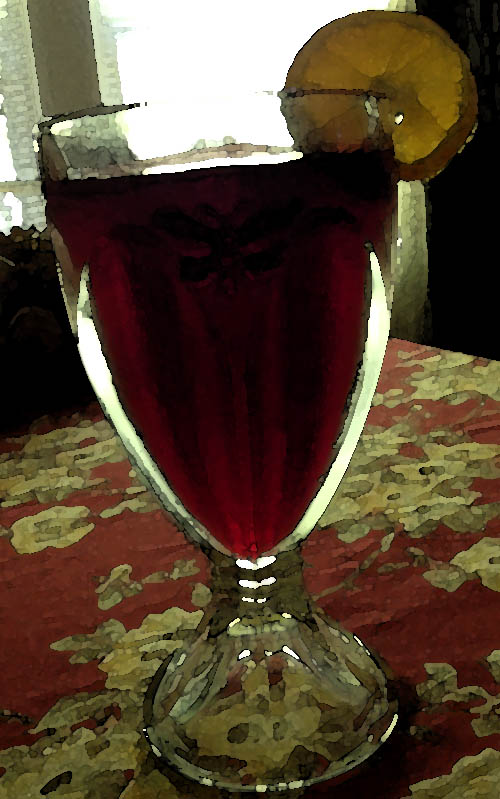
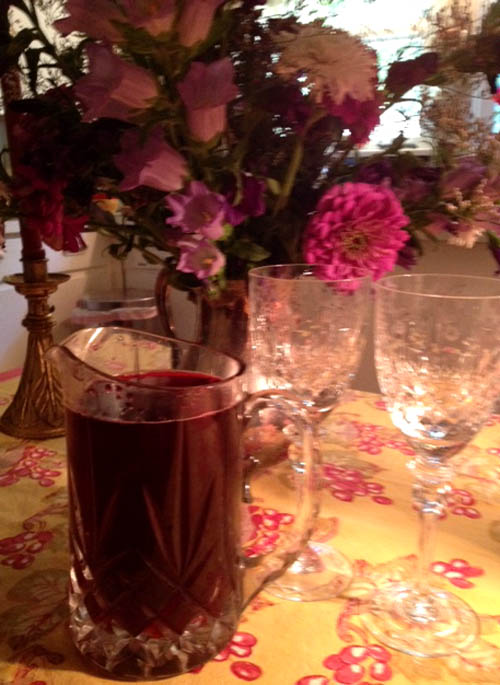
I then bring it into the house, add a bit of honey to taste, and then refrigerate. When it is chilled I can serve in all its beauty.

hibiscus3

For variety, I’ve discovered it is a delicious treat to add bitter lemon made by Fever-Tree. You can experiment. Iced hibiscus tea is a wonderful base for those large punch bowls one offers at parties, to which you might add any manner of things you might normally include in a punch, even as simple as lemon slices. The color cannot be matched! The taste so refreshing!

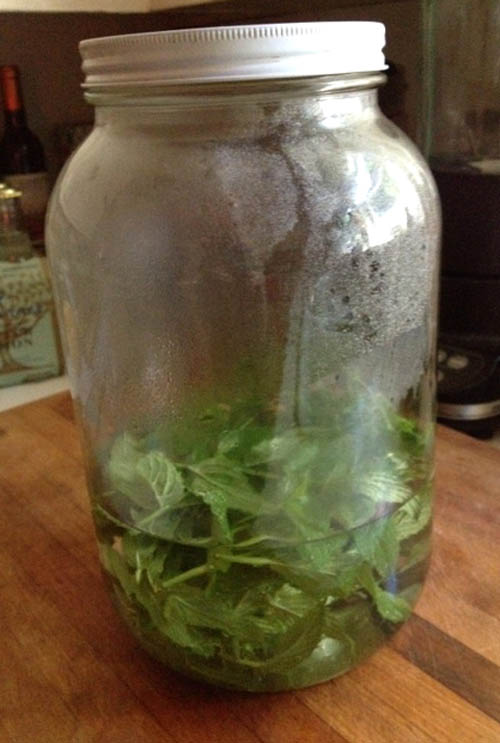
Another option in this household is spearmint, especially as it has gained ground in my kitchen garden and it’s free for the picking! I’m discovering I enjoy putting a cup of spearmint tea next to my bed at night, and should I awaken, thirsty (which does happen), I have a lovely swig of spearmint on the ready to quench my thirst. It feels very special.

spearmint

The next herb I intend to use in my sun tea adventures is lemon balm. It grows in abundance in the garden and I’m thinking I will enjoy it very much. Another possibility is using peppermint. All of these suggestions are wonderful alternatives to sugary canned drinks filled with artificial sweeteners and corn syrups (and calories!), which are delicious, beautiful, good for you, and save you money! Which herbs have you most enjoyed as summer tea?

Love and kitchen blessings,
Kathryn xoxo

Book News: Huge news! The buyers at Barnes and Noble have decided to carry Plant Whatever Brings You Joy: Blessed Wisdom from the Garden in their bookstores, making the book available to many new readers. This is very exciting, as you might imagine!

And when you have time I’d love for you to listen to my latest interview on Authenticity Radio!

Thank you!

Bee Friendly

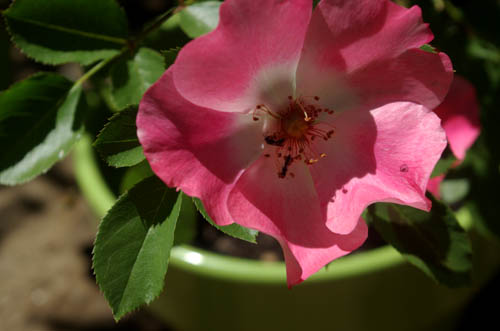
beerose500
bird bath set up for the bees

Sometimes when I’m pondering posts for this blog, now, after five and a half years of blogging I have to doublecheck to see if I might already have covered some percolating idea. This post rather falls in that category, for I did, indeed, write a post a few years ago called Where the Bees Go. But upon revisiting that particular post what I found most interesting is that while there is some overlap with the one you are about to read, I had written that post in August, when what was flowering in my garden is not precisely what is in blossom now. And I point this out because one of my personal goals is to stretch the amount of time bees will find something yummy and delicious to harvest at ever-lengthening seasons. Apparently I’m meeting some of those objectives.

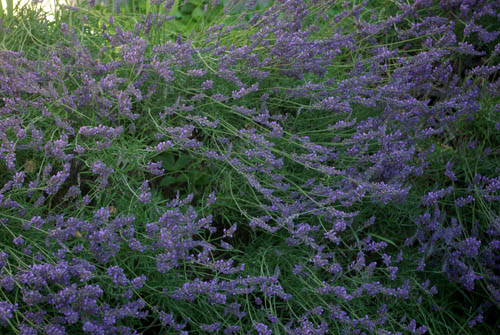
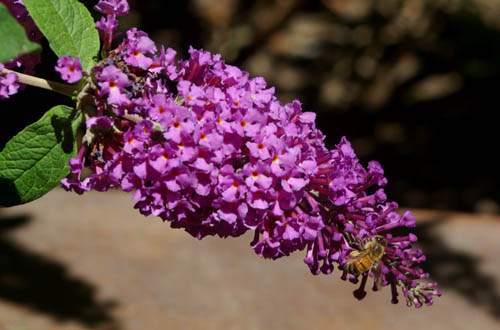
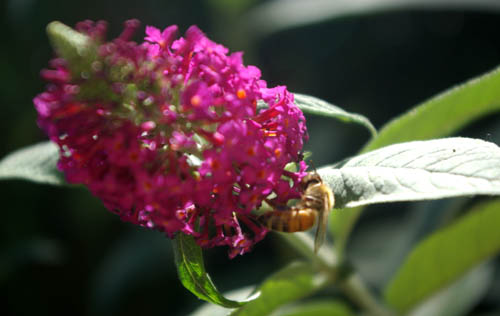
So, upon first days of summer I invite you into my garden to visit my visitors! I’ve been logging them for a few days. And this morning I actually tasked myself with the absolutely impossible guesstimation of how many bees and pollinators are visiting my garden on a daily basis. I decided 500 was a fair number, but it could be far more. What is driving up the honeybee numbers at this very moment are primarily this large stand of lavender, the true myrtle and the ever present and expanding buddleia, as there are now three to choose from, planted to attract butterflies, obviously, but far more bees responded, as might be expected. I guess. As I did not. ๐Ÿ™‚
lav
old lavender stand abuzz with bees from early morning ’till dusk

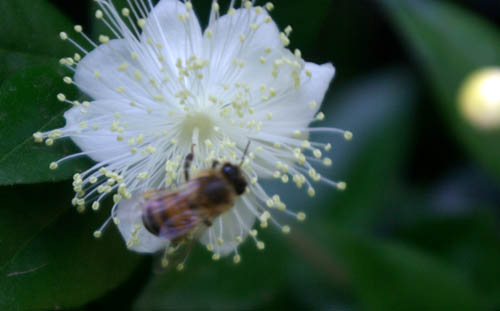
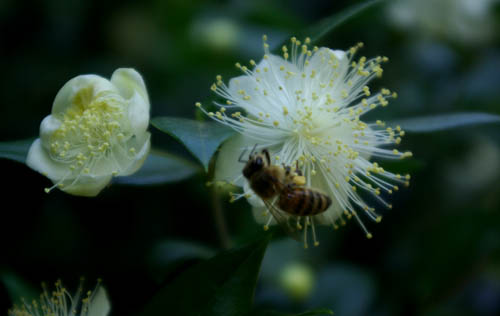
beeinmyrtle1
honeybee in true myrtle
beeinmyrtle2
another honeybee in the true myrtle
beeinbudd1
honeybee in the buddleia

beeinsmallbudd
honeybee in the newest buddleia

Some of you might have heard in the last week of the devastating news out of Oregon that the gardening service of a particular shopping mall sprayed an insecticide called Safari on their linden trees and 25,000 (that’s THOUSAND) bumblebees died within a day or so. Their bodies littered the parking lot. I am posting a particularly lot of pictures today as some small tribute to our pollinator friends, not that it makes up for such a horrendous loss, but perhaps some one or two of you might be inspired to do a bit more for your own bee visitors and this post will have made some teeny difference. I hope so. Had I been in that town in Oregon I believe I would have been compelled to walk the parking lot spreading flower petals, at very least. Since I can’t do that, I will give my gifts of writing and photography combined with my deep love for the pollinators. Thank you.

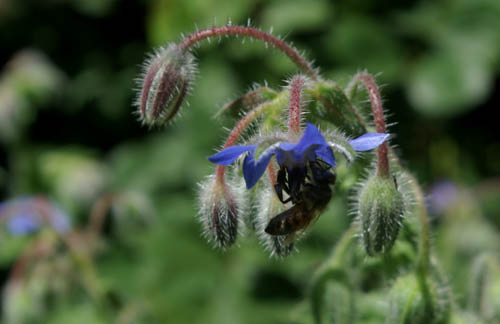
bumbleinborage
This bumblebee found the borage, tucked below some roses.

2babybeesinrose

Teeny little babies. Don’t ask me what they are called. They do the work, however. ๐Ÿ™‚

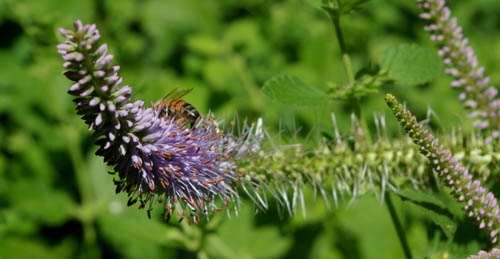
beeinmyst

Honeybees are very attracted to this plant, which I continue to call my Mystery Plant. Do you know its name? Its leaves look like pot. Yes, they do. Scared me to death when they emerged! Finally the purple spike grew and I breathed a sigh of relief. I do know that Liz Watkin at Nutty Gnome blog in the UK has one, too. She also does not know its name. Help us out. ๐Ÿ™‚ Meanwhile, the bees don’t care what it’s called. It’s yummy.

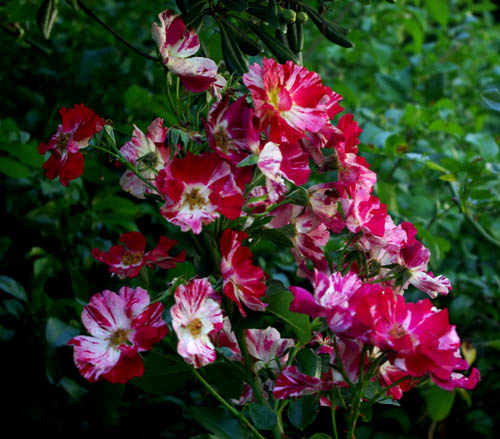
4thjuly

The 4th of July roses attract all manner of pollinators. I’m imagining if I were a pollinator these spectacular colors would attract me, too.

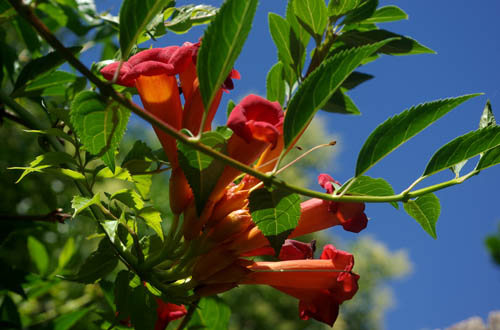
trumpet

The trumpet vine, which runs rampant on this property, is always a favorite of the honeybees.

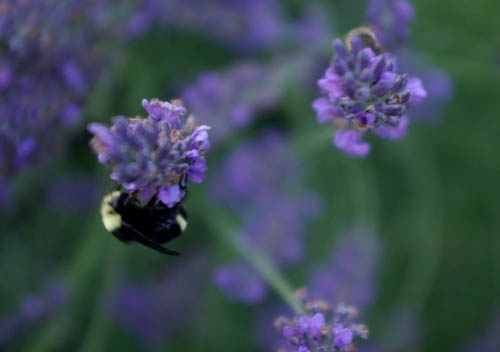
bumbleinlav1
bumblebee and honeybee frolicking in the lavender

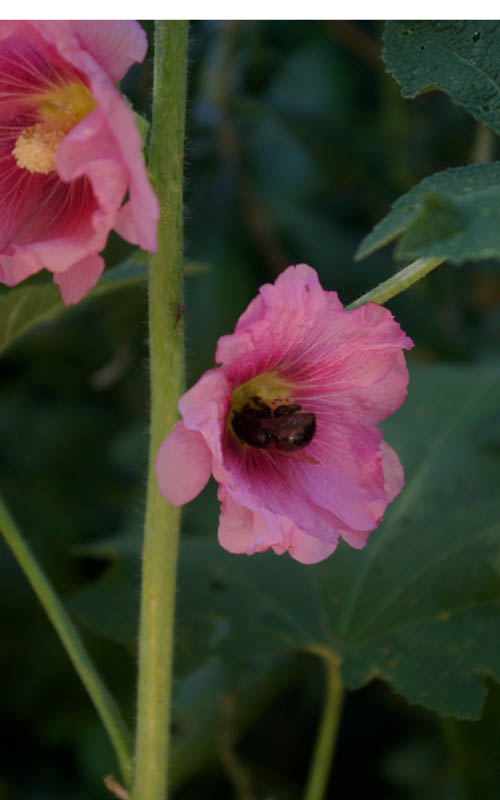
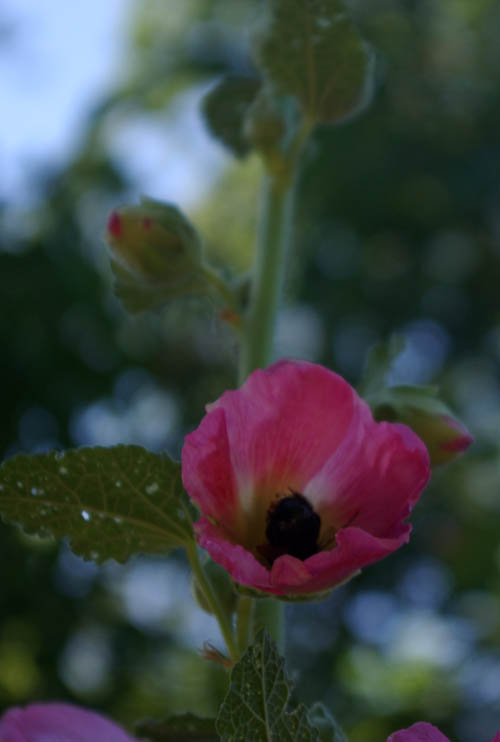
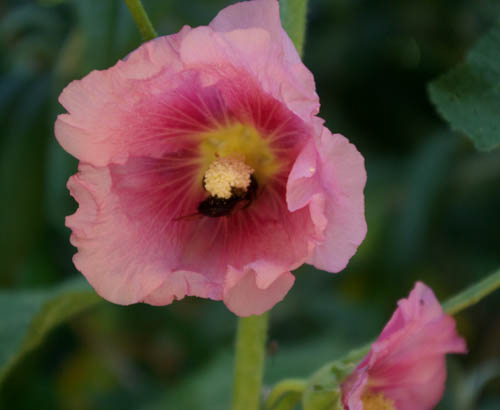
One of my very favorite observations has to do with the magical mix of bumblebees and hollyhocks. It is not unlike them to tuck themselves into a hollyhock for the night, awakening slowly to morning’s early warmth and continuing whatever they were doing before they fell asleep. Have you seen this? And of all the pollinators it is the bumblebees who seem most intoxicated with the pollen of the hollyhock. They immerse themselves with the discovery of it, wallow in it, revel in it in the greatest joy.

bumbleinholly2

bumbleinholly4

bumbleinholly3

Blessings on our bees. Thank you for whatever you might do to ensure their well being.

Love and gardening blessings,
Kathryn

Book News: On June 23rd I will be a guest on KSFO’s popular show “Bob Tanem in the Garden” at 8:30AM (PST)!

© 2008 - 2026 Kathryn Hall. All rights reserved.
For optimal viewing Mac users using IE should access via Safari.
Pixel Surgery by Site Mechanix