Courtesy of Monrovia
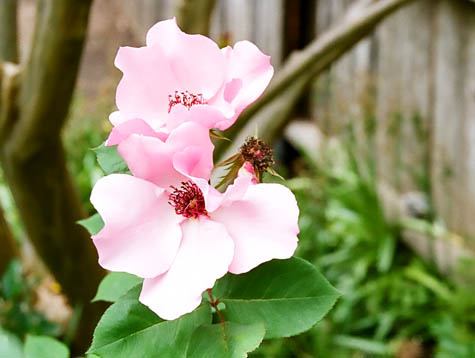
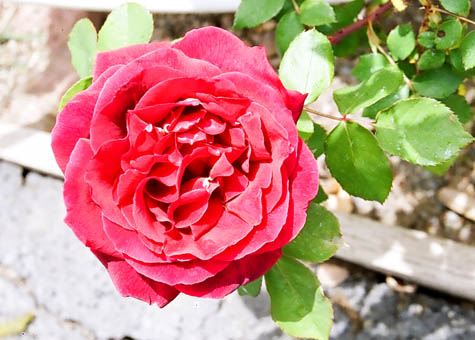
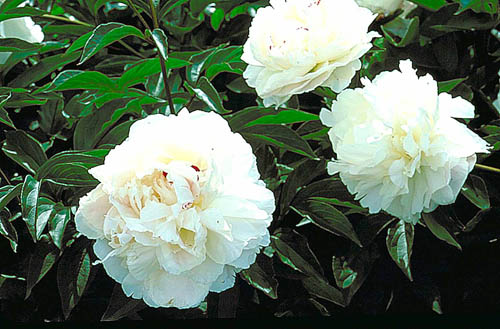
Catalyzed no doubt by the merging of full spring and Mother’s Day, this week marks the accomplishment of something I’d been thinking about and planning for a few years. I’m not sure why some things “take time.” Perhaps the sheer doing of this deepens the acceptance of my Grandmother’s no longer being a part of this Earthly existence. Regardless, I have at last arranged, after many phone calls and much research, for a nurseryman in Utah to plant a peony next to my Grandmother’s grave. I have chosen the Shirley Temple peony you see above. This plant bespeaks the beauty and elegance and understatedness of my Grandmother’s life here, while simultaneously declaring in volumes the fact that her presence demanded space, appreciation, acknowledgment and attention. The edges of this flower remind me dearly of any large silk flower she might have worn upon her bodice or hat. Indeed, do those outer petals remind you of silk tulle, or not? Always attracted to the fine, this is a flower worthy of marking her life. Christine Christensen, a remarkable woman. An artist in her own right. Once established this plant will bloom each year for many many decades next to her green marble gravestone with minimal care. Adjacent to the white flowers visitors will find these words engraved on her stone:
Many the treasures
She leaves behind
And carries forth

Synchronicity played her hand as I was making these arrangements, as she is wont to do with those inclined to be watching for her. In response to my last post on community gardening, I heard from Julie Rice, a very very distant cousin in Ohio, whom I know through my genealogy research. In this case my gggguncle Erastus married the sister of a gggrandmother of Julie’s. (I know. It’s ridiculous that I know such things, but I love the complexity and the miracle of finding these people, as do they. You can get high simply contemplating the unlikelihood.) Here’s what Julie wrote:
We have been using the back yard as a “test garden” to see what thrives with benign neglect. The successful plants are then added to the local union cemeteries, Walnut Grove (1859) and Flint (1831) which are also used as parkland, passive recreation/arboretums for the local population. Working on the Union Cemetery advisory board has been one of the most rewarding things I have ever done. It’s a joy to be adding to gardens that you know will be there for hundreds of years to come. Many of the old plantings came out of the yards of the old Worthington homes. Mostly it is historical shrubs, peonies, daffodils, iris, and day lilies that have survived and spread. We don’t use pesticides on the grass so right now Walnut Grove is a blanket of forest wildflowers, mostly violets.
What?? Within days we were on the phone, exchanging ideas and photographs, as, of course, it was the very thing I was involved in at that moment–finding which plants would survive over time in a distant cemetery. What is most extraordinary and extremely fortunate is that Julie has multiple degrees in Earth Sciences. Indeed, she is a Senior Scientist for a private firm in addition to being on the board for the local union cemetery. I found her research to be so invaluable, I am encouraging her to start her own blog documenting all she is discovering. But meanwhile, we are blessed to have access to some of her early information.
Here are two of the plants being tested in Julie’s yard, which have passed the rigorous standards they are employing (basically letting things be!) and have already been introduced into the cemetery:
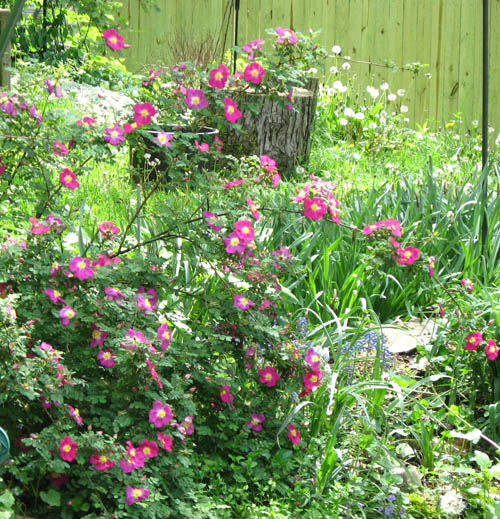
Mary Queen of Scots roses
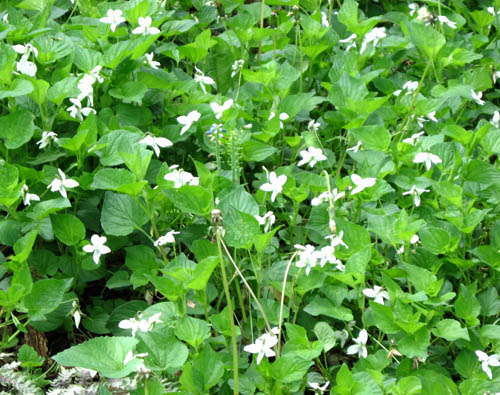
white violets
Now introduced into the cemetery are these same white violets:
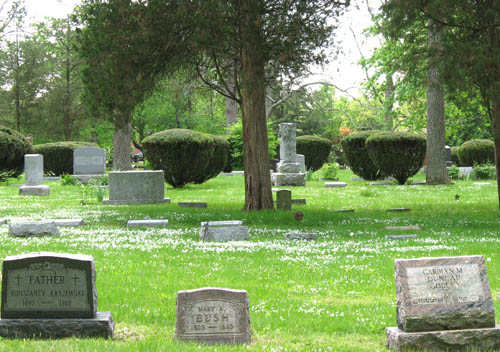
Following their blossoming they are simply mowed along with the grass. Simple.
Is this not a concept that warms your heart and action muscle? I am so enchanted with the idea that our gardening efforts might readily extend not simply to our own back yards, where who knows what will become of our dear creations eventually, but also that we have a palette and tools to contribute to those who follow, simply by cultivating plants that will endure the miles and distance, natualizing as they come and go. Lovely, lovely, lovely.
May the spirit of this intitiative whisper into many fertile hearts and minds and souls, and may it take root for the benefit of all who follow. Blessings be.
Heartfully,
Kathryn xoxo
Posted on May 14th, 2008 by Kathryn
Filed under: Plants | 20 Comments »