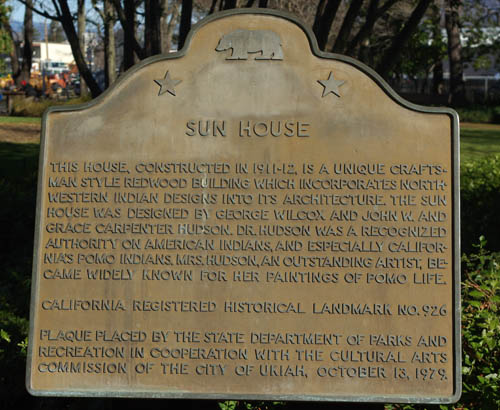
Field Trip: Sun House/Grace Hudson Museum


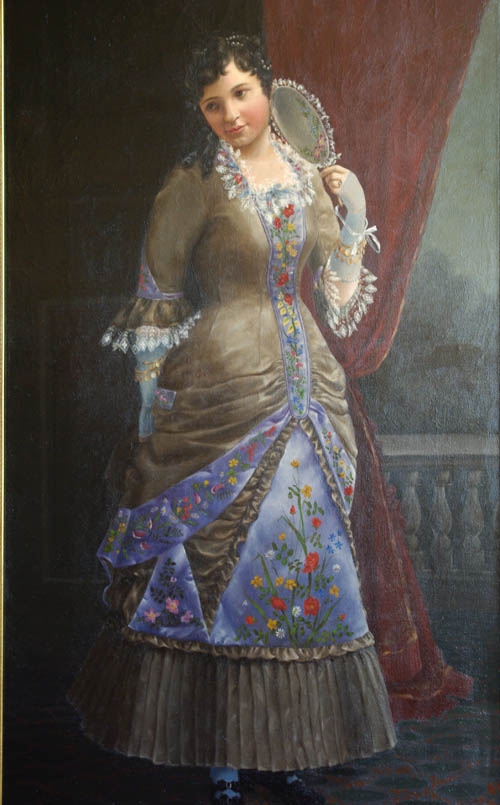
Grace Hudson, self-portrait, painted at age 16, Grace Hudson Museum

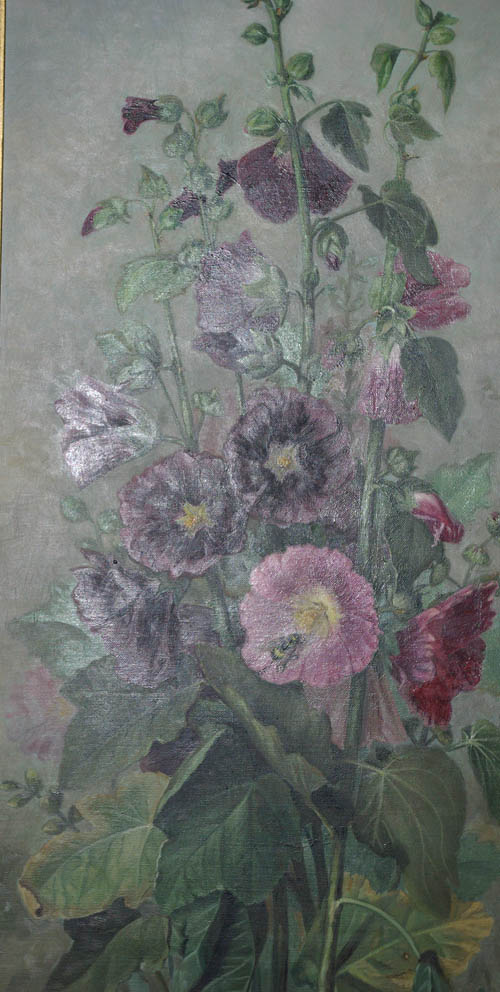
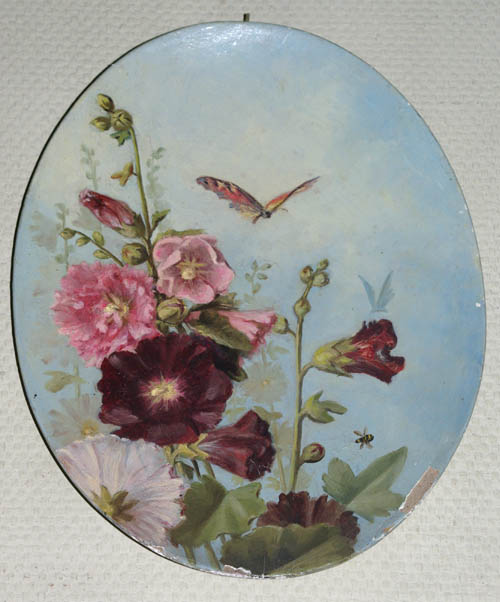
The flowers on the dress Grace Hudson (1865-1937) is wearing are a clue. She would become recognized as an exceptionally popular artist in her time whose passions included painting local landscapes, local indigenous peoples and animals. She came by this naturally. Her father, A.O. Carpenter, was a well known and respected photographer who recorded early landscapes and pioneers of Mendocino County, and her mother, Helen, was an artist in her own right, illustrated by the two lovely pieces below, now housed in The Sun House, Grace Hudson’s family home, a registered California Historical site.


Painting by Helen Carpenter, Grace Hudson’s mother


Handpainted china by Helen Carpenter, Grace Hudson’s mother

Grace Carpenter, a twin, was born in a humble one-room cabin in 1865 in Potter Valley in Mendocino County. Her talents were recognized and encouraged by her artistic parents early on. At age fifteen, she was sent alone to San Francisco to attend San Francisco School of Design where she would excel. Completing her studies, she returned to Mendocino County and remained with her parents until she met and married John Hudson, a young physician from Tennessee, whose developing love of Indian studies Grace shared. Indeed, Grace Hudson would go on to paint over 600 paintings of the Pomo Indians who inhabited Mendocino County at the time, establishing herself as one of the first female artists to be recognized among Western artists. In 1893 her painting, “Little Mendocino” went on exhibit at the World’s Columbian Exhibition in Chicago where it created a sensation and received a certificate of honorable mention. Her competitors included works by Mary Cassatt and Rosa Bonheur.

The success of this painting put Grace squarely on the radar of collectors and galleries in San Francisco. She began to paint on commission. By the end of 1894 Grace was a nationally known and admired painter. She received major national media attention and her career was firmly secured.


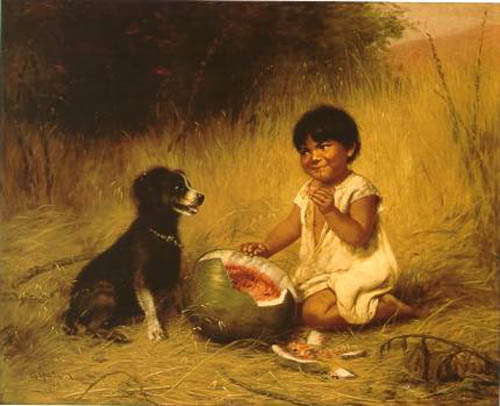
The Watermelon

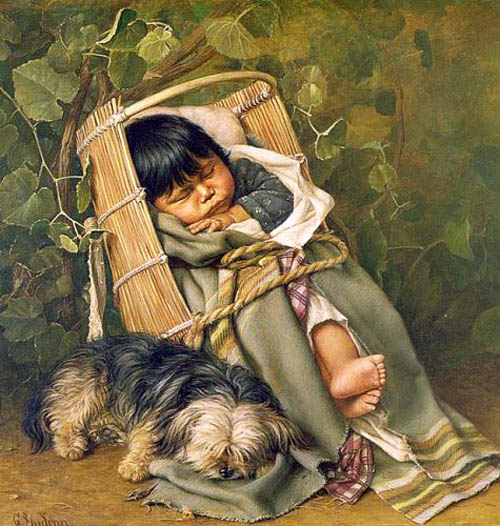
The dog in this endearing painting looks suspiciously like a McNab (closely related to the Border Collie) and as the McNab was bred first in Mendocino County on McNab Ranch, I have to wonder. Dogs appear frequently, however, with Grace’s renditions of Pomo children. This might be construed as contrived, but, point of fact, the Pomo Indians had a very high regard for their dogs.

Baby Bunting

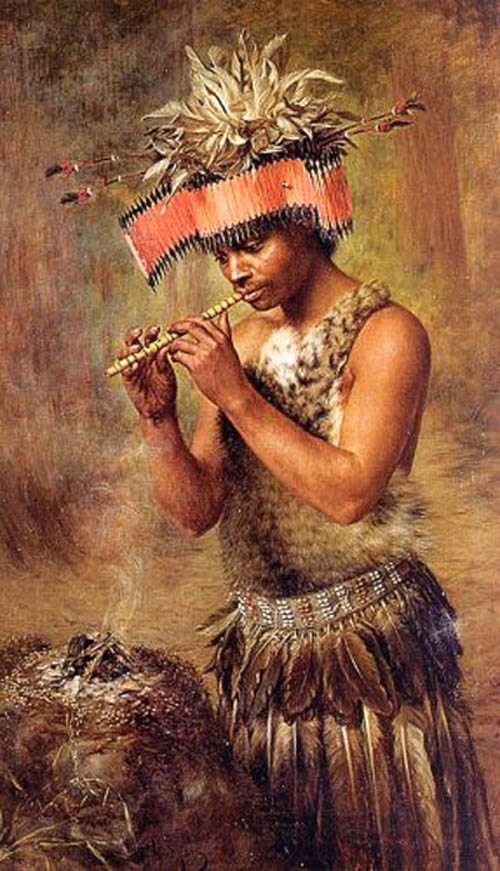
The Pomo Indians that Grace painted she knew and loved and admired. Said Grace, “My desire is that the world shall know them as I know them, and before they vanish.”

The Seed Conjurer


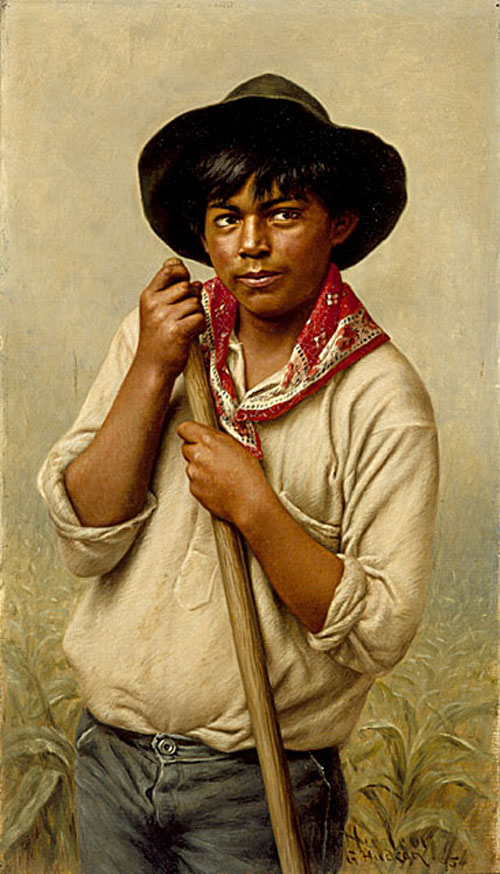
Powley: Young Man Hoeing Corn

There is an attending story about the above painting. Apparently Grace painted a Pomo woman and named the painting, “Powley’s Sweetheart.” When she was asked repeatedly, “Who is Powley?” she subsequently painted the man himself to answer their question.

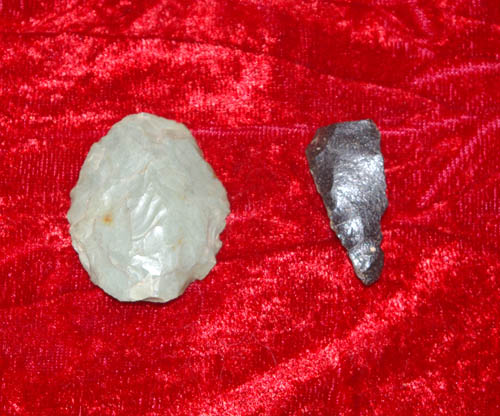
My awareness of Grace Hudson’s work began, synchronistically or ironically, when I planted my first garden in Mendocino upon returning to California after a four year quest exploring living first in the South followed by two years in the Arizona desert, outside Scottsdale. In digging up the earth for my first seed planting I “happened to” unearth two Indian tools. I was surprised and excited. And for some reason I put them in a zippered pocket in my purse and then promptly forgot they were there.

Later in the spring I decided to visit the Grace Hudson Museum which a friend had told me about and the Sunday I decided to make that journey it so happened that the staff was sponsoring a day in which one could bring indigenous artifacts to be evaluated by an expert. I sat in utter (very quiet) fascination as people revealed paintings and objects they had brought for evaluation. It took me a full hour at least to recall that I had the Pomo tools I had found in my garden with me in my purse. Very shyly I finally brought them forth, and was told they were practical tools the Indians used in their daily creative activities, one being a scraping tool, and the other looking more like an arrowhead.

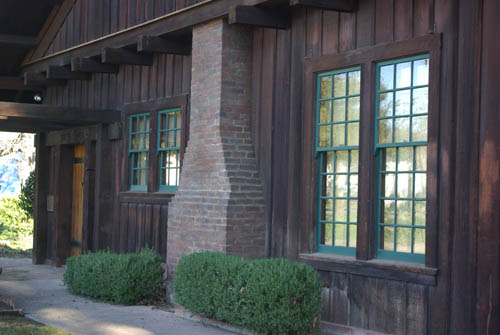
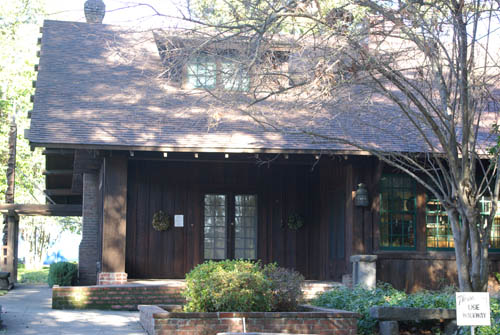
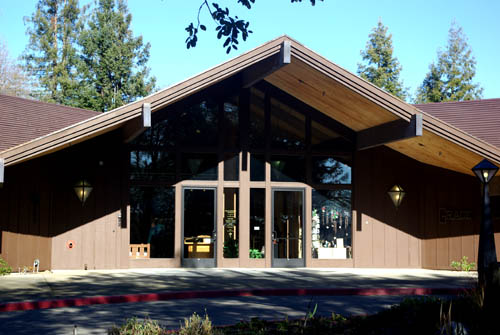
I remember feeling excited. However subsequently I was quietly informed by a woman I met who is of Pomo descent, “I have never found a single thing.” The impact of the find descended on me and I felt profoundly humbled and honored. I also felt obliged to pay attention and I have ever since. One entry point into this exploration is the blessing of Sun House and the adjacent museum showcasing Grace Hudson’s life and work. Here is the Sun House.

I find myself wondering if people actually came and left by the front door. If one takes a docent tour one is always ushered through the patio door, on the side of the house, and this feels like a more likely entry.

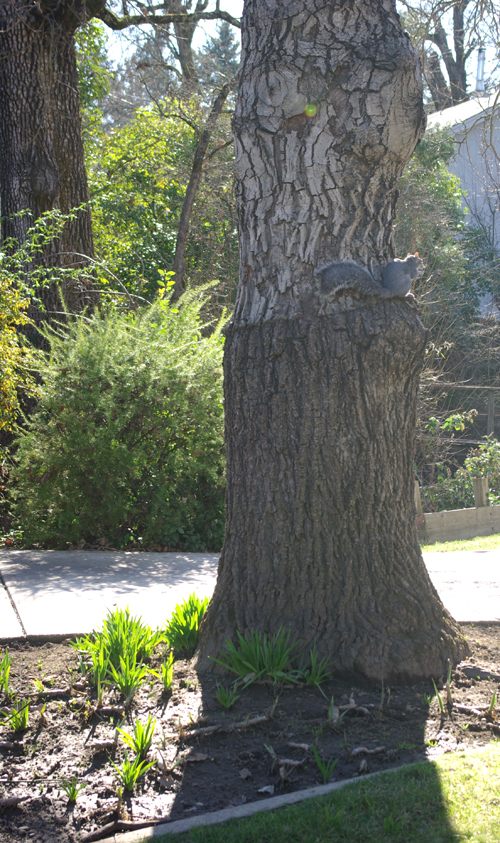
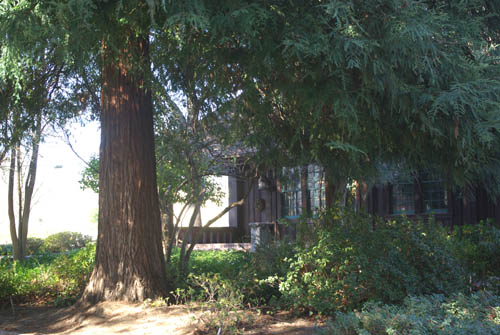
I’m going to show you another photo of this side of the house, as I want you to get the feel of this property from this perspective, influenced largely by this redwood tree which stands just in front.

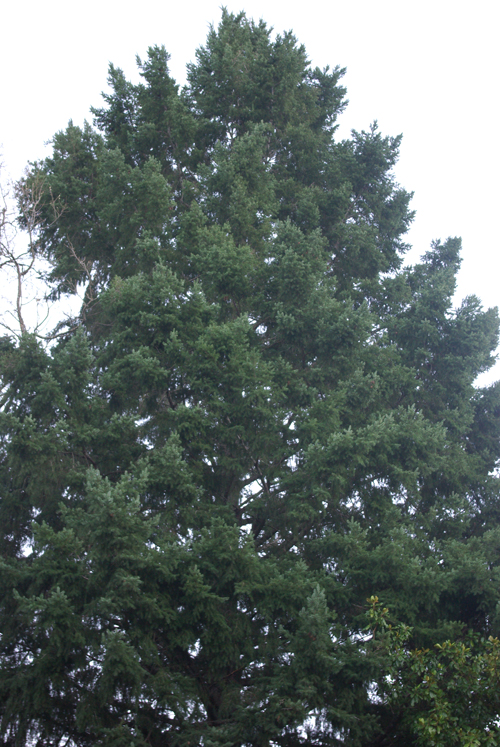
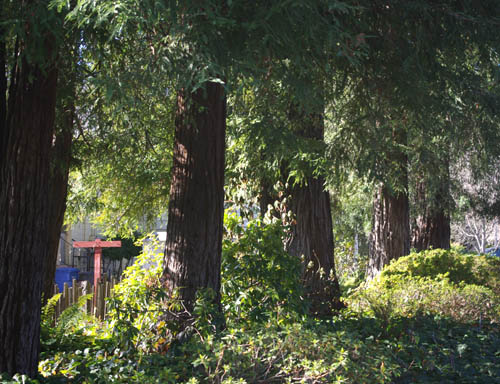
Indeed, Grace was deeply insightful in planting beloved redwoods all along the front entryway to the property, which we now enjoy. Thank you, Grace.

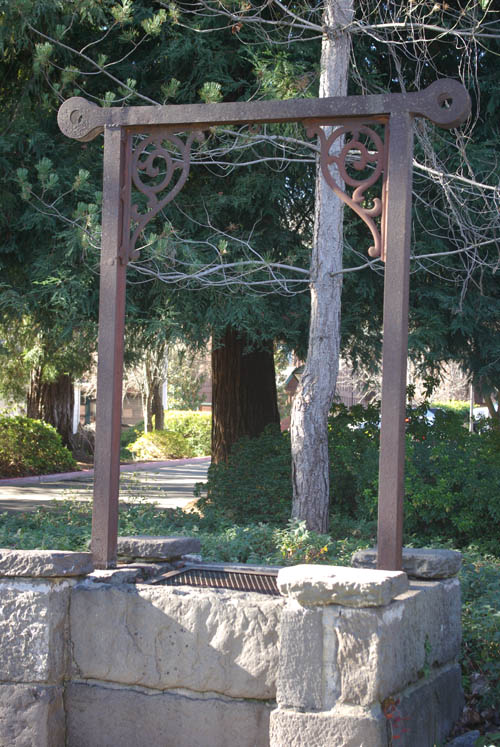
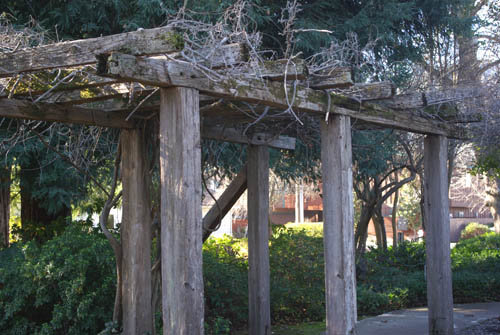
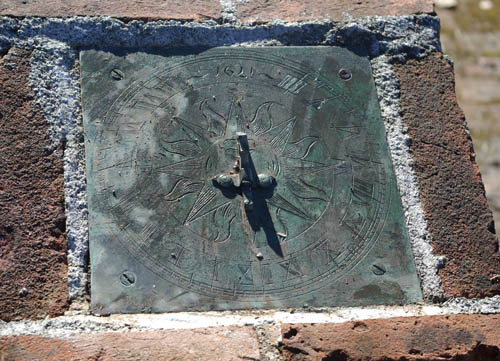
The hand of the artist reigned at Sun House. This firepit and the arbor and sundial below all speak to her domestic creativity.

Firepit

Arbor which will be awash in trumpet vine and wisteria come spring

Old sundial

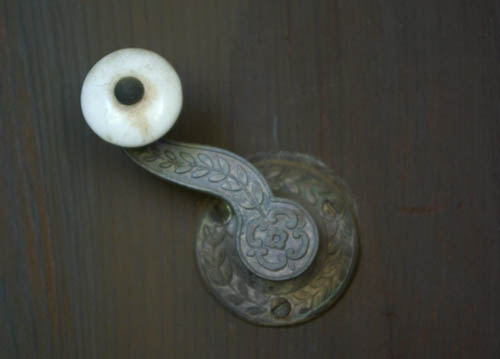
On the far side of the house I found this enchanting door ringer.

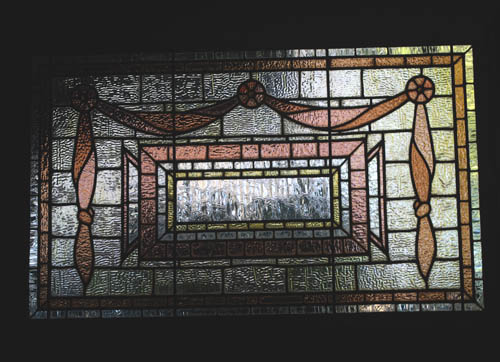
This door ringer is actually afixed to the door that gives entry into Grace’s studio, a large room with a bank of tall windows, with a stained glass window on one end.

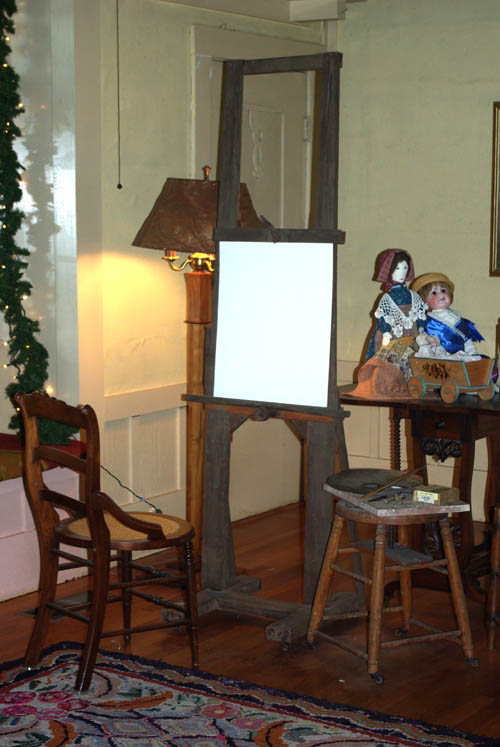
In the opposite end of the room still stands the easel Grace used in her work.

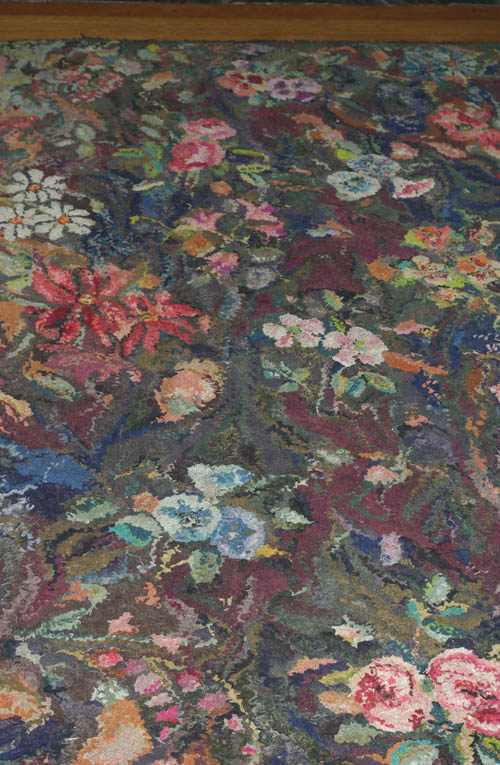
Just beneath her chair is a rug she designed and had executed, showing her obvious passion for beautiful plants, which we all share. A second similar rug, very pretty, is in an adjacent living room.

Lapping up her creative endeavors it is no large stretch to imagine that her life and work are now housed on this same property in the Grace Hudson Museum. Cheers to those who recognized and valued her work and continue to showcase it, as well as other artists’ work in the area.

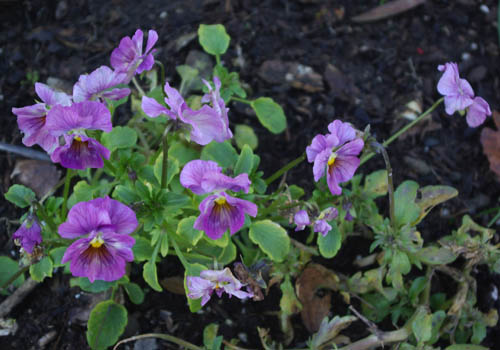
As I parted today, filled up with my renewed appreciation for Grace’s work and what she left behind a spot of color caught my appreciative winter eye.

Grace would be pleased.

With love and great gratitude for all artists everywhere,
Kathryn xoxo

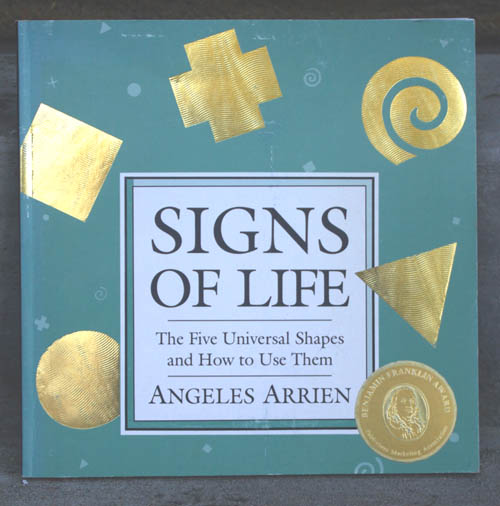
Book Review: Signs of Life

One of the many great blessings in my life has been the opportunity to study with cultural anthropologist Angeles Arrien, author of Signs of Life. Again and again I have returned to her work and teachings, and now my daughter has begun to do the same. Perhaps it was the recent recognition of the seeming importance of the circle in my life that drew me to picking up the classic favorite. It had been years since I had taken the Preferential Shapes Test therein, and thus the book held particular opportunity to renew my experience. In Signs of Life Angeles, ever seeking and honoring cross-cultural perspectives and links through the myths, fables, fairytales and values in world cultures, examines the importance of five universal shapes found naturally in all cultures, often with similar interpretations and meanings, reflecting their archetypal nature. The five shapes examined in Signs of Life are simply the circle, the square, the triangle, the (equi-distant) cross, and the spiral. As gardeners we are all well familiar with the repetition of these shapes in our natural landscapes, as are we well versed in our recreating them through our various avenues of creation.

What Signs of Life does so simply and eloquently is to invite the reader to arrange and value the five universal shapes in order of current personal preference. Is it the square you are most drawn to? Or the triangle or circle? What follows is an enlightening process whereby one may examine what this might actually mean in your life today. Why are you drawn to the square, a symbol of foundation and consistency? What might it might mean that the triangle holds no interest for you at the moment, thus placing it in the fifth position? What unfolds is a fascinating tool for not only illuminating your own current process and priorities, but also for objectively reflecting what a loved one might be focused on at the moment in his or her own process, allowing for greater understanding, respect, acceptance and compassion for those we love. Don’t you just love it?

“The soul never thinks without an image.” Aristotle

Very briefly the five shapes represent the following:

The Circle–symbolizes wholeness and the experience of unity
The Equidistant Cross–symbolizes the process of relationship and intergration
The Spiral–symbolizes the process of growth and evolution
The Triangle–symbolizes goals,visions and dreams
The Square–symbolizes stability, solidity and security

After deciding in what order you are currently attracted to the five universal shapes Signs of Life illuminates the significance of the position in which you have placed each shape. I once again found this to be a fascinating process, as did Antonia when she was here for Christmas. I will now be examining how I can honor this realization in my everyday life. And, frankly, would it not be utterly fascinating for an inspired gardener to use this book and then to employ his or her findings in planning next spring’s garden? Oh, I do hope so. I will not be one bit surprised if one of you is already thinking in terms of triangular beds for herbs or a square raised bed for strawberries. Is it you? Signs of Life might be a fun way to find out what is brewing below the surface as you are imagining your new creations! Do tell!

Love and New Year’s blessings,
Kathryn xoxo

A Seasonal Tale


“Boats, Island Bay” Rita Angus

Once upon a time there lived a wee small girl with long golden hair. She lived in a small house atop a hill overlooking a large blue bay dotted forever with the white sails of small boats that bobbed upon the sparkling water. In the center of the bay was a small island, named after an angel. Indeed, it was called Angel Island. The little girl climbed each night onto a small stool that stood below her bedroom window. The window opened to the bay like a white glass-paned door. She would throw it open wide and gaze out on the boats and smile.

At night before sleeping in her small cozy bed her mother would come into her room and sit in a rocking chair beside the bed. She would open a book that lay in her lap and she would begin to read to the beautiful wee girl, whom she loved very much.


“Bedtime” Norman Rockwell

The girl would listen very intently until the story ended. Then her mother would tuck her in with her warm blanket and say a prayer with her and she would close her sleepy eyes and go to sleep. And so it went for years.

One night the mother read from a different book. This book told stories of other children who lived very far from the Angel Island and the blue bay where the white-sailed boats traveled so leisurely upon the familiar bright shining water just outside the little girl’s window. These children wore warm coats and woolen hats and mittens and heavy socks and shoes. They went to school before the sun rose, so dark were the winter days and, indeed, the sun was already setting as they returned each afternoon to their homes. The little girl listened, and wondered.

It was not long after when the little girl found all that was familiar in her life going into boxes, or being sold. What followed was a very very long and arduous journey to the other side of the world, the world where the children in heavy coats lived. The earth was so cold there that the rivers froze over and the children in this new place skated about as if it were the most natural thing in the world to do. They spoke an unfamiliar language, rather quaint, and slowly the young girl began to make sense of it and to speak it, even. Eventually she spoke it so well no one ever dreamed she was not one of them.

One thing these children shared with the little girl was Christmas. In this country, however, the little girl was amazed to suddenly see a man with a tall cap upon his head here and there about town. As he would appear people would shout out, “Sinterklaasje!”. He wore a long red cape and held a staff in his hand, and they seemed terribly excited about his appearance.

As Sinterklaasje traveled the streets his helpers tossed cookies and candies to the children who gathered to see him.

The little girl learned that in this new country where she now lived that children left their shoes out by the fire, stuffed with straw or carrots for Sinterklaasje’s horse as he made his promised visits. This was a very exciting time for the little girl and her new friends!

After preparing for Sinterklaasje’s arrival at their homes, the children went to bed, though they hardly could sleep. And surely surely Sinterklaasje did come in the night.

Years went by and at last the time came for the little girl to return to her beloved land beside the large blue bay of her earliest years and memories. She never forgot the country so far away where she learned so many new things. To this day there is a special place in her heart for all that became part of her. And the dream lives on.

Love and holiday blessings,
Kathryn xoxo
(Special kisses for Antonia.)

© 2008 - 2026 Kathryn Hall. All rights reserved.
For optimal viewing Mac users using IE should access via Safari.
Pixel Surgery by Site Mechanix