Butterfly Gardens: Host Plants vs. Nectar Plants


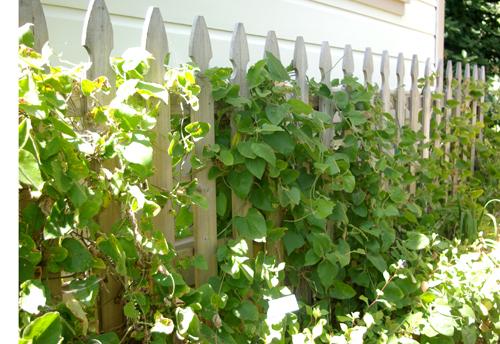
Dutchman’s pipevine

How I managed to garden all these many years and not know the difference between host and nectar plants for butterflies is beyond me. Honestly? I’d never really thought about it, primarily because no one really brought it to my attention! It was only through my recent field trip to Hallberg Butterfly Gardens and the subsequent research that I did that it truly dawned on me that there was a very big difference. Did you know? Maybe you did. Maybe not. But here are some highlights from what I discovered.

Let’s start with the most extreme example I encountered, but I must forewarn you that I’m beginning to believe this is not as uncommon as one might think. The above photograph, taken just in front of Louise Hallberg’s home, where she has lived for the last 92 years, is of the pipevine, which really began her whole journey into the world of butterflies. Louise’s mother planted this pipevine, but so very long ago that in spite of being very slow growing, has, over the decades made its way throughout the gardens surrounding Louise’s home. The magical result? Pipevine swallowtail. Why? Not because butterflies are drawn to a flower. No. Butterflies are drawn to the leaf because that is where they need to lay their butterfly eggs. (Yes, did you ever even think of a butterfly egg? No, neither had I.) Because when those little eggs hatch (the ones not eaten by neighboring spiders, etc.) they are going to be hungry little baby caterpillars. And pipevine swallowtail caterpillars need to eat pipevine leaves for six weeks! Period. As in, that’s it. If they don’t have pipevine, they will not survive as a species. After they eat and eat and eat, each one creates a little chrysalis, hopefully in a safe place, where they will remain for nine months! True story. As most of you know the butterfly that emerges is apt to live a couple of weeks. Please let that sink in. Because we need to begin to exponentially let in those little details in order to begin to understand just how fragile the world of butterflies is. Yes, indeed. Very fragile, indeed.

It would seem, if my newfound knowledge and careful contemplation is correct, that gardeners tend to be told that in order to enjoy the beauty of butterflies we are to plant certain flowers. Butterfly bush comes to mind, right? Sure enough, I did that, and it worked. I just spied this beautiful Western tiger swallowtail on the butterfly bush I planted last year, and, boy, was I happy! It did rather break my heart to notice the big tear in one of her wings, however. Poor dear.

Western tiger swallowtail

This Western tiger swallowtail has come to my butterfly bush to drink nectar. This you most likely knew. This part we are routinely taught, most likely, my dears, because nurseries sell us these kinds of plants to “attract butterflies” and we are more than happy to oblige.

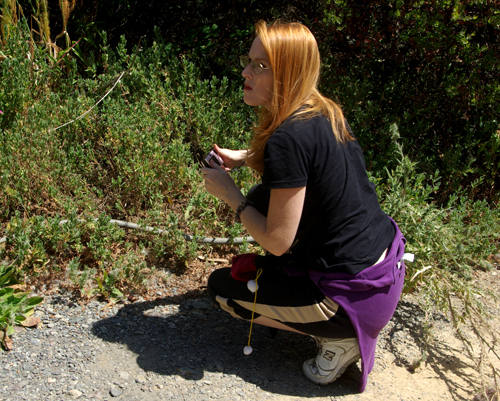
But what about the host plants? Uh, maybe not as pretty? But maybe so! Being in the butterfly meadows I took advantage of Louise’s vast knowledge and took fastidious notes, which I later returned and verified last weekend, taking Antonia along, who readily caught the Butterfly Bug and was soon on her knees with her camera!

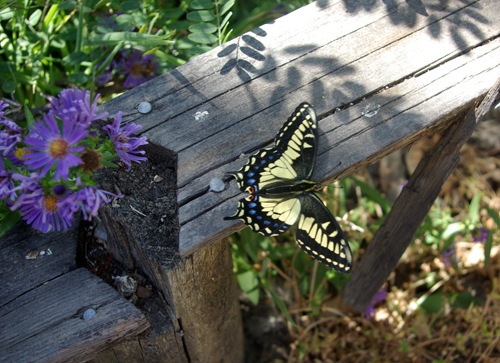
A family from the East Bay joined us and Louise took us on her butterfly rounds, initiating our tour with a very special treat–releasing an anise swallowtail she had protected as a caterpillar in a butterfly cage, who had just recently opened her wings. Gorgeous creature!

anise swallowtail

The anise swallowtail lays eggs on fennel. Those of you in the right locale might want to consider including fennel in your gardens to help ensure the survival of the anise swallowtail. Louise says they are on the decline. She attributes the decline of butterflies to loss of habitat, global warming and pesticides. She knows there could be other factors, but in her 92 years of contemplating her property, that’s her best assessment, folks. I take her word.

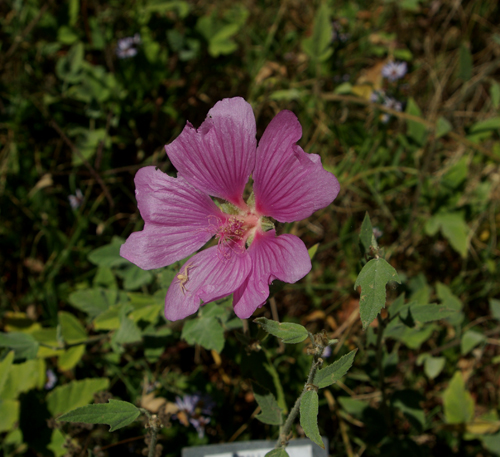
As we moved about the property I verified my original notes. Yes, the West Coast lady lays her eggs on wild mallow.

mallow with little companion spider

Western tiger swallowtails and mourning cloak butterflies both like willow for laying their eggs. The red admiral prefers stinging nettle. The humble plantain is home to the eggs of the buckeye butterfly. West Coast lady also likes hollyhock. I was relieved to hear this, as hollyhock lives in my garden in abundance. My guilt subsided when I heard this, as I have been integrating how lopsided my support of butterflies has been over the years. I need to add native plants, after carefully researching which ones are needed by which butterflies. I must do my part.

Now. The other half of the equation is so much easier, and probably most of us have been supporting the nectaring needs of butterflies for a long long time. Louise says they do, indeed, favor the butterfly bush and the salvias.

hot lip sage

blue sage

But here are others I found on her property you might want to consider including, if you have not already done so, and want to offer sweet food for butterflies who have emerged from their long journey of becoming.

aster

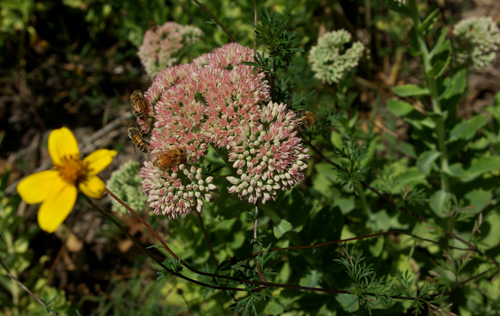
pink sedum

Louise says the bees adore the sedum, and, indeed, it seemed so.

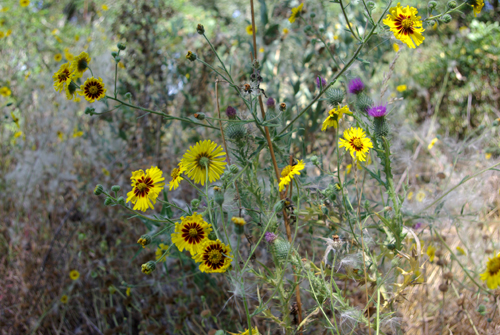
showy tarweed

“It’s sticky,” says Louise.

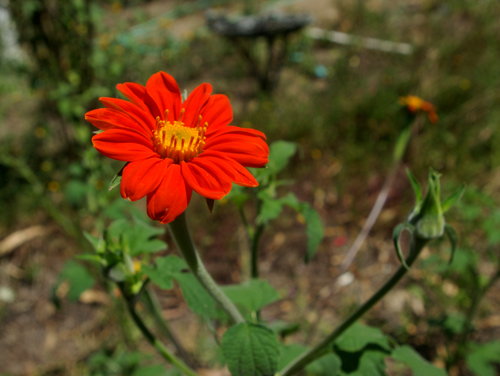
Mexican sunflower

Apparently the Mexican sunflower is a favorite of the monarch butterfly. I’d love to see that!

scabiosa

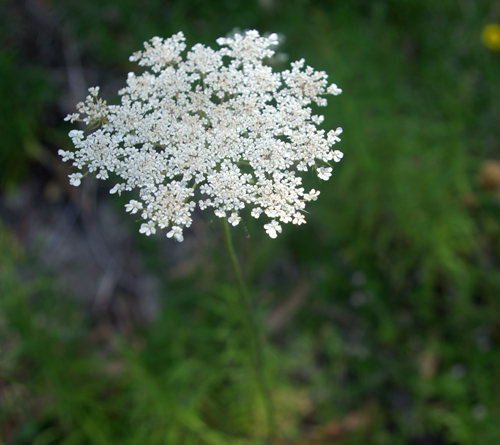
Queen Anne’s lace

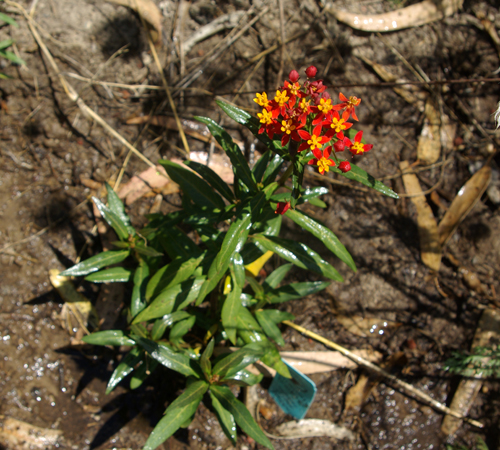
milkweed

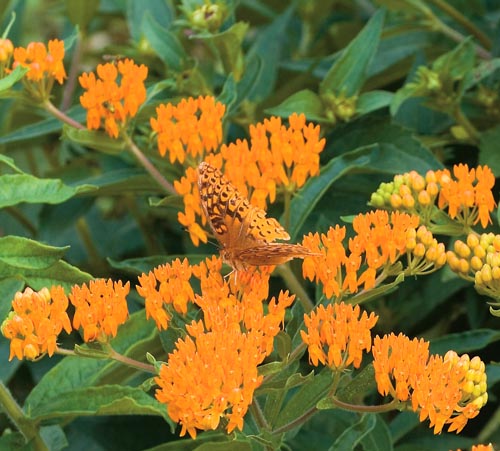
Note that milkweed can be a nectar food and a host plant. Monarch butterflies use them as host plants.

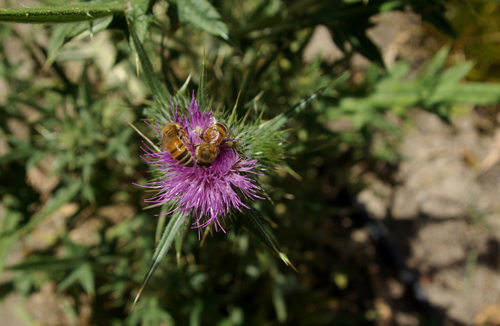
thistle

Thistle is a plant that the California dogface likes to nectar on, so we are hoping the ones Louise released last week will find these plants, feel at home, overwinter, and establish themselves next spring. Oh, may it be so!

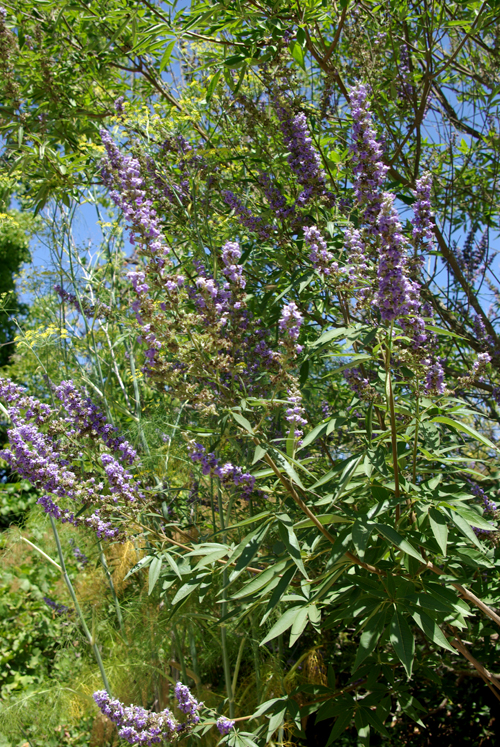
Returning to the house I spotted this plant, thinking it was a butterfly bush, but Louise corrected me by telling me it was vitex.

vitex

Here is what I’m hoping, dear readers. I’m hoping you will become inspired perhaps during the winter to make some time to discover what the native butterflies are in your locale, to find out what their host plants are, and to pick one or two, include these host plants in your garden and see if you can help ensure that your local butterflies get both the host plants they need for laying their eggs as well as the nectar plants I bet you have already established in your gardens. You might be surprised that one of the “weeds” you have been routinely pulling up is actually a host plant to some lovely butterfly, desperately needing it for her eggs. (Scary, huh?) Please do write to me and let me know. Please triple check your research. The more I learn the more I realize that many butterflies have an very narrow spectrum of host plants they can utilize in spite of sites touting that the butterfly can use dozens. Not so, says Louise. By adding your knowledge to the comments section, specifying your locale and what butterflies live there and what they need on BOTH ends, you really can contribute to the well being of one of the most beautiful of creatures we are blessed to share our planet Earth with. Thank you for your loving care and concern.

Love and caterpillar blessings!
Kathryn xoxoo

Footnote: Just heard from a fellow named Jeffrey Caldwell, a friend of Louise’s and he had posted a list of plants in CA that would attract mama butterflies here.

Field Trip! Hallberg Butterfly Gardens


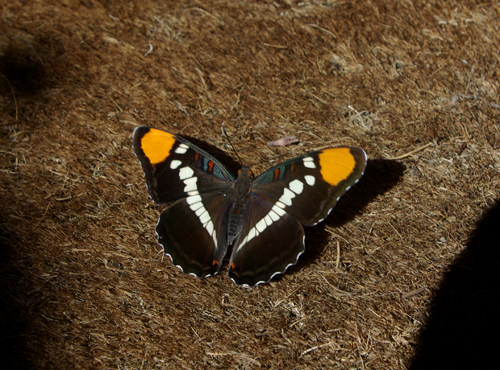
California Sister Butterfly

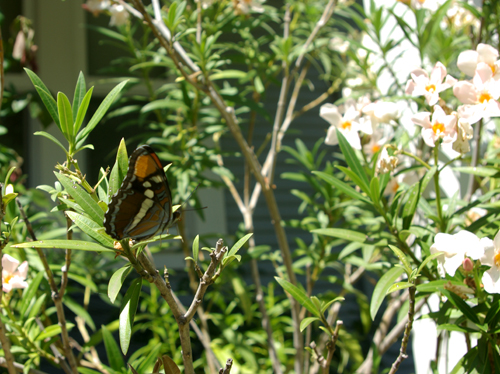
Wouldn’t you know it, dear readers? As soon as butterflies were clearly on my radar and I’d made an appointment to visit the Hallberg Butterfly Gardens in Sonoma County, this beauteous creature greeted me at my front door. I was, as you might imagine, ecstatic! I was even more ecstatic during the next fifteen minutes or so when it played about my head, clearly checking me out, then obligingly landed on a mat on the front porch allowing me full access to photographing him. (Yes, he’s a boy.) I was beside myself with joy. He also gave me a side view when he landed in the oleander. Thank you, dear soul butterfly! You have only an inkling of how grateful I am for your propitious, synchronistic visit. (I was clearly on the right road.)

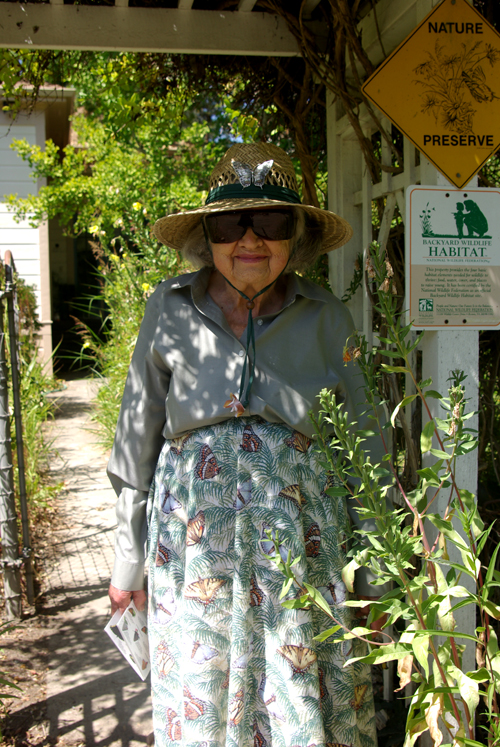
Mind you, this is the first I have ever seen on this property. Thus it was with great joy and optimism I set out yesterday morning for Hallberg Butterfly Gardens, where awaiting me was the very special 92-year-old Louise Hallberg, and don’t you know I was thrilled to have her greet me at her garden gate! California Sister, indeed!

Louise Hallberg
Isn’t she wonderful? Yes, she is! After a warm greeting we set off down one of many paths to a meadow below. Silly me, wearing clogs, and barely able to keep up with Louise! Here is the meadow where we shortly arrived.

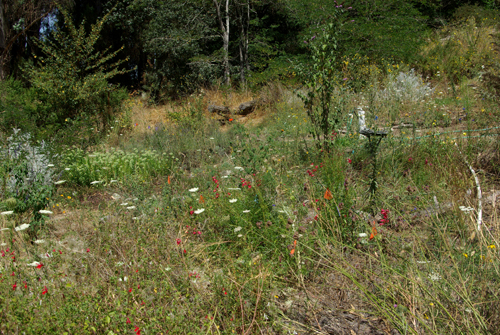
These butterfly gardens were carefully designed through the years through Louise’s knowledge and guidance, and through hired workers, volunteers and grants. As gardeners we would be more apt to call them butterfly meadows, and I think that is an important distinction, and I will be telling you why over the next few posts, as I am currently mining a line of thought I think most important to share. The subject of butterflies is far too complex in this day and age to be relegated to a single post, so today I’m going to focus simply on the butterflies I was able to see yesterday on a hot August afternoon. Down in the first meadow while I was able to learn much about host and nectaring plants I saw only honeybees and bumblebees on hand. After taking many photos Louise led me back up to a guest barn, the doors flung open.

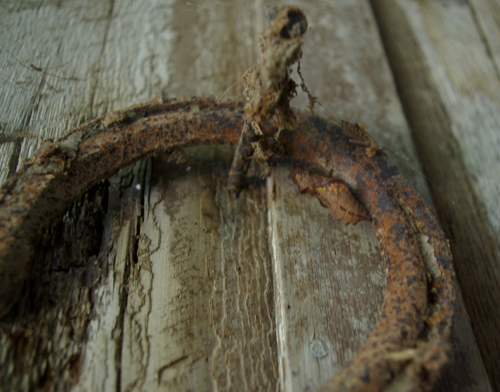
“Do you see a horseshoe up there?” she said, pointing just inside one of the doors.

“Yes,” I responded.

“And do you see a chrysalis?”

Confused, I took a closer look, and sure enough, a chrysalis was attached into the bend of the horseshoe!

Louise explained that the chrysalis I was viewing was a pipevine swallowtail butterfly and that it would remain as a chrysalis for nine months. I was shocked. I had no idea there was such a disparity among butterflies and that while some could emerge in weeks, some, such as the anise swallowtail, might stay in a chrysalis for years. What a metaphor!

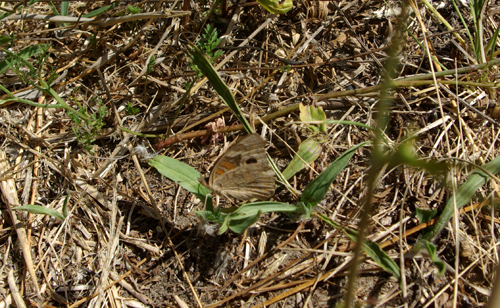
After purchasing a very good guide to local butterflies we continued toward the main house, where I was delighted to spot this buckeye, well camouflaged.

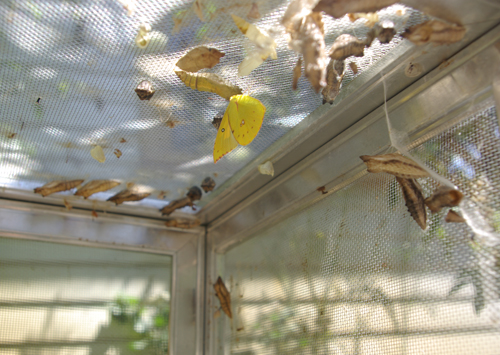
Louise then invited me into a side room at the back of the house where she has lived her entire 92 years (!!), to share a very special event. Apparently a man who knew Louise had brought her caterpillars of the California dogface butterfly, California’s state butterfly. This was very special, as, in spite of their status, they are rarely ever seen. Louise said she had only seen one sighting, ever, in East Sonoma County! Louise provided them with amorpha Californica, false indigo bush, which fortunately she has growing, as it is their only viable larval plant food, on which they feasted, and then they ensconced themselves in chrysalides, and, lucky me, I had arrived as they were emerging, two months after their arrival! Oh, thank you, thank you, thank you!

I felt very honored when Louise generously offered to release one while I was there, so I could witness this process. Her helper, Catarino, carefully removed the cage out into the front yard. We opened the front door to the cage, and whoosh, out flew a male California dogface, landing on a nearby Queen Anne’s lace. Here he is!

After these adventures I was ready to make my departure, not wanting to tire Louise. But, no. She only thought a drink of water would be appropriate, and then she wanted to take me on another path. Okey dokey, Louise! I’m coming! Off she went.

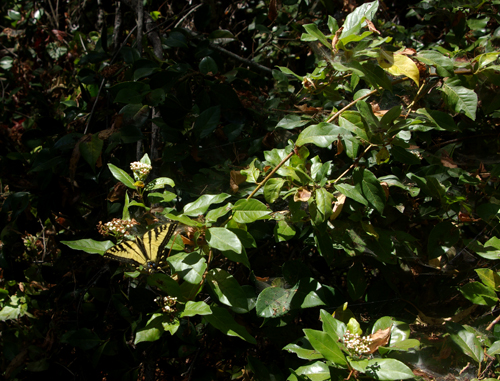
And good thing, too. Soon there were two kinds of swallowtails dancing about our heads. One flew off on his own adventure, but one got curious and made himself available to us, first from underneath…

Western tiger swallowtail

And, then, upon circling a few more times, decided I was worthy of being trusted, and landed close enough for me to catch him from the top.

Wasn’t this a magnificent way to wind up a perfect afternoon?

Next post I want to show you some of the many native plants I learned about under Louise’s generous and abundant tutelage. I will be happy to share.

Thank you for the visit, dear ones.

Love and butterfly blessings,
Kathryn xoxo

Flower Carpet at the Biltmore


A few years ago I pulled up my deep California roots and headed for Asheville, North Carolina in the beautiful Blue Ridge Mountains. Proof positive I was there is the photo above of a lovely row of Bradford pears, one of my favorites taken during the two years I was there. I have kept my association with Asheville alive through tendrils that reach through social media, email and telephone. So I was quite delighted to discover recently that the Biltmore Estate was about to feature its annual Flower Carpet event, and made the decision to invite you on a virtual tour, even though it’s been several years I myself was at the Biltmore, having made the journey in the company of my father when he came to visit.

the Biltmore House at nightfall

I am imagining many of you know the history of the Biltmore Estate, and surely many of you have visited the grounds. The Biltmore was the vision of George W. Vanderbilt, who opened the house to his family and friends on Christmas Eve in 1895. Imagine! The Biltmore is essentially a 250 room French Renaissance chateau, and the estate includes over 8,000 acres including, yes, the gardens, originally designed by famed landscape architect Frederick Law Olmstead. [Clickity click recommended!]

And now that I have thoroughly whetted your appetites, dear gardnerers, let me just put you over the top with this amazingly beautiful image of last year’s Flower Carpet at the Biltmore!

Biltmore Estate continues this marvelous annual event, based on a very old Indian tradition, beginning August 14! This year’s Flower Carpet design is a fleur de lis pattern based on a stone pillar found on the outside of Biltmore House. The plants being used in this year’s flower carpet include salvia, begonias, marigolds, zinnias, and dusty miller. [I promise to post a pic at the end of this post once they are available!] This wonderful display, featuring more than 100,000 plants on nearly one quarter of an acre is available to public through August 30th. More details here.

And if journeying to Asheville is just a bit of a stretch for you, here’s a treat: a vid that will give you an idea of how much work went into the Flower Carpet! Aren’t you glad they got to assemble it in the haze of an overcast sky? How amazing to have participated! Enjoy!

Love and gardening venture blessings!
Kathryn xoxo

As promised!

Flower Carpet at the Biltmore ’09

© 2008 - 2026 Kathryn Hall. All rights reserved.
For optimal viewing Mac users using IE should access via Safari.
Pixel Surgery by Site Mechanix