Book Notes: The Encyclopedia of Herbs

Herbcover

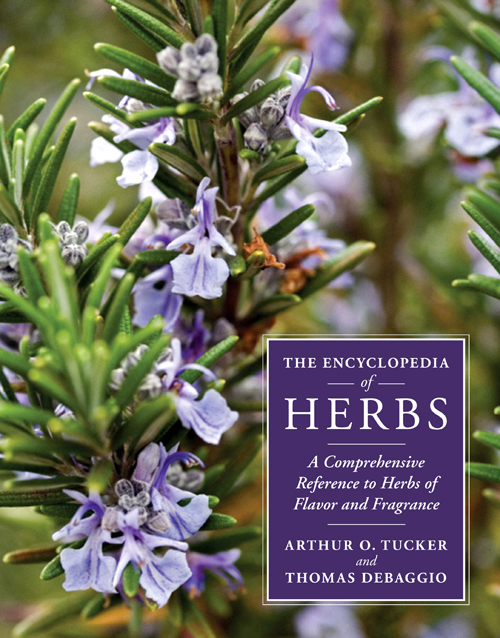
Ever a fan of reference books I was delighted to see Timber Press had published The Encyclopedia of Herbs, subtitled with the promise to be A Comprehensive Reference to Herbs of Flavor and Fragrance. Well qualified authors Arthur Tucker, professor of botany and Thomas Debaggio, founder of an herb farm and nursery, do not disappoint. It is both interesting and useful that the book focuses on culinary herbs, as this eliminates the sometimes burdensome and overwhelming task of identifying the medicinal values of the thousands of plants we have available to us for healing. What is also most constructive is that the book is highly readable, even though based in solid sciences. However this observation, taken from the introduction, will kindle the heart of gardening readers.

“We rely on botanists and agricultural scientists for an understanding of herbs and their cultivation, and we believe their research provides useful guidelines, but it is not infallible and should not be read as the last word on the subject. Every spring brings new revelations to the observant gardener, as well as to the careful scientists.”

The Encyclopedia of Herbs is arranged in two large sections. The first provides a very pragmatic overview of how to grow, harvest and preserve herbs. This will appeal to all those now engaging in growing one’s own food so often without the benefit of family members on hand to pass along how we do that exactly. And I am very much looking forward to utilizing the second section, which is an excellent guide which will vastly assist me in identifying, cultivating, caring for and using the herbs I’m most likely to use in the kitchen. At present I always have on hand, throughout the year, rosemary and oregano. I’d have to say other efforts, at, say, sage, and thyme, have not been as successful, though, granted, part of that was the aggressive nature of the oregano which has not only taken over the very large pot it’s in, but has now spread itself at the foot of my arugula and chard. Good to know! So I have yet a lot to learn, dear readers, in this department. How about you?

Following are some of the illustrations that grace The Encyclopedia of Herbs. You will find this book contains all the herbs you are familiar with, offering a good starting point, and then many herbs the authors are inviting us to consider using, and why. I think this book could keep us busy for a long time. It’s certain to take its place beside Back to Eden (old favorite) as an invaluable addition to my garden library.
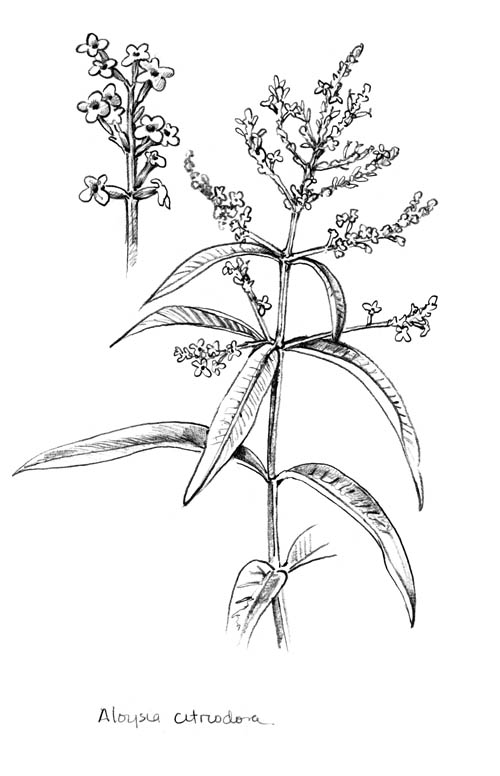
lemonverbena
lemon verbena

I learned this year from the gardener at Frey Winery that you can take cuttings from this plant, and I tried, unsuccessfully, but it’s one I want to establish in the coming year. I adore the tea in the evening. If you are not familiar, it’s extremely pleasantly aromatic.
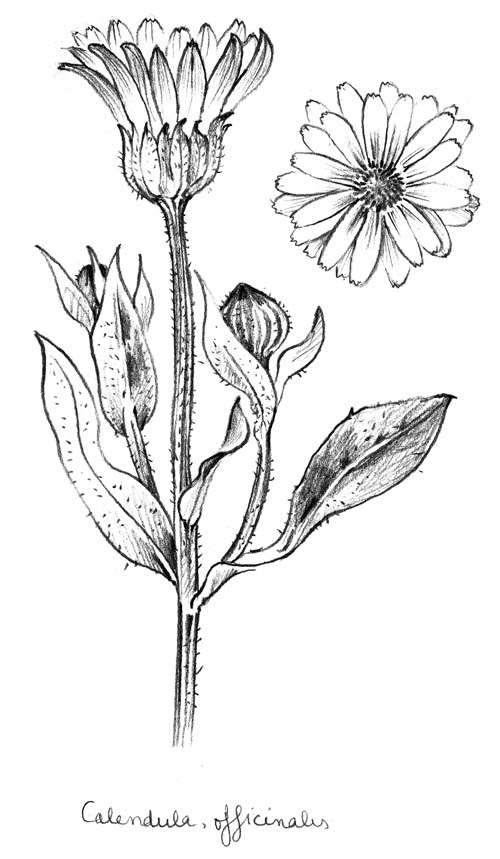
calendula
calendula

I personally associate calendula with healing salves. This informative book tells me it is called poet’s marigold in England. And who knew this?

“The carotenoid-rich yellow to orange petals of this annual daisy were once used to color butter, cheeses, and custards and to thicken soups and add a pleasant taste to salads, and to substitute for expensive imported saffron.”

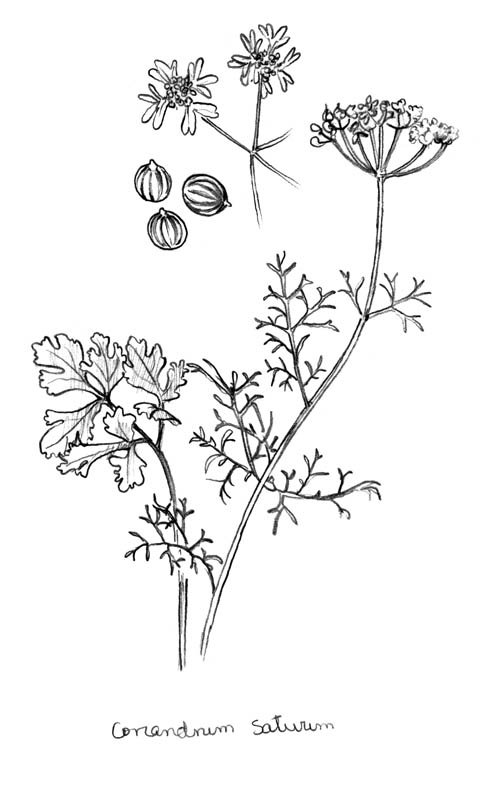
coriander
coriander

I should here mention that one of the fascinating aspects of this book is that when a plant is listed we are then given the name of the plant in various languages! Thus coriander is also listed as:

French: coriandre
Italian: coriandolo
Portuguese: coentro
Spanish: culantro
Arabic: kuzbara

How thoughtful! I love this! I’m always struggling to translate plants into Spanish. Now I won’t have to. Thank you, authors!
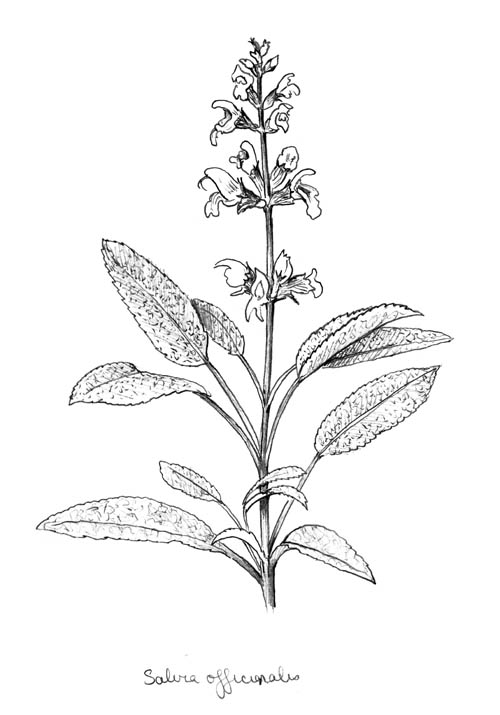
sage
sage

I think I will have best success if my sage is given its own pot. I’m reading it cannot stand frost, so looks like it will have to be mightily protected in winter, or grown as an annual. Boo hoo hoo.

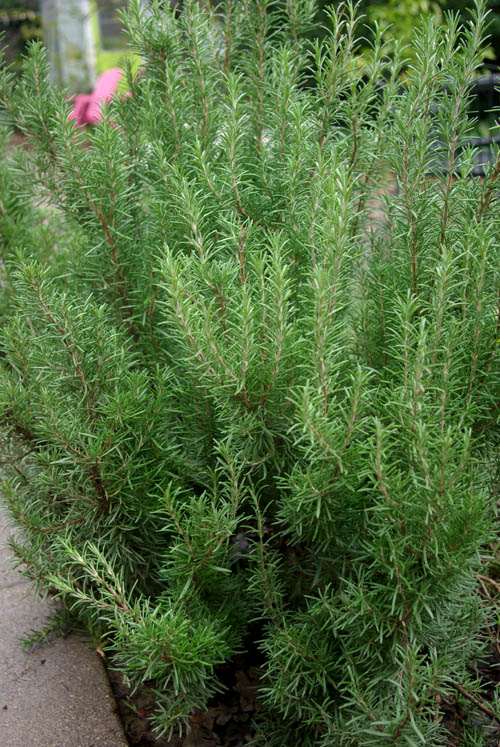
And here is my own precious and endeared rosemary.
MyRosemary
rosemary

One way to get hooked on rosemary is to purchase those shorn (but fragrant) rosemary “Christmas trees.” I have at least one of those. (It’s in a pot.) Once you grow it you will wonder why it took you so long and you will never go without again. Trust me.

I am wishing each and every one of you a Happy New Year. These are the days we are planning our gardens, dreaming of what we will create when the sun’s warmth returns and we can manifest what’s been brewing in our creative minds. I think you will find that The Encyclopedia of Herbs will inspire and guide you into new rich realms you had only begun to explore, adding to your culinary skills and to the very essence of your lives.

Love and gardening blessings,
Kathryn xoxo

It’s Biscotti!

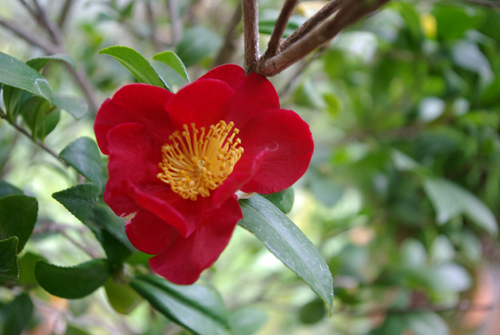
rhodie

This lovely Christmas camellia beckoned and was the harbinger of recipes to be found and made. One of my favorites at this time of year is for biscotti, which is disarmingly easy to make. Try this simple recipe this year and you will be thanking me for a long time, I will bet!

Biscotti

3 1/2 cups unbleached white flour
1/2 cup of hazelnuts, toasted, skinned and finely chopped
1/4 teaspoon baking soda
3 large eggs (use organic)
1 1/2 cups sugar
1/2 cup unsalted butter
1/2 teaspoon anise extract

1. Preheat oven to 350 F.

2. Grease large baking sheet. [I only use stainless steel and I use extra virgin olive oil, but you can use safflower or sunflower oil.]

3. Combine flour with hazelnuts, baking soda and 1/4 teaspoon salt in medium sized bowl. Set aside. [Note, I’ve also used sliced almonds or pecans. I would not use walnuts.]

4. In a large bowl, beat with an electric mixer the three large eggs with the sugar, softened butter and anise extract. Beat until well blended, up to five minutes.

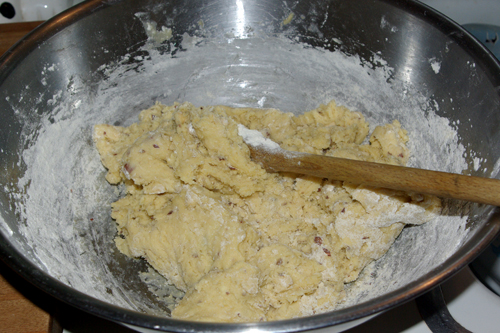
5. With a wooden spoon, gradually stir in the flour mixture, kneading with hands if necessary, until you get a stiff dough.
dough

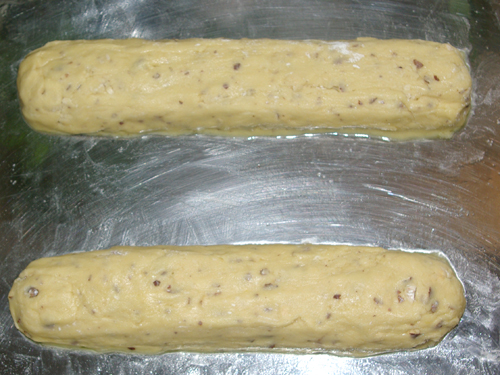
6. Divide the dough in half with a knife. With floured hands, shape each half into a long roll. [OK, this is the only tricky place. Just wash and reflour your hands if it gets messy. You can do it.] My recipe says 12″ x 1/1/2″. So around there. Place the two rolls on your baking sheet.
logs1

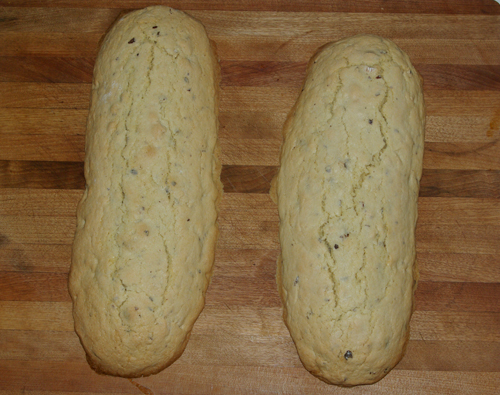
7. Bake 30 minutes, until rolls are firm and very lightly browned.

8. Remove rolls from oven, and with a long spatula, transfer the rolls to a cutting board.

logs
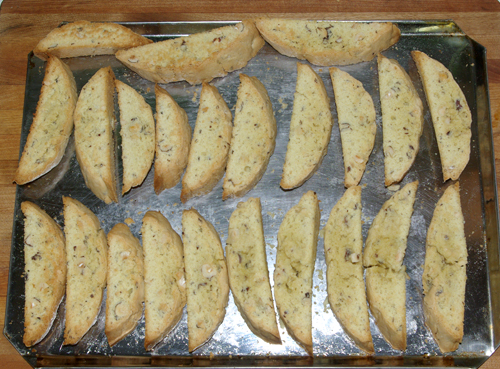
With a serrated knife cut rolls very carefully on the diagonal into 3/4″ slices. Place the slices, again, carefully, cut side down, back onto baking sheet.

9. Return to oven and bake 15 more minutes. You now must flip each one over,
slices

then continue baking for the final 15 minutes, until each is firm and crisp on both sides.

10. Remove from oven and place the slices on a wire rack to cool thoroughly.

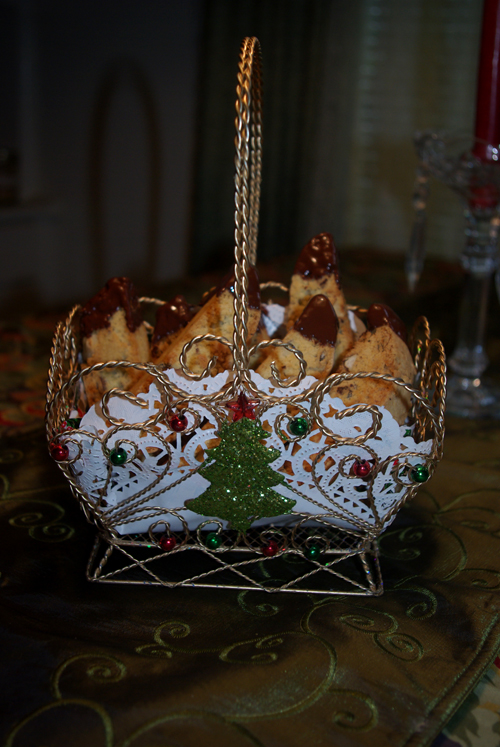
A marvelous thing to do then is to dip the ends of the biscotti in melted chocolate. That’s what I did today, and here is my lovely result! Isn’t this a wonderful contribution to the spirit of Christmas? I hope you will try and that you and your loved ones will enjoy enormously!
biscotti

Love and Christmas blessings, my dear readers,
Kathryn xoxo

Vineyard Montage

entry

It had not escaped my attention that though I have spent many years living in wine country I really had yet to write a single post truly focusing on the vineyards that bless my life and the lives of the communities that surround me. This is probably due to a boorishly boring indifference to wine itself. But the beauty of the vineyards are a mainstay in my daily reality and it was probably past due to pay homage and share with all of you. And today I do.
redtree2

Go, little book, and wish to all
Flowers in the garden, meat in the hall,
A bin of wine, a spice of wit,
A house with lawns enclosing it,
A living river by the door,
A nightingale in the sycamore!
~Robert Louis Stevenson

Traversing early morning backroads I find this beautiful vineyard which lies next to the Russian River. What a stunning place to live!

river3

Inspired, I continue my exploration, and, of course, I find another animal friend who comes to visit and I am (again) delighted. These large animals just light up my spirit immeasureably. Their curiosity kindles my own and my heart always always immediately opens. Yours?
horse4

Hello, pretty horse! Thank you for visiting me this morning! But now the activity at the fence has caught the attention of a number of cattledogs. I know better than to tangle with cattledogs, so I excuse myself and scurry back to my car! Whew!

Vineyards, vineyards. Back on track, I continue on my documenting way. I notice fog on the hills further south and I am anxious to catch and share one of the most engaging and beautiful elements with which we are blessed: the continual flow of fog off the ocean moving inland and gracing our surrounding hills and mountains in an ever changing spin of white and blue.

5

Further south I look across the road, upon which I may not stop except in an emergency, and photographing vineyards will not qualify, at a series of willow trees which always capture my attention as I have occasion to pass by, yet I have never known how or where to enter. Suddenly I see a small dirt road and I make the sudden decision to turn in. I’m so glad I did. I follow the dirt road and a few small signs, and here’s where I come out!
Christmas6

So I get one of my willows, and a big bunch of Christmas in the mix, charmingly so! How fun! This truly is a gorgeous spot, and after speaking with a woman there, I do promise to return to create a full post on this particular winery. For today I am sharing some of the images I was most struck by, which will serve very well for now and also as a precursor of what we will find in spring.
covercrop7

I was very impressed with the gardening principles at this vineyard. I took another snap of the cover crop growing between the rows of grapes. I am not familiar with these particular plants. Are you? I’m sure I will have a reader who will know and share with the rest of us.
covercrop8

One of the things I found here that pulled at my imagination and filled me with delight were these very old olive trees. The woman I spoke with told me they are each over 100 years old, and are slowly being transplanted from another location to create this amazing orchard.
olive9

When I saw these olive trees, I knew I would have to come back to meet the artistic and conscientious people who are creating this destination. Here is another exquisite result of their artistry. The orange trees are willows. The small man-made lake beyond is surrounded by the weeping willows that had called me here from the road.
willow10

Oh, yes. I will be back. Won’t you?

Love and country blessings,
Kathryn xoxo

© 2008 - 2026 Kathryn Hall. All rights reserved.
For optimal viewing Mac users using IE should access via Safari.
Pixel Surgery by Site Mechanix