Time for Paperwhites!


Oh, my goodness! Only 21 days until Christmas! Christians around the globe are gathering their inner resources, making plans for the holidays. Some are out the gate! (I received my first Christmas card yesterday from Wisconsin!) One of the treasured practices of this special time of year is to tuck paperwhite bulbs into a simple medium and add a bit of water. And voila! One has a lovely way of marking the days until our special holiday is upon us. By planting today, you will most likely enjoy their fragrant blossoms gracing your lovely breakfast table on Christmas morning. Get a move on! Here’s what you do!

The simplest things are needed. A clear pot. Some marbles. Bulbs. Mine this year are “Paperwhite Ziva”.

Place a layer of marbles at the bottom of the container. Some folks like to use abundant marbles (or stones or colored glass), but I use fewer, primarily because paperwhites do get tall, and I offer them a bit of support by using fewer marbles and thus a glass container that will help hold them up as they grow. Simply place the bulbs, pointy side up into the marble medium, and add enough water to cover the very bottom of the bulbs. If you are so inclined, there is a “trick of the trade” euphemistically called “pickling the paperwhites” that involves topping off with alcohol, not water, which will stunt the growth of the plant. But I just let them be.

Don’t they just emanate life and possibility? I think so!

And here’s the sweet result!


Check daily to see that the bottoms of the bulbs are covered with water. The water will evaporate in proportion to how hot you keep your home in winter. Roots will emerge and seep into the marbles (or whatever medium you have chosen), the greens will sprout upward, buds will appear and open, right around Christmas time! Nothing can match the sweet fragrance of paperwhites that will emanate from your simple creation. It is a lovely gift to the family. I think this is a special tradition that you might well share with your children or grandchildren, marking the days before Christmas by watching the paperwhites emerging–a new Advent practice to perhaps include along with the conventional chocolate calendar! Enjoy, my dearest readers. Let the paperwhites remind you of the essence of the holiday. Let them be a place where you can stop and smell the paperwhites. A place to pace yourself. To breathe in beauty, to release the pace of the day.

Love and early holiday blessings,
Kathryn xoxoxo

Footnote: Here are my paperwhite bulbs on December 13th:

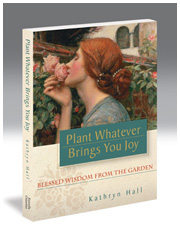
Book News: Plant Whatever Brings You Joy was blessed with a review in Examiner.com written by minister Allyson Szabo. She tells me she will be contemplating how she might use some of the lessons in the book in upcoming sermons. I am humbled and touched and delighted!

If you would like to order gift copies of Plant Whatever Brings You Joy, here’s a reminder that priority shipping is FREE in the US and we offer free giftwrapping! :) Simply visit Estrella Catarina and place your secure order. Thank you!


Del.icio.us

Long Island Cheese Pumpkin Soup!


Long Island Cheese Pumpkin (Cucurbita moschata)

When Antonia was a wee little girl and “making things from scratch” became a very high priority in my kitchen, San Francisco hippie woman that I was, I decided that November was Master Pie Crust month. And I made pie crusts over and over until I could make one half asleep in minutes. That little game I played with myself has served me for decades. And apparently this fall has been All About Pumpkins and I am learning as much as I can. And the most important discovery I have made, as someone who has wanted the perfect Pumpkin Soup Recipe for years, is that the secret is not the recipe. The secret is the kind of pumpkin. Who knew? And what I have learned through all these weeks of pumpkin and winter squash learning and sharing is that the very best pumpkin to use for pumpkin soup bears the unlikely name Long Island Cheese Pumpkin, an heirloom variety, which supposedly is/was commonly grown on Long Island. (Would love to hear the stories, if you know them!) As I don’t recall ever seeing a Long Island Cheese Pumpkin in any kind of store, ever, nor had I ever heard of one before this summer, I’m not too sure how likely it will be that you can find one, other than at your local farmer’s markets. You may have to grow one. I have poked around and I think you will have no trouble finding the heirloom seeds. I’m partial to all things Baker Creek Seed Company, so here’s their link. Plan early! And, boy, are you gonna be glad!

So, first I’m going to post a refresher course on how to easily make pumpkin puree, and then I’m going to show you how to make fabulous pumpkin soup in, oh, say, five minutes. Really.

First you grab an apple corer and poke two holes in the top of your pumpkin. Place in a large pot of water. Let the water come to a soft boil and cook until a fork is readily able to pierce your pumpkin. Then, flip it so the top is also cooked thoroughly. (This is the only tricky part of this process. You might ask someone to hold the pot in place while you turn over the pumpkin.) This won’t take long.

Once the pumpkin is cooked, pour off the water. Then simply cut it across twice. [Please excuse this slightly out of focus pic! I promise to replace next time I make this, which will be soon!] Let it cool.

Once the pumpkin is cool, peel off the skin, which you will discover is very intact and readily peels off. It’s not like what you are expecting. And recycle the seeds. This is what you will have. Look at this color!! I think this is Food at Its Best. It just screams I Am So Good For You! And it is utterly delicious.

Then put the flesh in batches into your food processer and puree. Look at this rich spun gold! I’m rather astounded this is the color of what emerges inside a Long Island Cheese Pumpkin. But that’s what you get! #LOVE

Now. What I do is measure out the puree into portions of 2 cups and freeze what I’m not going to yet use. I feel fantastic knowing I have this on hand in my freezer for winter, for soups and pies and breads. I set aside two cups for my easy soup recipe.

I don’t know about you, but I am so busy that finding time to cook is a bit of an effort sometimes. I really like having certain things prepared and on hand at any given moment. On that list are fresh scones in the freezer, cold green tea, rice for the doggies, some form of salad all made up (e.g., cole slaw or grated dressed beets) and, hopefully, at this time of year, a yummy soup. So this fits the bill.

I poured some olive oil in a heavy pan, and sauteed half an onion and two cloves of garlic I had processed beforehand in the Cuisinart. I made a point of cooking the onion slowly and thoroughly. Then I added two cups of free range chicken broth. (I cheated because this is an Easy Recipe and “easy” in this case means chicken broth from the health food store.) I let that heat up a bit, and then poured in the two cups of pumpkin puree. Like this.

I added salt and white pepper to taste. And then I added a cup of cream. And I served this delicious, simple, nutritious soup with sour dough bread and a glass of green tea. What a fantastic cold weather luncheon! This soup would also make a wonderful starter course for Thanksgiving or Christmas that would not require much time! I think I’d add a dollop of sour cream or perhaps some chopped parsley or scallions for the holidays before serving, wouldn’t you?

And I will store the balance of the soup knowing There Is Soup in the frig, a comforting thought. You know? Yes, you do. :)

Love and kitchen blessings,
Kathryn xoxoxo

Book News: Western North Carolina Woman has just published an excerpt from Plant Whatever Brings You Joy here. If you visiting this blog from the beautiful NC mountains, you might appreciate knowing that Malaprop’s has copies of my book! Also, a wonderful review of Plant Whatever Brings You Joy has just been published on Examiner.com.
As you are planning Christmas giving, remember that you may order copies of Plant Whatever Brings You Joy directly from Estrella Catarina, and that shipping is free, as is giftwrapping!


Del.icio.us

Field Trip: The Ugly Pumpkin Sale (hahaha!)


pumpkin beauty
I have to admit I was intrigued when my new pumpkin mentor, Anne, of C & A Organic Farm, posted to her Facebook page that she would be having an Ugly Pumpkin Sale this Sunday afternoon. Really? What might that entail? I asked. What it entailed was the marvelous opportunity to purchase very inexpensively those pumpkins the public had not deemed “perfect” due to mostly irregular shapes. Given that most pumpkin purchases at this time of year are due to jack ‘o lanterns for children I suppose I can understand. Since one of my goals is to have a supply of pumpkin puree on hand in my freezer this winter for breads and soups and as a rich diet supplement for my Border Collies, who love it, this seemed like a good deal to me, especially after Anne informed me the majority would be sold for a dollar apiece! Organic pumpkins for a dollar? I’m there!

Truth be told I’d been really wanting an opportunity to see Anne’s farm, imagining pumpkins scattered across a large field. Pulling onto her ten-acre property, propitiously set amidst several organic wineries, what greeted me were flat dry fields perfectly cleared, ready for impending rains, amendments and winter crops. Continuing on to her beautiful home, the last of the pumpkin harvest lay waiting for those adventurous enough to come and fetch them. Many were stored in this large plastic tub.

Others stood on display nearby. They all looked just fine to me!

Anne relayed that a Hispanic woman had arrived and salvaged a very large pumpkin for two dollars. She told Anne she would have her husband saw it for her. She would steam it. And planned to prepare pumpkin tamales. She wagered the single pumpkin would yield enough pumpkin to make $200 worth of tamales. I loved that Anne was making this opportunity available to someone ambitious enough to really take advantage of her Ugly Pumpkin Sale. It seemed a loving way to give back to a community that had embraced her abundant harvest for the weeks she had taken her wares to the various farmer’s markets around the county. A lovely way to do business; one that will undoubtedly endear her even more to the community, and add to her successes.

This was the first time I’d seen Anne outside a farmer’s market when she was busy selling her beautiful organic vegetables. Seeing her on-site afforded me the opportunity to learn more about her practices. She and her husband have very high standards for their organic produce, and their gardens and greenhouses all meet the standards required by the state of California to be certified organic. As we chatted she invited me to the back of their property where visual delights were in abundance! This is where, Anne explained, she tries out new possible products. She rather test drives various seeds so she knows what she will invest her own time in and can then recommend firsthand to her customer base. That is an awesome practice! It is also where she grows an abundance of zinnias and marigolds!


purple basil and marigolds

To know a plant you must grow it. ~Kathryn Hall

Notice the wonderful little cabin Anne’s husband built for one of their sons that he used to hang out in with his boyhood friends? What a great dad! How fun must that have been for a teenager??

Accompanying us was Anne’s faithful companion, Russell, who apparently is known on Facebook as “the supervisor”! :) I hear he has his own fans. You can see why.

These are the pumpkins Anne has put aside to process so she has her own supply of pumpkin throughout the winter. She’s a woman after my own pumpkin-loving heart. We both **LOVE** pumpkins!

Another charming addition to the back garden was the tub which Anne has stocked with winter cabbages. She says they are truly beautiful in winter. I noticed the adjacent shower and had to know if it worked. She assured me it does, and obliged me by turning it on! I loved this!

Best of all, Anne and I spoke at length about the value and importance of knowing where one’s food comes from, how it is grown, and by what standards. This included a talk about fertilizer sources, and I am happy to report I now have been given a lead to a reliable source of amendments I will not have to worry about. This was a big gift.

Happily, I returned home with a new supply of pumpkins which I will begin processing this week. Gradually I will prepare simply in large pots of water. I have posted directions on how to do this in a previous post and I provide a link here. Once I figured out how to cook pumpkins like this I began including them regularly. (Before, when I thought I had to cut them in half, cumbersome at best, I declined.)


some of my new store–yes, there are more!

I hope these recent posts have inspired you to try using pumpkins in your fall and winter diet beyond simply in pies. And if you have dogs I very much hope you will try giving them pumpkin puree in their dogfood. They will love you for it!

Love and autumnal blessings,
Kathryn xoxo

Book News: I’m very happy to announce I will be hosted by the Depot Bookstore and Cafe October 25th from 1:00-3:00PM in downtown Mill Valley for an Author Meet and Greet! I would love to see you if you live in Marin or Sonoma and can make the trip down! Or perhaps you are in San Francisco and can make the short trip up! Also, check out the excerpt from Plant Whatever Brings You Joy in the November issue of Western North Carolina Woman. Blog visitors in Asheville area might be interested in knowing Malaprop’s has copies of my book! :) Thank you!


Del.icio.us

Wonderful Winter Squashes

Happiest fall greetings and welcome to Plant Whatever Brings You Joy (and a fresh new look!).

As promised I’m going to continue sharing the wealth of information I gathered from Anne, whom I met at the farmer’s market, who has a wonderful organic farm in Mendocino County. I was just astounded that she knows so much about pumpkins and squashes. Her love for these vegetables and the magic they hold is palpable!

In my last post I focused on the various pumpkins I learned about. This post is devoted to some of the abundant winter squashes available to us only at this precious time of year. I particularly love that these vegetables have been woven so beautifully into the tapestry of our winter holidays. They also continue to offer inspiration for a variety of winter soups that nurture us as the days grow longer and the nights grow colder.


Baby Blue Hubbard Squash (Cucurbita maxima)

This is a smaller version of a standard Blue Hubbard, producing fruits about 5-7 pounds. It has a smooth, gray-blue skin and a sweeter flesh than the standard Blue Hubbard. Reputedly this is the preferred squash of the cucumber beetle, so one might consider growing (off to one side??) to distract the little buggers from your other squashes! (Just sayin’…)


Kabocha (Japanese: カボチャ, 南瓜)

Kabocha squash received a lot of attention on Plant Whatever Brings You Joy, in my Squasharama post written nearly four years ago (!) and I refer you back to it for more extended information about kabocha, including a baked custard recipe. It has an exceptional naturally sweet flavor, even sweeter than butternut squash. It is similar in texture and flavor to a pumpkin and a sweet potato combined. I’m looking forward to baking the one I just purchased. It’s a very substantial squash.


Crown Pumpkin

I actually included the Crown Pumpkin in my recent pumpkin post, but I’m going to include again here, as it actually is a winter squash. Crown Pumpkin is a delicious winter squash with a hard blue-grey skin and rich orange flesh.

The Cucurbita family houses the pumpkin, the gourd and the squash, and has sub-categories called the Cucurbita moschata, Cucurbita maxima and the Cucurbita pepo.Pumpkins are usually recognized as being the pepo. The stems are woody and the skin is hard and orange. The maxima species is slightly different from the pepo species in that it is less hardy when compared to a Jack-o-Lantern.


Burgess Buttercup

Burgess Buttercup produces smallish 3-5 pound dark green fruits with orange flesh, which is fiberless. The flavor is reminiscent of sweet potato. It can be baked or steamed, then combined with butter and fresh herbs. It stores well.


Blacktail Mountain Watermelon (Citrullus lanatus)

Yes, just as watermelon season was closing, there was Anne selling this intriguing Blacktail Mountain watermelon. I couldn’t not give it a try, right? The fruit is solid dark green and has an orange-red flesh. Ann says the fruits are generally 6-10 poinds and 8″ across. Vines reach 10 feet. Once harvested it will keep up to two months. Good to know.

I hope you have enjoyed the pumpkin/squash journey. Thank you for taking it with me. As winter approaches and you begin planning your next garden, I hope you will be inspired to try some of the veggies I have introduced.

Thank you for the visit!

Love and garden blessings,
Kathryn xoxo

Book News: OdeWire has just published another excerpt from Plant Whatever Brings You Joy, the chapter/lesson titles “Invest in Trees.” It’s a perfect story for October. And if you have not yet visited the book trailer for Plant Whatever Brings You Joy, I invite you to take a peek!


Del.icio.us

All About Pumpkins!

My favorite new discovery at our local farmer’s market is the magnificent collection of winter squashes and pumpkins grown by Anne and her husband, Chris of C & A Organic Farms, here in Mendocino County in Northern California. Anne has a deep passion for these varieties and is a wealth of information, which she most generously passed along to me, and thus to all of you. This two-part post will undoubtedly serve as a resource to many who have an interest in adding more pumpkins and squashes to their gardens next year! This foray into her world has certainly educated me and I am most grateful!


Organic Baby Pam Pumpkin (Cucurbita pepo)

These organic Baby Pam Pumpkins are the ones we reach for at this time of year to make our delicious pumpkin pies. Its stringless flesh cooks down to a smooth filling and its sugary flavor makes it the preferred choice. I think most folks would have access to these in your local farmer’s markets and health food stores, and possibly even in your local supermarkets (though maybe not organic–always better).


Organic Jack Be Little Pumpkins (Cucurbita pepo)

Organic Jack Be Little Pumpkins (also called Little Jacks) are the small pumpkins we buy for decorating. Children find them especially endearing. They are about 2″ high and only 3″ wide. You see them in all the markets in October, I’m sure and are one of everybody’s favorite for decorations.


Organic Cinderella Pumpkin

The organic Cinderella Pumpkin is a French heirloom variety, known in French as “Rouge vif D’Etampes”. It is hard not to notice that their beautiful shape does, in fact, resemble the carriage Cinderella’s fairygodmother created from a pumpkin! Best of all, this pumpkin is recorded as having been the variety cultivated by the Pilgrims and served at the second Thanksgiving dinner. (I love this!) These flattened fruits weigh an average of 15-20 pounds. Their deep orange flesh and strong sweet flavor lends to using in winter soups to brighten and enrich cold winter days.


Organic New England Pie Pumpkin (Curcubita pepo)

This heirloom organic New England Pie Pumpkin variety remains the favored pie pumpkin in many homes. Its stringless flesh cooks down into a thicker pumpkin filling, making it very desirable for pies. Pumpkins are usually 4-6 pounds.


Organic Crown Pumpkin (Curcubita maxima)

While these hard-skinned blue-grey are called organic Crown Pumpkins, they are, in fact a delicious eating winter squash. I include here due to their name. Reputedly Organic Crown Pumpkins were part of the Koanga Gardens collection in New Zealand, and they do continue to make these seeds available. It’s known as an excellent keeper, and Anne shares it’s one of her favorites this year. I made a soup from one of these and it was delicious, so I’d have to say it’s one of my faves this year, too. And as someone who has searched for the “perfect pumpkin soup recipe” for years, I’ve come to realize that the secret is in your pumpkin choice, not the recipe itself. Who knew?


Organic Black Futsu (Cucurbita moschata)

The Japanese organic Black Futsu is an heirloom variety. These small pumpkins have heavy ribs, a warty texture and average 4-6 lbs. The outer skin remains dark green or black until ripe and then become a muted chestnut color with a powdery appearance in storage. Texture is firm and flavor is nutty and fresh. Each plant will produce 3-5 pumpkins. This is a pumpkin you can grow in large containers, making it a good choice for those with limited space!

Anne has kindly sent along this simple recipe:

Black Futsu

Cut pumpkin in half, place face down in baking dish. Add a bit of water and bake at 350 degrees for about 35 minutes. Add seasonings to taste. Delicious!


Organic Kakai Hull-less Pumpkins (Cucurbita pepo)

Yes, hull-less seeds. The organic Kakai Pumpkin produces hull-less seeds, perfect for snacking! Kakai seeds are highly nutritious and yield a valuable oil that is used to promote prostate health in men. This Japanese pumpkin bears orange and green striped markings and large raised ribs. Medium sized fruits average 5-8 lbs. Plants yield 2-3 fruits per plant, even in poor conditions. It’s a beauty!

lovely market display

Dearest readers, I hope this post has inspired you to try more varieties of pumpkins this year–to seek them out and use them and learn which ones you prefer and for what. There’s a vast array and exploring these delicious nutritious gifts is a treasure! I’m grateful to Anne for expanding my knowledge.

Last word! Don’t forget that our dogs adore fresh cooked pumpkins! I have a big bowl set aside in the frig and my Border Collies really appreciate my adding it to their morning rice and protein breakfasts!

Love and season blessings,
Kathryn xoxox

Book News: Please visit my FaceBook Fan Page for a fairly comprehensive view of bookstores carrying Plant Whatever Brings You Joy! I’m adding new photos–and new stores–daily! ~ I would also like to welcome and thank a number of new subscribers! I hope you enjoy the posts at Plant Whatever Brings You Joy! :)


Del.icio.us

The County Fair

A fair (archaic: fayre) is a gathering of people to display or trade produce or other goods, to parade or display animals and often to enjoy associated carnival or funfair entertainment.

Strangely, in spite of putting up posters, tweeting and Facebooking the Heirloom Expo in Santa Rosa, perhaps due to their midweek scheduling, I passed up the opportunity to head south, and instead opted for going over the hill to the local county fair. I wanted to experience a real county fair, replete with corndogs, and cotton candy, (not that I would actually eat any of it), blue ribbons and apples pies. Probably the biggest draw, however, was knowing there was a Border Collie trial going on and I had not been in some years. So off I went in the early morning sun through the woods and into the tiny town of Boonville (and all that name engenders). I somehow had not anticipated that Parking Was an Issue, and opted not to view it as such, merely as a small challenge, and opportunity, to look up and down all the side streets I’m normally too busy to venture down, until I encountered a small road several blocks from the fairgrounds. I drove to the very end where a Hispanic woman was chatting in her small garden, abundantly blessed with enormous dahlias, and parked off the road. It didn’t take too very long to walk back to the fairgrounds, and I happily snapped this wayward trumpet vine on my way.

Boonville is situated in Anderson Valley, the heart of winecountry. It is a mix of salt of the Earth folk, winegrowers, applegrowers, many Hispanics probably drawn to winery work (guessing) and a small tourist industry, as people must pass through Boonville to get to the coast, where tourists increasingly abound. It is very quiet and one is not allowed to go faster than 30 mph. Let’s just say it has a lot of character.

The finding of the parking spot ate into my dogtrial time, so I arrived when there were only two more dogs to run. If you’ve never been to a Border Collie trial, go here.

Sheep waiting for dog trial
What ensued when the next dog up was set to begin I’ve never seen before. The handler lost control of the dog. The sheep people lost control of the sheep. And the dog set upon two of them, nipping at their chests. I guess it happens, but it was a new experience for me, and rather disconcerting.

The last dog was also a surprise. He and the sheep were deadlocked in moving them through the various gates so it was like watching a sheepdog trial in slow motion.

I decided I’d not come for the dog trials afterall, and allowed myself to be swept into the crowds and see what else the fair held for me. :)

Within minutes I found myself standing before the merry-go-round, instantly enchanted.

I next entered a large building where farmers had been displaying their vegetables and fruits and awards had been given. It was fun to see red and blue ribbons on their displays, knowing they must have been very proud of their hard work.


squashes


pears


gourds

And then there were the apples! What do you think of this arrangement? I honestly have a mixed reaction. Part of me is in awe of the work that went into this creation. I am made keenly aware of the industrialization of our food production, which is both admirable and somewhat jarring. We have learned to feed large numbers of people. A Good Thing. And now it seems we’d best retrace our steps and examine those very practices to ensure our own health. Ironic, right?

Elkanah Watson, a New England patriot and farmer, earned the title, “Father of US agricultural fairs” by organizing the Berkshire Agricultural Society and creating an event (known then as a Cattle Show) in Pittsfield, Massachusetts in September 1811. It was more than just an exhibit of animals – it was a competition, with prize money ($70) paid for the best exhibits of oxen, cattle, swine and sheep. Watson worked diligently for many years helping communities organize their own agricultural societies and their respective shows (fairs). By 1819 most counties in New England had organized their own agricultural societies and the movement was spreading into the other states. The nineteenth century closed with almost every state and province having one or more agricultural fair or exhibition.

In addition to the fruits and vegetables on display, along the sides of the room were various displays, some with historical interests. I loved the wheel. It made me wonder where it had been, what stories it might tell. I’m sure they are work stories.

And this wagon surely has been privy to many conversations.

This sign caught my attention. These are not women I know. But I found myself wondering about them. I might look them up!

And in the far corner were the Master Gardeners. As it happened they needed a shot of their display, so I happily obliged. I spent some time talking to them and discovered a new Master Gardener program is starting up in winter, very conveniently not so far away. I decided this was why I’d really come to the fair. Thank you, Inner Guidance. :)

I left this building, then, and wandered over to the Wool Barn. I’d never been to this kind of event before. This angora rabbit immediately caught my attention, as he was being shorn! I talked with the man cutting his fur and learned that angora also comes from goats. Maybe you knew that?

There were tables laden with kinds of wool.

And stalls full of incredibly beautiful yarns. I could see there must be women (or men?) who just live for this, to secure these beautiful materials for their winter creations. A winter of weaving, of knitting, of crocheting. It’s lovely to contemplate.

I was not drawn to purchasing yarns, but I certainly was drawn to buying this beautiful green wool hat, which came up from Morro Bay! I am very much looking forward to wearing it soon as mornings inevitably become quite chilly!

American, Canadian, and UK readers: to find a fair in your state, check out this link! http://www.fairseverywhere.com/

I find myself wondering if county fairs are on the wane, or will always be a mainstay of our lives. I believe they will increasingly be venues where we might examine how we are conducting our food production, and how we might aim ourselves for more sustainable living. Do you attend your local county fairs? What changes have you seen and how might what you have learned impact their evolution?

Love and gardening blessings,
Kathryn xoxo
Footnote: Since posting this blog post I have crossed paths with three women who were in full attendance at the dog trials and every one of them said the same thing: “It was the sheep!” Apparently what I missed in arriving late was that not a single dog was able to maneuver the sheep through the various gates or pens. These sheep had had no experience with being herded and they cooperated with not even the most skilled of dogs! Bet I’ll be hearing more about this. :)

Book News: Please watch for upcoming review of Plant Whatever Brings You Joy on examiner.com and an excerpt from my book in the winter issue of The Intelligent Optimist (formerly known as Ode Magazine).

The list of bookstores carrying Plant Whatever Brings You Joy continues to grow! If you do not see a bookstore near you please consider purchasing directly. Priority shipping within US is free, as is giftwrapping! :)


Del.icio.us

The Butterfly Cafe


Western Swallowtail

One of my greatest joys this summer has been reaping the benefits of planting this buddleia last year, for it has emerged as the neighborhood Butterfly Cafe, and I have been there nearly daily to bear witness, to photograph and to share with loved ones, including those I know through social media! What an gratifying adventure, one I highly recommend that you explore!

The actual buddleia is triple the size of what you are seeing above, and is rather rangy at this point of the season. It is flanked by a structural tower of morning glories, by pots and pots of pink and yellow rugosa rosas, and, behind, by purple mallow and an abundance of trumpet vine which wends its way through a nearby tree, and beyond. Way beyond. Such is the nature of trumpet vine, I’m sure so many of you have discovered. So there are several ample blossoms tempting any butterfly or pollinator in the area. That umbrella peeking into view is part of a rather secret vignette bathed in dappled morning light. Four chairs and a round table invite quiet observation or morning meditation. I love this corner of the garden. And so do the bees and butterflies and towhees and scrubjays and an abundance of flickering hummingbirds.

This buddleia is actually one of three, but it is the one that is most mature that receives the most sunlight so for this summer, at least, it is officially the Butterfly Cafe, and I am grateful for it for the sake of all concerned. From the numbers of visitors I am currently getting I’m starting to surmise this might be one of the last Nectar Holes in the neighborhood, as perennials recede and annuals have long ago succumbed to the intense summer heat this year. Triple digits abound. This is even more reason to be grateful for this one buddleia, large enough to feed multiple critters. I have carefully tended it almost every day, being sure to water it in the morning and to keep deadheading so new blossoms, food sources, are generated. My reward has been to be in the company of the most exquisite of beings. All summer long a parade of butterflies have visited, including ample skippers, cabbage whites, swallowtails and even an occasional California sister. California sisters are often harder to spot, even though in abuandance, as they frequently fly quite high, though the males like to puddle. Remembering this I sometimes make little muddy areas below the buddleia as a special treat.


California sister

Most common this year have been the swallowtails and I never tire of being blessed by their presence. Would you?


Tiger Swallowtail

Last week three arrived at the same time and swirled above the buddleia in a delicate and spirited spiral dance, a wonder to behold!

The most special moment this summer however, was a first in this garden, and it’s happened twice. Monarchs! In the many years I’ve been here I have never seen one in this garden! About a month ago one arrived and I was thrilled, thinking this would never happen again. But I was wrong. Last week this beauty arrived and by patiently observing her, careful to give her a wide berth, she eventually allowed me to photograph her up close, definitely the high point of this photography summer season! My first shot I caught on my cell, then ran to get my camera.


Sudden arrival of a Monarch!

“Most North American Monarchs overwinter in the Transvolcanic Range near Mexico City. Ours do not. Monarchs from the Great Basin and West Coast spend the winter along the California coast, from just north of the Bay (not all years) to Santa Barbara.” ~Art Shapiro, UC Davis professor of ecology

She kept hungrily sipping nectar, then departing as I wished her back. She would return and each time she allowed me to get closer.


Monarch

The best part for me was when she seemed to sense she was safe and I was at liberty to examine her closely. I was so amazed her body was perfect polkadots! I think that’s one of the loveliest discoveries I’ve made in my garden ever! I’m posting her a bit larger so you can see more detail.


Monarch
Thank you, dear readers, for the visit. I hope your garden is bringing you great joy this summer, too!

Love and butterfly blessings,
Kathryn xoxo

Book News: New reviews and articles are being lined up for fall and winter for Plant Whatever Brings You Joy. I will post here as they are published. And there are several new places where you might purchase a copy. For a full list, please visit Estrella Catarina. Travelers passing through SFO, you can buy a copy of my book at Compass Books in Terminals 2 or 3! This is a great book for a plane ride! You may also purchase the book directly from Estrella Catarina. Shipping within United States is free. More information? Please visit the new Facebook Fan Page!


Del.icio.us

Nurture, nurture, nurture


Antonia and Kathryn, Mother and Daughter series

Dearest Readers:

Following is an excerpt from my book Plant Whatever Brings You Joy: Blessed Wisdom from the Garden, which recently ran on OdeWire.com. I felt this selection was timely given the current conversation around the country. Enjoy.


Near as I can tell life on planet Earth is mostly about taking care. Taking care of our families. Taking care of our friends. Taking care of the work that we take responsibility for. Taking care of our homes, taking care of our possessions, our animals, our gardens, our plants, our cars, our water, our air, our land. Our churches, our communities, our cities, our roads, our poor, our sick, our wounded, our frail and elderly.

Taking care of ourselves. Taking care of ourselves physically. Taking care of ourselves mentally. Taking care of ourselves emotionally. And taking care of ourselves spiritually. Yep, I’d say that pretty much covers life on our planet for we human beings, and it certainly reflects my experience!

Now how we go about that is endless in its possibilities. As varied as the fish in the sea, the birds in the sky, the plants in the forest. And notice they are all taking care as well.

If I ask myself what is the central principle behind this endless and perpetual taking care, I’d have to say life itself. Life reaching towards life. Life ensuring life continues. That essentially is the drive behind it all, is it not? Each and every living thing on planet Earth is hardwired for doing well, for keeping the whole thing going, for perpetuating life. The lengths various species go to ensure their sticking around boggles the mind. As we are caught up in our own individual dramas and the illusions (and grandeurs) of our sense of separation, it is easy (and convenient) to forget what the essential driving force behind all this is. Truly there are beings walking planet Earth thinking it was about them. “What? It’s not about me?” Well, it is. You and over six billion other people and a several billion other species. It is humbling to contemplate when we take the time. And the distorted ways in which some of us choose to take care of ourselves and others are absolute abominations, there is no doubt. But often underneath the aberration one could find this slender thread of life’s longing at the core, hard as that might seem. What would our lives look like if we consciously brought the value of taking care, of nurturing to the fore? How would aligning ourselves with that single focus impact our lives and the lives of others? If we acknowledged fully our intrinsic programming to care and nurture for all that came within our view, our path, our neighborhood, our own small radar, what impact would that accumulative shift have on our larger reality? Jesus said to love one another. Was that not the same?

Love and earthly blessings,
Kathryn xoxo

Book News: It’s been an awesome month of discovery! Recently I found two wonderful reviews of Plant Whatever Brings You Joy I had not previously known about. (Thank you, Google.) The first was a review written and published in Telluride Watch by Daiva Chesonis, owner of Between the Covers bookstore in Telluride, Colorado. Here it is:

Plant Whatever Brings You Joy: Blessed Wisdom from the Garden (Estrella Catarina, 2010) by Kathryn Hall

This Northern California-based author called us to see if we’d like to carry her self-published book. As an independent bookstore, we try to support as many writers as possible across the spectrum of first-timer to been-there. We talked about why her book is unique amidst all the others. The garden as a metaphor is by no means a new literary concept but this is a fabulous packaging of that idea. This gardening blogger and book publicist has mashed up the sentiment of gardening into the reality of life (which means it gets shelved in several sections of the store). Thematic titles abound: Appreciate Small Returns, Move Gently Among the Bees, Reframe All Error as Learning, and Clean Up After a Storm. Fiercely Guard the Seedlings is a sweet paralleling about children. The format—52 lessons through 52 stories—lends itself to a once-a-week devotional. At three to five pages each, they’re easy to fit in as a quick grounding. But don’t just take our word for it; there’s a blurb from the cultural anthropologist who wrote The Second Half of Life [Ed.: Angeles Arrien] that heralds Plant Whatever Brings You Joy as an “invaluable resource for understanding the garden as a source of healing, growth, solace, joy, wisdom and inspiration.” This small book is proof again that what we all really need, we probably already have or have access to, whether that’s proper gardening tools or the therapy that pulling weeds, helping things bloom, and indigenous wisdom can mete out.

And, then, happily, I found this review, featuring Plant Whatever Brings You Joy as Book of the Month, this month, in the Master Gardening newsletter at UC California at Davis!


Del.icio.us

California Garden Tour


sunflowers and zinnias
Formal garden tours are wonderful and becoming increasingly popular and I’m glad for it. But sometimes all we need to do for a fresh look of inspiration is to walk down the street. Really. At least that’s what happened to me. For just a block away an elderly woman (no other way to say it) secured a small house, gutted it, and proceeded to create the dream house of her Golden Years, replete with solar panels and a grey water system. And being a true and knowledgeable gardener, the space around the house is receiving the full creative benefit of what will likely be her Last Big Garden and what an inspiration! But before showing you what she has done, I want to preface this pictorial with an amazing fact about this inspiring woman of 80 years–she hikes six miles every Saturday morning with a group of friends. Indeed, I happened upon her in town one day and agreed to follow her over the farmer’s market and I could barely keep up. She’s a veritable steam engine of energy! Not an ounce of fat on her body, and eats a diet of fresh veggies from her own garden. (Except, oh, yes. Her true confession: she likes Wonder Bread.) So I was delighted when she gave me permission to do an early morning shoot recently, to share with all of you the garden she has created to live in in this particular chapter of her life. I especially like that this trek around her garden will give those afar an insider view into an extraordinary Northern California summer garden.

Let’s start with the dahlias, shall we?


dahlia

dahlia

dahlia and penstemon
And that penstemon hiding behind the above dahlia has a nearby sister and deserves her own clear view, so here she is. What a beauty!


penstemon
This rose, called Eye Paint, was a housewarming gift to my friend. She says it offers wave after wave of roses. I think it’s her favorite.


Eye Paint roses

A simple question. A simple answer. What opportunities lie within our reach that hold the power to make a difference in the quality of the lives of others simply by sharing the bounties and blessings that grace our lives? ~Kathryn Hall, in Plant Whatever Brings You Joy: Blessed Wisdom from the Garden

Along the drive were gladiolus for the last month. Now in our intense summer heat only one is left. This one lovely creature.


gladiolus

Nearby is a sweet daylily. (Daylily lovers, I know who you are! I even asked the name of this for YOU! It’s Frans Hals! Heh.)


daylily

So as I’m walking around gingerly picking my way through beds, suddenly this little boy showed up! Turns out he’s my friend’s grandson, who is visiting here from Africa! He was an adorable surprise!

Compounding my surprise, a few minutes later I learned he has a sister, who oblingly posed for me by the sunflowers!

Apparently their father is an African diplomat. I had no idea they were here on vacation, so this was a treat!

And did I mention this is going to be a long post as this gardener has a lot of beautiful plants!

And this is a charming little vignette, as when this garden was first being formed, a stack of old cement and rocks began accumulating off to the side. Then one day I came to visit and my friend said, “See what’s happening in the corner? One of my grandchildren came and put some dirt on top of the pile of rocks in the corner and planted this and that and now it’s become a little rock garden all on its own.” Fast forward to these grasses, which my friend “brought home from the lake.” All manner of things has been added including wild chamomile, several succulents and near the bottom, this:


hoarhound and sedum in the rock garden

As you might begin to imagine, this is not a highly structured garden. I’d call it Permissive Gardening, which I can actually relate to. Along the sidewalk alyssum is spilling out.


purple alyssum

Go placidly amidst the noise and haste, and remember what peace there may be in silence. ~Desiderata

And apparently my friend is not one for pulling up every weed, especially if it has an endearing flower, like this scarlet pimpernell! I loved that she knew the name of this weed, which I have long admired and only begrudgingly pulled up. Can’t believe such a humble little flower has such a lofty name!


scarlet pimpernell (Anagallis arvensis)

Then there was the gaura…

…and the agastasche…

…and the phlox, offering a fresh vision in the summer sun.


phlox

phlox

One of my favorites was this hybrid of California poppy. I brought home some seeds, which are drying and I look forward to planting them in the spring! My friend says they will cross-pollinate with my wild California poppies.


poppies

Speaking of cross-pollination, can you begin to imagine the numbers of bees that are attracted to this garden? They were everywhere, I’m very happy to report! They especially like the sunflowers.


sunflower
And the zinnias! (As did I!)


zinnia bed


zinnia


zinnia

I am utterly enchanted with those little round circles of teeny flowerettes, as I know that some power much larger than teeny I consciously chose to create and include them and I am humbled and touched at the thought. :)


zinnia

zinnia

Are you just filled to the brim with California beauty?? I hope so!

Love and garden blessings,
Kathryn xoxo

Book News: Oh! Oh! I did at last start a Facebook Fan Page. Please LIKE if you are inclined. I solemnly promise not to overwhelm you with notices. My intention is to now and then mention something of note, and, mostly, to have a place fans of Plant Whatever Brings You Joy can connect. Thank you.

Also, I’ve been continuing to collect pics of my book on shelves around the country. (Who does this??) I was delighted when I unexpectedly received this photo from Kaitlyn at Copperfield’s Books in Healdsburg, alerting me that they’ve included Plant Whatever Brings You Joy in their new Local Author display. Sweet! I do hope you continue to support your local indie bookstores. They are a treasure.


Del.icio.us

The Beauty of Lemon Balm


Melissa Officinalis

I continue to be fascinated not just with herbs, but with herbs that have been used by human beings for thousands of years. Lemon balm, or, formally, melissa officinalis, falls in that category. I think I first became aware of lemon balm through my dear friend Conny, who is German, and, apparently, lemon balm is much more common in Germany than it is here. The Germans make a lemon balm salve which I am now longing to have in my store of medicinal herbs, and I might have to resort to making my own, most likely with a bit of guidance from Henriette Kress’s book Practical Herbs, which you are probably aware I recently reviewed. (She teaches you All Things Herbal!)

I think, in fact, that Conny once sent me home with a bag of dried lemon balm herbs she kindly picked from her garden, and I must confess I was not quite sure what to do with them, and so I did nothing whatsoever. This happens to all of us with new herbs, I think, and rightly so. There is an intrinsic wisdom in not blithely using herbs, but in researching, studying and when we feel we have sufficient information to be confident in our knowledge of the herb, begin to use. Some of them thus will end up being lifelong companions for which we are eternally grateful. I’m approaching that point with lemon balm, so I will share with you how far along I am in my knowledge and perhaps some of you will be moved to join me in its usage.

Years after the gifting of the bag of lemon balm which sat on a shelf for a long long time, unused, I at last found myself foraging herbs in a big box store and found some lemon balm in small containers. I bought two. One ended up in a big pot. It seemed like the right thing to do. The other, rather sadly, did not get transplanted for quite some time. (Don’t ask. This happens. I’m busy.) But one morning it was at last put in a small pot, which was better than its original container, which it did outgrow, poor thing. And I will depart from the point of this post to point out blatantly to what happens when you put a living being (plant, animal or human, take your pick) and put in a confining space:

And what happens to a living being (plant, animal or human) if you put it in a spacious environment with ample room for spreading wings, branches, mind and heart:

Given that I think metaphorically and have based an entire book on using gardening as a metaphor for life, this is the pictorial version, and need I say more? I think not. :)

So that happened.

But what to actually do with it?

The overwhelming and predominant usage of lemon balm which I read over and over again in multiple sources was to simply make a tea of it and that it was associated with relaxation. Perfect. I was actually needing something refreshing to drink in the summer evenings, after a hot day. I always have black tea for breakfast, green tea for lunch and I did not want caffeine in the evening, and, while water is nice sometimes, I found I was lacking a cooling drink to have with my light supper. As it turns out lemon balm fills this need quite beautifully. So here’s what I did. I bought a large glass jar to make sun tea, which I had not done in ages. I’m not sure why as it used to be a habit, but one that got misplaced over the years. I used two quarts of water and picked enough leaves from the larger plant that I felt I would have a lovely tea. And I placed in the hot sun in the garden all day long.

The sheer act of doing this was enormously satisfying. I’m very happy I’ve resumed this lovely tradition. And in the evening I brought in the jar, feeling I had something so precious made in the hot summer sun, and added a bit of honey, and then strained it, put in a pitcher and let it cool overnight. The next afternoon I enjoyed the simple pleasure of a chilled glass of lemon balm tea. What a joy!
I am abundantly glad I tried this and to have now added cold lemon balm tea as a standard in my summer kitchen. I especially appreciate that given its relaxing qualities (not unlike chamomile) the tea begins to prepare me for a good night’s sleep. In addition lemon balm aids digestion, adding to its being a good choice for the last meal of the day. I do hope you will try and enjoy.

Love and herbal blessings,
Kathryn xoxo
Footnote: One of the UK gardening bloggers left a comment on FB about this post reminding me it’s way too rainy in the UK at the moment to make suntea. :( Don’t hesitate to make a hot cup of tea with the lemon balm leaves from your garden. It’s very delicious!

Book News: Highlight of the week was unexpectedly finding a review of Plant Whatever Brings You Joy through a random google search in Telluride, Colorado’s local newspaper The Watch! From that review:

The garden as a metaphor is by no means a new literary concept but this is a fabulous packaging of that idea. This gardening blogger and book publicist has mashed up the sentiment of gardening into the reality of life (which means it gets shelved in several sections of the store). Thematic titles abound: Appreciate Small Returns, Move Gently Among the Bees, Reframe All Error as Learning, and Clean Up After a Storm. Fiercely Guard the Seedlings is a sweet paralleling about children. The format—52 lessons through 52 stories—lends itself to a once-a-week devotional. At three to five pages each, they’re easy to fit in as a quick grounding. But don’t just take our word for it; there’s a blurb from the cultural anthropologist who wrote “The Second Half of Life” that heralds “Plant Whatever Brings You Joy” as an “invaluable resource for understanding the garden as a source of healing, growth, solace, joy, wisdom and inspiration.” This small book is proof again that what we all really need, we probably already have or have access to, whether that’s proper gardening tools or the therapy that pulling weeds, helping things bloom, and indigenous wisdom can mete out.

Meanwhile, I’ve been continuing to collect pics of my book on indie bookstore shelves around the country and posting them in a photo album on my new Facebook fan page, quite gratifying, I have to say. :)


Del.icio.us
© 2008 - 2013 Kathryn Hall. All rights reserved.
For optimal viewing Mac users using IE should access via Safari.
Pixel Surgery by Site Mechanix