Dream realized!!

FedEX

Dearest Readers,

Today was a special and very important day in my life here in Northern California. Over twenty years ago I removed myself from the intricacies of life in Marin County, where I largely raised my daughter Antonia, and, essentially, “Mom moved to the country and got a dog”. Dream number one realized. And it was there in the woods next to a raging dynamic sea, which crashed through my dreams and comforted me that I started a small garden of flowers. I had not worked in a garden in years. I would begin my days out in the fog and mist and dig in the quiet still morning and as I worked and slowly experimented and planned I found myself soon coming to the realization that what I was learning in my garden made sense in my life.
LittleRiver
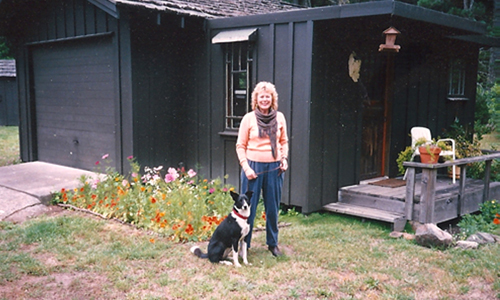
Kathryn and Moxie beside first tiny garden plot in front of guest cottage/garage in Little River

And I began to take notes. And to ponder. And to observe. And I allowed myself immeasurable time to contemplate, as I expanded my various garden plots, what the essence of each lesson was and how it fit into the larger scheme of my life, and then I challenged myself, with whim and dedication holding hands, to distill that bit of wisdom into the simplest of terms. I was aware that my many years of working with the I Ching was influencing my thinking, for, having “thrown the I Ching” hundreds and hundreds of times what I noticed was that I would find myself in some situation where knowledge and wisdom were required, and I was so often surprised that some line from the I Ching would emerge–the perfect words at the perfect moment, offering me the gift I needed to move ahead. And I was fascinated by the power of this, and decided to make that part of my intention–to provide a bit of wisdom in the simplest terms that might lend a helping hand to a reader sometime in the future. And so it was. As the Dutch say, “In the seed is the tree.”

Throughout the years of development of this book many paths were explored. Ultimately I chose what felt right to me–the least expected path, in fact. And that was create a small publishing company and to assemble an excellent team of professionals and to rely on that team of excellence to shepherd the book through to, well, today. For that very large Fed Ex truck pulled up our street in the heat of this afternoon. Neighbors actually came out of their doors to see what had arrived! And here’s what they left on the front lawn. Ta da!
Arrival

What to do? Fortunately I had had a small chat with the Folks Upstairs this morning about this very thing. For how can one plan for help arriving when the the shipping folks give you a five hour window for delivery? Indeed. One must take the Miracle Train. So, sure enough, even though Dave next door already was out the door with gloves and a hat, his wife in tow worrying about “the heat” (and duly so), three young boys came down the street in perfect timing, and I called out to them, “Would you boys like to make some money?” About face and they came back immediately, bless their hearts. Only minutes later that teenage summer energy had been applied to a neat stacking of the cartons indoors, ready for business!

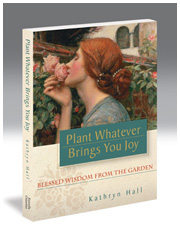
First order of business was to keep a promise to my friend and master beader and basketweaver, Susan Billy to “sell her the first copy of the book”. This allowed me to get a pic of my happy self in her lovely bead shop with a copy of the first edition of Plant Whatever Brings You Joy: Blessed Wisdom from the Garden.
Suzies

We have been working very hard to get this book to market. “We” includes a bevy of incredible, talented people I have been so fortunate to work with. Now my attention turns to media, to the market and to you. If you are interested in purchasing a copy of this book, I invite you to visit Estrella Catarina’s site . You will find there are a couple of options available.

My commitment is to continue to be of loving service, here on this blog, as a publicist for my clients, and also now in this capacity. Please watch for events I am in the process of creating. Details can be found on the Estrella Catarina site.

Many thanks for visiting this blog and for your encouraging feedback and support. And enjoy the book!!

Love and gardening blessings,
Kathryn xoxo
Footnote! Kindle version now up on Amazon! Reviews are coming in and I am deeply touched! Please be aware that you need not own a Kindle to read a Kindle product. No. Kindle products can be purchased and then read on the following devices, all downloadable for free: Kindle for PC, Kindle for Mac, Kindle for iPhone, Kindle for Blackberry, Kindle for iPad. All links are provided at the Kindle page for this book.

Post to Twitter Tweet This Post


Del.icio.us

Book Notes: Smart by Nature

smartbynature

Smart by Nature is an inspired handbook that connects hands-on experiences of the garden, the kitchen, the table, the compost heap, and the classroom curriculum.” ~Alice Waters, founder of Chez Panisse

In keeping with the inspirational thread we are currently exploring on this blog I was delighted that a close friend of mine happens to be promoting a book titled appropriately, Smart by Nature: Schooling for Sustainability. It is written by Michael K. Stone, a senior editor at the Center for Ecoliteracy, a public foundation in Berkeley, California, known for its dedication to education for sustainable living. The Center for Ecoliteracy provides information and support to K-12 educators, parents and other members of school communities who are helping young people gain practical skills to live sustainably. I loved that my friend was able to send me a copy of this book as it synchronistically fit with my deep desire to help lend a voice to the conversation being widely generated in this country, and, certainly in the UK, about getting kids reconnecting with the Earth, and, most importantly, serving as a very solid guide to adults who find themselves inspired to help generate such programs in their schools and communities. Because it’s one thing to watch Jamie Oliver spark a conversation about what foods our schools are offering our children for lunch. It’s another to know where to begin. And I’m guessing that a marjority of my readers would agree that it’s far more powerful to give our kids a place to grow their own food, to get their hands dirty, to watch the miracle of a seed growing into a plant and to (let’s face it) demystify life itself, than to simply change the menu in the cafeteria. Otherwise I believe change will most likely be temporary and not rooted in a fundamental understanding that would lend itself nothing short of transforming one’s life. Thus the word sustainability. But where to start?
pumpkin

“As we recognize the sobering implications of global environmental and social justice threats, people are looking for smart new answers. Smart by Nature offers the best hope of all by explaining what sustainable living really means, how to teach it, and why young people with this knowledge will lead us to a safer, more fair, and prosperous future.” ~Kevin Coyle, VP Education and Training for the National Wildlife Federation

Smart by Nature offers a framework for schooling for sustainability based on two decades of work with hundreds of schools by the Center for Ecoliteracy. The book is conveniently divided into four areas of schooling for sustainability: food, the campus, community, and teaching and learning. Students learn to ask what is upstream and who is downstream, and to examine how their decisions affect the health of people and the environment. I invite you to imagine if the folks involved in the oil industry had been schooled in this way as children. Indeed, it is imperative that these principles, largely lost to both urban and suburban children, be reinstated into their curriculums if we, in fact, will have any chance of maintaining our beautiful world as we have grown to know it. The clock is ticking, my dearest readers. If these values beat in your heart, I hope you will find it within yourselves to teach what you know and to join others of like mind to help you realize your understandings and passions, or, at very least to write about these issues and to highlight communities who are implementing such programs. I believe this book is an excellent resource to guide such folks along the way.

Many of you have heard of the Native American tribal tradition of bearing in mind the effects of each of our collective decisions on the seventh generation to come. This is a practice well worth considering as we each find our way to support sustainability in our lives and in the lives of those who come after. May you find your way and help our youth to find theirs.

Love and gardening blessings,
Kathryn xoxo

Post to Twitter Tweet This Post


Del.icio.us

UK School Community Garden

Dearest Readers,

Not long ago I did a review of The Family Kitchen Garden which I found a good extension of my excitement about Jamie Oliver’s Food Revolution. British Jamie, you might recall, did a show on national television about our schoolchildren eating a healthier diet, and creating gardens at schools is a solid way to introduce such new eating habits. I then heard from blogger Liz of the blog Nutty Gnome in the UK who is involved in a school garden project in Chesterfield and I immediately invited her to write a guest post about her project, hoping it might inspire both teachers and children to think of beginning such a project in their own schools. Following is her fascinating and very inspiring report! I particularly like that the students in this school were boys potentially at risk, and the gardening project gave them a focus where they could engage, and that made a difference, as we gardeners might expect! :)

Love and blessings,
Kathryn xoxoo

Footnote: Liz has posted a lovely second post about a primary school in the UK which also has a school garden here.

overview
Following Kathryn’s recent post on Jamie Oliver and school gardens – and my comments about the school gardens projects in the secondary school where I am a Governor, and in our partner primary schools, Kathryn very kindly asked me to do a guest post about it. So here it is!

To put things into context, I thought that a bit of background might be helpful. I live in Chesterfield, which is in the county of North East Derbyshire in the middle of Britain (level with Manchester and just below Sheffield on the map). It is a beautiful, picturesque old market town where most of the heavy industry such as mining has closed down. It has some very prosperous areas and some very deprived areas within its boundaries.

The school I am involved with is Parkside Community School. It is a smaller than average sized secondary school of around 500 students aged 11-16. It sits in one of the most deprived areas in both the town and the County and is 46th out of 47 County secondary schools in terms of its social and economic deprivation levels, but its Value Added score is 2nd highest in the County (the Value Added score is the difference between the exam grades students are predicted to get and what they actually get). It is a fantastic school of which I am very proud to be a Governor.

One of our great achievements is the development of the gardening projects. There are currently two ongoing projects which began last year and one new project done in conjunction with the adjoining junior school which has started this year.

Parkside prides itself on knowing all its students well and in offering a personalised curriculum wherever possible. All students follow the core curriculum subjects of English, Maths and Sciences, but have the opportunity to follow an alternative or vocational curriculum as well. It is well known in Britain that boys in secondary education do less well than girls and can become disengaged from learning. Some of the boys involved in the gardening projects were disengaged, disruptive and close to being excluded from school (a process we do not take lightly). Some of the other boys were quiet underachievers who needed confidence building to support their learning.

The first project was the development of a ‘dead’ space behind ‘B’ block – the Science and Design Technology block. This area was an eyesore – messy, desperately overgrown, unused and unloved. Over several cold, damp winter days of 2008, the boys and staff cleared the area, broke through the old tarmac base to provide drainage, built a greenhouse, built raised beds, carted in 25 tonnes of top soil by hand (because the area has two flights of steps to negotiate to get to it) and worked on their planting plans. Unfortunately school didn’t photograph the area before the work began, but these are the earliest photos we do have and shows it partway through the transformation.

The area is north/south facing, bounded on the south and west by buildings and by a bowling green on the east – how terribly British!
IMG_7004
Ground cleared
IMG_7024
Greenhouse frame being erected

Spring 2009. The main raised beds go round the south and east sides of the garden. Other raised beds were created centrally, the flags laid around the fruit trees, a BBQ and table were built and an old bench rescued and renovated. Two boys, Jake and Matt, who were then in Year 9 (i.e., 14 years old) took over the running of this garden supported by Julie–a Teaching Assistant in school who has no previous knowledge of gardening. She did the initial planning, but the decisions about what to plant, and where, now come from the boys, with a little guidance from Julie who has had what she descibes as “the most amazing learning curve” about gardening, but obviously she has green fingers!
Assorted photos 055
Matt, Julie and Jake in front of their new raised beds and trellising
The garden is amazing – I was absolutely gobsmacked when I went to see it, [Gobsmacked is Yorkshire for amazed and speechless! ‘gob’ = mouth!] and it’s not very often that I’m lost for words!

This year they have planted:
Potatoes, carrots, parsnips, turnips, broccoli, cauliflower, broad beans, brussel sprouts, runner beans, peas, beetroot, leeks, spring onions, lettuce, radish, spinach, chard, courgette, cucumber, peppers, chilli, rhubarb, two beds of cosmos and pansies. They also have two apple tees, two plum trees, two cherry trees, sweet peas, plus raspberries and blackcurrants.

The boys feel that they have been transformed by the scheme. They were previously both disengaged and disinterested in academic learning. One was close to being permanently excluded from school for what he describes as an ongoing habit of doing daft and disruptive things that everyone got fed-up with. The other was quieter but ‘had his moments’ – as he put it! Now in Year 10, they are immensely proud of what they’ve achieved – and rightly so. They have set up a gardening company and Jake wants to go on to do a Land-Based Studies course at college.
Assorted photos 060
Jake, Julie and Matt with this year’s crop!
Assorted photos 061
Raised beds with painted railway sleepers
The produce from the garden is sold into the community at the summer fair and to staff and parents throughout the growing season. The pansies will be sold in plant pots painted by some Y9 girls as part of a science project. The original idea was to sell everything to the school kitchen, but that proved problematic last year for a wide variety of reasons, although negotiations are under way with the new Head Cook. We feel that it is important for our young people to have the link between growing, cooking and eating healthy foods, so we’re working hard to ensure this happens!

The proceeds from produce sales are ploughed back into the project to make it sustainable. In September Jake and Matt will begin to work with new trainee gardeners from lower down the school, to pass on their skills and ensure the continuity of the project before they leave school.

The most recent innovation is that our Site Manager has managed to acquire some bark chippings free from somewhere and they will be used to cover the remaining hard surfaces and give a softer feel to the area.

The second project is not quite as advanced as this one because the Teacher and Teaching Assistant involved have less time to commit to it because of their timetabled classes. However, it has involved up to 8 boys, mainly from Years 8 and 9, who have learnt the practical applications of maths as they have, under supervision: laid a concrete base for the shed (twice – because the shed had to be moved!), laid paving slabs, installed taps, helped construct the polytunnels, made raised beds in the polytunnels and outside – and worked out the volume of soil required to fill them, harvested rainwater via water butts they installed, and sited the compost bins – which take compost from the Food Technology classroom behind the garden. The boys now want to repaint the shed “because it’s a bit girlie!”, make a pond and build a herb garden.
Assorted photos 027
Tying up tomatoes
There was some reluctance to be photographed, but I think the boys deserve all the credit for producing a great small garden from scratch ….and I wish I could lay flagstones as well as they have!
Assorted photos 034
They all feel that they have benefited from the project, not just by “getting out of lessons!” as one boy said, but by seeing maths in action, having something that they could see develop as they worked, learning practical skills, working as a team.

Post to Twitter Tweet This Post


Del.icio.us

Singular Beauty

redrose
old red rose

Today I am choosing to celebrate the first day of summer by focusing on the singular beauty of individual flowers. Technology remains a mystery to me, so I’m not quite sure how I arrived at these images. I only know I felt a strong urge early yesterday morning to get out my camera and record what I found about me, not wanting to miss recording the moment. And these emerged. Perhaps it’s the early morning light that allows their presence to fully illumine themselves in such spectacular beauty. But I enjoy the mystery too much to ever actually try to figure it out. What enchants me most is that these photos, when they come, remind me of painting on black velvet. Only much better. :) Enjoy.
orange-yellowrose
variegated rose
butterflybush1
butterfly bush
rose3
gorgeous new climbing rose (with company)
favrose
simple, simple, and an all-time favorite rose

The Summer Day by Mary Oliver

Who made the world?
Who made the swan, and the black bear?
Who made the grasshopper?
This grasshopper, I mean–
the one who has flung herself out of the grass,
the one who is eating sugar out of my hand,
who is moving her jaws back and forth instead of up and down,
who is gazing around with her enormous and complicated eyes.
Now she lifts her pale forearms and thoroughly washes her face.
Now she snaps her wings open, and floats away.

I don’t know exactly what a prayer is.
I do know how to pay attention, how to fall down
into the grass, how to kneel down in the grass,
how to be idle and blessed, how to stroll through the fields,
which is what I have been doing all day.
Tell me, what else should I have done?
Doesn’t everything die at last, and too soon?
Tell me, what is it you plan to do
with your one wild and precious life?

~ Mary Oliver

rockrose1
rock rose
lily
lily
hydrangea
hydrangea
peptorose
I call this my Pepto Rose. I do.
mallow
mallow
butterflybush2
new butterfly bush (Needs to be planted soon!)
red-pkrose
another heirloom rose
yellowflow
remind me!

Love and summer blessings!
Kathryn xoxoo

Post to Twitter Tweet This Post


Del.icio.us

Pamela Polland/Hawaiianized!

Pamelacover

Waaaay back in the 70’s in Sausalito, when Antonia was a little girl, I joined a choir. The director of that choir was a beautiful singer named Pamela Polland and when you read my book Plant Whatever Brings You Joy you will read in part just how important she is in my life. And here we are, both of us, living out our dreams in 2010, still truckin’ and very nicely, thank you. Pamela now lives on the island of Maui, and has for many years. And all these years this accomplished musician has continued to sing her heart out with a wide variety of talented people. And all the while she has moved ever closer to incorporating the Hawaiian culture into her life–and thus ours, as you shall hear.

First I was charmed that Pamela (for years) took hula lessons, and learned to play the ukelele. How exotic, right? :) Here’s my girl.
Pamela2

And then, immersing herself ever more deeply, she began to study and attempt to master the native language of Hawaii. She took this upon herself as a sacred duty and gift. She has honored the native Hawaiians for as long as I can remember. This was just one more way.

Another fascinating facet of Pamela’s life is that she is a swimmer. Her idea of celebrating her birthdays is to challenge herself to swim ever greater distances, say from cove to distant cove, in the gorgeous ocean that surrounds her island. She goes out with a bevy of beauties whom she affectionately called “mermaids,” of which she is one. And off they go. I have always been in awe of this endeavor as I cannot quite imagine myself doing this, ever. And I have been the lucky recipient of such amazing photos as these.
dolphins

seaturtle

And NOW my dear friend, at the very same time I am launching my book (woot!), is releasing her new EP, Pamela Polland’s “Hawaiianized”. Given our closeness and the fact she is also Antonia’s Godmother, I was a lucky lucky girl and got to hear some of her cuts early! And I cried. I did. It made me realize how precious our parallel paths have been all these years, and how incredibly blessed we are to still be creating and I was so very deeply moved by her voice and where she’s coming from inside. I was so inspired, in fact, that I called her and got permission to offer all of you dear souls an inside peek. Because, point of fact, this music will not be available to the public at large for another two weeks, most likely. One, if we are fortunate! :) On iTunes!

So! Without another word I am privileged to share with you my favorite cut (which I have been singing for two days now), “Somewhere Over the Rainbow”–Hawaiianized! Enjoy, dear readers!

Audio clip: Adobe Flash Player (version 9 or above) is required to play this audio clip. Download the latest version here. You also need to have JavaScript enabled in your browser.


Love and happy blessings,
Kathryn xoxoo

Post to Twitter Tweet This Post


Del.icio.us

Book Notes: Lavender, The Grower’s Guide

lavendercover

For far longer than I care to ponder I’ve had a rather hazy relationship with lavender. I know it when I see it. I’ve grown it successfully in the dampness of North Carolina, the deserts of Arizona and the lush soils of California. But could I tell you any details? Not really. So I jumped at the opportunity Timber Press afforded me when they published Lavender: The Grower’s Guide by New Zealand horticulturist Virginia McNaughton.

In my own garden I have a huge plot of lavender in bud, captured here on a recent foggy morning. From my reading this book I believe these are angustifolias, the spindly, skinny versions that we most commonly see in gardens.
buds2

I love the lavender at this stage. It is already ripe with perfume when I water it or brush by it. But I am filled with anticipation of what is about to unfold, because ultimately, this is what this lavender patch will look like, as it did last summer.
lavender

And then it will be a mass of bees and butterflies for weeks and I adore that stage of its life (and mine). This plant is, indeed, a gift to all the bees in your neighborhood.
bee_4
happy bee photo courtesy of Antonia Hall

Also gracing my garden are the lavenders called Stoechas. They appear to have little wings on top and are very endearing. Propagation requires taking soft wood cuttings from the plant.
biglav

Lavender has been a regular part of my life for many years now. I use lavender oil regularly in my baths. And I never fail to take a bottle of lavender oil with me when I travel as I know the restorative powers of its fragrance, sprinkled on a pillowcase or, again, in a relaxing bath to take the stress out of travel. The bottle (found at any good health food store) is so small one can easily drop into ones purse and be relied upon as a quick resource when one needs a mental adjustment. I liked the lavender notes in the introduction to this book that read:

“Spiritually, lavender is considered a plant that will raise perceptiveness and take an individual to higher states of consciousness during mediation. Since fabled Lemurian times, special devas or plant guardians were appointed to look after the plants until such time as mankind was able to absorb greater knowledge. Its therapeutic use in aromatherapy and its wide range of healing applications as well as other fragrant and ornamental uses make lavender one of the most versatile of herbs. It is truly a magical plant and those who have ever been enticed and enchanted by its sweet, heady perfume become enamoured for life.”

Yes, I’d say I’m a lifelong fan. You?

Looking about my own environs I discovered a neighbor who had used lavender in a very efficient and beautiful way, lacing it with other plants such as roses, guara, and rock rose, creating a natural boundary between her property and the sidewalk that ran before her home. What a lovely “fence”!
row2

Happily, Lavender: The Grower’s Guide will serve as the only book you will ever need to identify more than 200 species and cultivars of lavender, and will provide you with all the information you will need to lovingly include this most exquisite addition to your garden. Enjoy!

Love and gardening blessings,
Kathryn xoxo
Footnote pics for Ewa in Poland (See comment below! :) ):
woodylav
So this is the very old structure holding this in place, Ewa. Have you ever seen lavender this old? No? Neither have I. The woman who most likely planted this was the wife of the man who built this house many decades ago. And this is a small town so old timers remember that she was president of the local gardening club! So in our nineties this is what we apparently have to look forward to in our gardens! :) I guess!

And following is what that patch of lavender looks like at the moment. But within a month or so after all the bees have gathered all their pollen and the butterflies have come to visit and the lizards have hidden underneath it [anyone remember?] it will simply fall over from all the love and visitors. Think of it as the Velveteen Rabbit of Lavenders. :) xoxo
prim

Post to Twitter Tweet This Post


Del.icio.us

Plant Whatever Brings You Joy: The Book!

PWBYJ Full Cover REFONLY1

Dear readers, it gives me incredible joy to announce to you that my book, Plant Whatever Brings You Joy: Blessed Wisdom from the Garden is now ready for publication! The official publication date is August 1, 2010. An event will be held on that date at the Nickel Creek Nursery in Mendocino County to honor the occasion. I have created a site where all information about Plant Whatever Brings You Joy can be learned. Please visit:

www.estrellacatarina.com

Thank you!

Love and reader blessings,
Kathryn xoxo

Post to Twitter Tweet This Post


Del.icio.us

The Best Carrot Cake in the World!

cake

Mother’s Day arrived and I got inspired to Be the Mother, which included baking a salmon, steaming asparagus and, lucky everyone, baking a carrot cake. I could not for the life of me find a recipe in my recipe box. (Did I ever have one?) So I googled Carrot Cake and found a recipe that looked interesting. As I am wont to do, as I began assembling I began tweaking the recipe and am very glad I did! I now have what it undoubtedly the best carrot cake recipe I’ve ever found and I am inspired to pass it along straightaway to you. Maybe you need to bake a cake! So here goes.

The Best Carrot Cake in the World

*Set the oven at 350 F.

*Coat the inside of a bundt pan with a mixture of soft butter and a bit of olive oil, and then sprinkle some white flour inside and shake the pan around so the flour is more or less distributed. Don’t worry. It will be fine.

*Beat four eggs in a big bowl.

*Add two teaspoons of vanilla.

*Add two cups of sugar and beat that in.

This is how it will look.
batter

Now. This is going to sound outrageous, but just pretend you are Julia Child and go with the flow.

Melt a lot of unsweetened butter in a heavy skillet very very slowly. Do not let it get in the least bit brown, OK? You are going to want to end up with 1 1/4 cups of melted butter. (I know. I know. But I have to tell you–otherwise how will you follow the recipe?) Like this:
butter

Add the melted butter to the egg mixture. Set aside.

Now, get out a bunch of organic carrots, peel them lightly, cut off the ends and voila.
4carrots

Chop up the carrots into maybe two inch pieces, and put in Cuisinart. If you don’t have one, borrow one or invest in one. Otherwise this is going to be way too much work and we don’t want that, and besides, you won’t have this consistency.
carrots

And you are going to need it, because this recipe requires three cups of grated carrots! Yes, it does. Yummy.

Add to the egg mixture 1 3/4 cups of unbleached white flour and then 1/4 cup of whole wheat flour. Then add a pinch of salt, two teaspoons of baking powder, two teaspoons of baking soda, two teaspoons of cinnamon and then grate at least one teaspoon of nutmeg into the batter. After these are mixed up, hand stir in the three cups of carrots. Just stir a reasonable amount of time.

When this is complete, I opted to throw in a small handful of golden raisins and a sprinkling of currants. Then you will have this:
carrotbatter

Then, my dears, fold in a cup of chopped nuts. I’d suggest walnuts or pecans. Now, isn’t this final batter amazing??
finalbatter

Pour the batter into the bundt pan. Pop in the oven for 50 minutes and then check to see if it’s done with a toothpick or small fork. I’ve made it twice now and both times I needed an hour.

Remove the cake from the oven.
cake2

Critical point. You must be patient. This cake should cool at least one hour before you try to remove from the pan. I slid a knife around the edges probably after half an hour and ever so gently lifted it underneath, but did not attempt to remove. After an hour I flipped the pan and the cake effortlessly slipped onto my plate. Then I waited another hour before I frosted with cream cheese frosting, which is ridiculously easy.

Cream Cheese Frosting

1/2 butter, softened
8 oz. creamcheese, softened
1 teaspoon of vanilla (only use the real stuff)
4 cups of confectioner’s sugar

Done.

This cake is so unbelieveably delicious I can’t wait until you try it and then let me know. This will become one of your best recipes and your family and friends will love you for making it. Enjoy, dearest readers.

Love and kitchen blessings,
Kathryn xoxox

Post to Twitter Tweet This Post


Del.icio.us

Small is Beautiful

prayerflags
tiny prayer flags recently gifted to me by a new friend

Oh, my goodness, dear readers, this is One of Those Weeks. I bet it is for you as well. Am I right? It began with the news that a beloved aunt had very quickly turned herself toward heaven’s door and that event, like a rogue wave rushing to my shore was accompanied with news, events and responsibilities from such a wide and pressing variety of venues, all swirling about me, demanding good wise choices that I truly thought my head might explode. OK, slightly dramatic. But I told myself, get bigger, you can hold the space for all of this. Just take one thing at a time. And then one would have thought I’d have sat down at my desk and begun the process, one by one. Right? Wouldn’t you? But no. I went out and mowed the lawn. Yes, I did. And then I grabbed my camera and headed out back because I knew in my heart of hearts if I was going to make good sound heartful and wise decisions I needed to sustain myself first. And so I did. I am a bumblebee, and I gathered the nectar from my immediate environment and came back to my desk with a broader perspective, all perfumed up with spirit and I am going to share it first with you before I Get On With It, while my heart is full and tears are filling my clearer eyes (probably why I see better now). :)

I have these lavenders to comfort me, as I ponder why they are the most vibrant purple flowers I recall seeing on this plant. Could it be all the rain?
lavender

Close by is my trusty and much loved oregano, always at the ready to enhance something cooking in the kitchen. Hi, oregano. I love you.
oregano

First tomatoes finally in the ground! Hurray! Hurray! This makes me so happy. I love to grow tomatoes. They are so generous and I’m so grateful.
tomato

“What am I growing??” I tweeted recently! I thought these were lettuces, but my posse of tweeties helped me figure out these are actually curly endives. I have a dozen and have no recollection whatsoever of planting them and they have reseeded themselves into abundance, wherever they came from. Thank you.
endive

A book I recently reviewed reminded me that marigolds are good companion plants so I have several now living among my veges. So cheerful and pretty!
marigold1
Into the broader garden, who would not be uplifted by this wonderful basket of petunias I found recently and brought home? Happy, happy, happy!
petunia

And, sweet, sweet, sweet tiny precious orange buds about to open. The anticipation of the beauty of their scent is exciting and beyond that there will be oranges this year! How lovely!
orange

Now these pretties are seldom seen as they are part of a long ago garden, do not even grow in the sun, but persist, hidden among too tall purple and white lilacs. They are rather a secret, but I show you today.
backroses

Close by is a large rambling bush of small red roses which I opted to keep rather than listen to a gardening consultant who opined that they were “just old stock” and that I should pull them up. No, thank you. :)
backred

I am being filled up in this gathering process. Here the happy pansy.
purplepansy

I take great delight in the 4th of July roses I bought for myself and another for dear friend Conny last year for Mother’s Day!
4thofJuly

And I breathe in the sublime and perfect and glorious old roses, one of my favorites in this garden. Yes, they are as big as they look! And their fragrance is as rich as one can imagine.
oldroses

This morning I find the first blue geranium!
geranium

And, oh, this precious hosta. I love it!
hosta

Am I getting full? I am, indeed. Exiting the garden, I look back over my shoulder at the space I have prepared for Antonia’s Mother’s Day visit. I know my girl. I know she will come into the early morning garden and meditate among the California poppies cheerily threatening to overpopulate this part of the garden. We love that.
poppy

Counterintuitive as it might seem, entering the garden, taking a hike on the beach or in a forest can prepare us well for the gnarliest of tasks and responsibilities. I know as gardeners you know what peace and beauty there is in the garden upon which we can draw nurturance at any time. I feel better now.

And I send you love and warmest garden blessings,
Kathryn xoxo

Post to Twitter Tweet This Post


Del.icio.us

The Flowering Tree

dogwood
Cornus florida

“The best time to plant a tree is 20 years ago. The second best time is now.” ~Chinese proverb

It’s April and flowering trees abound at this time of year in California, and most likely where you live, too. They emerge in concert harmony, showcasing one after another. At this particular moment it is the dogwood that is in full display, and last year I highlighted their abundance and beauty here.

However while it may be dogwood that is taking the larger stage, there are many more flowering trees about and I set out to find them. What I least expected to find was a western redbud, as they have largely come and gone, but redbud I did find, and I was delighted! My guess is this late bloomer will be the last of the season. Lucky us for its last minute arrival! For whatever reasons, this tree (and variations) is associated with Judas’s supposed hanging himself and is known in parts of the world as the “Judas Tree.” It has a very interesting property in that its blossoms emerge directly from its branches, contributing to a rather unlikely look as it unfolds. I love their little heart-shaped leaves. It’s rather endearing that carpenter bees cut nickel-size circles from the redbud leaves to use in their nests. (I adore carpenter bees. I think of them as the grand teddy bears of the bee family, kind of lumbering and harmless to humans.)

redbud
Cercis occidentalis

Scouting about I find myself drawn to a small tree of which I’d been previously aware, but had not closely examined before. It is a Japanese snowball tree.
Snowballtree
Styrax Japonica
This tree has always puzzled me as my interpretation of it is that it is some sort of hydrangea that has gone rogue and far exceeded its boundaries and expected form! You will see what I mean, here:
Snowballtree2

See? Most perplexing. But Japanese snowball tree it is and lives happily in this dappled corner, protected by a wall of bamboo. Very lovely setting.

The most dramatic flowering trees I found were these photinia twins living entwined in a small charming county park. They must have been carefully groomed in their early years and I’m imagining are very very old to have reached this height.
park

Closer to home is a reliable white lilac in full blossom. I love that people walking by always stop to partake of its wonderfully sweet fragrance!
whitelilac

And now a mystery tree, which, ironically, inspired me to want to write this very post.
lacey

I must confess that at point of inspiration the plumes on this tree were slightly more lavender and my delay in acting on my muse has placed it slightly past its most beauteous moment. However, it is still quite lovely. It does not have leaves, per se, but rather a lacey kind of needle. Its gnarled trunk suggests its presence in the neighborhood for quite some time. Any ideas?? All guesses appreciated!

Love and springtime blessings!
Kathryn xoox

Footnote: If you want an answer, ask a scientist! Cousin Julie has ID’d the above plant as a tamarix. Poor thing is invasive in some parts, and has the ability to suck up groundwater from the desert floor. Good for the tree. Not so good for the desert.

What is interesting to me about the above post is that three of the trees I’ve chosen apparently have Biblical references. The dogwood, as you may know, has associations with the crown of thorns placed on Jesus’s head before his crucification. As noted above, the redbud is associated with Judas’s hanging. And I have just found these surprising notes in verifying that Julie’s ID was correct:

In spite of Tamarisks drawbacks, its an important desert tree, providing windbreaks and welcome shade and cover for many animals. It is the source of the Manna of the Bible, which is produced by a small sap sucking insect that turns the toxic sap into a sweet honey like substance that drops to the ground. It is still gathered in the Middle East and sold in the markets.

A fascinating unfolding!

Post to Twitter Tweet This Post


Del.icio.us
© 2010 Kathryn Hall. All rights reserved.
For optimal viewing Mac users using IE should access via Safari.
Pixel Surgery by Site Mechanix